A Bathroom Cleaning Routine That Actually Works
A bathroom stays clean with two habits: a 60-second wipe after every shower and a 20-minute pass once a week, done in the right order so you’re not cleaning the same grime twice. Skip either one and the other has to work twice as hard. Here’s the routine broken down by fixture, the reasoning behind the order you clean things in, and where a quick clean stops and a real deep clean starts.
Why order matters more than most people think
Most bathroom cleaning goes wrong before the first wipe, because of order, not products. A few rules explain almost every mistake worth avoiding.
Dry before wet, top before bottom. Dust and hair on a counter turn to paste the moment they’re hit with a spray cleaner, so clear loose debris first, then spray. Work from the highest surface down too: mirrors, then counters, then the toilet, then the floor last, so nothing drips or falls onto a surface already cleaned.
Toilet last, always, with its own cloth. The toilet carries more bacteria than any other bathroom surface, so it never shares a cloth with the counter or sink. Using the same rag on both, even rinsed in between, moves bacteria to a surface people put their hands and toothbrushes on.
Let cleaner sit before you wipe it. Spraying and immediately wiping is the single biggest reason bathroom cleaner seems to underperform. Most need 3 to 5 minutes of dwell time to actually break the bond between soap scum or mineral deposits and the surface underneath. Spray it, walk away and do something else, then come back. The difference in how much comes off with the same amount of scrubbing is real.
Rinse and dry, don’t just wipe. A surface that’s clean but left wet gives soap film and hard water spots somewhere to reform before the cloth is even put away.
The routine, broken down by fixture
Shower and tub
The shower does more work than any other fixture because water sits on it daily. After every shower: squeegee the glass and walls, or wipe with a dry towel, while the surface is still wet, since dried soap scum takes real effort to remove and wet residue wipes off in seconds. Leave the exhaust fan running 15 to 20 minutes afterward, since a shower pushes humidity close to 100 percent and that moisture needs somewhere to go. Weekly, the tub and shower floor get an actual scrub with a bathroom cleaner, not just a rinse, focused on the corners and drain area where soap residue collects fastest.
Toilet
A daily swipe of the seat and handle with a disinfecting wipe takes ten seconds and keeps the most-touched surface from building up between real cleanings. Weekly, it gets the full treatment: cleaner inside the bowl left to sit before scrubbing, then the seat, lid, tank, and base wiped down, in that order, since the base is where splash residue collects and gets skipped more than any other part of the toilet.
Sink and counter
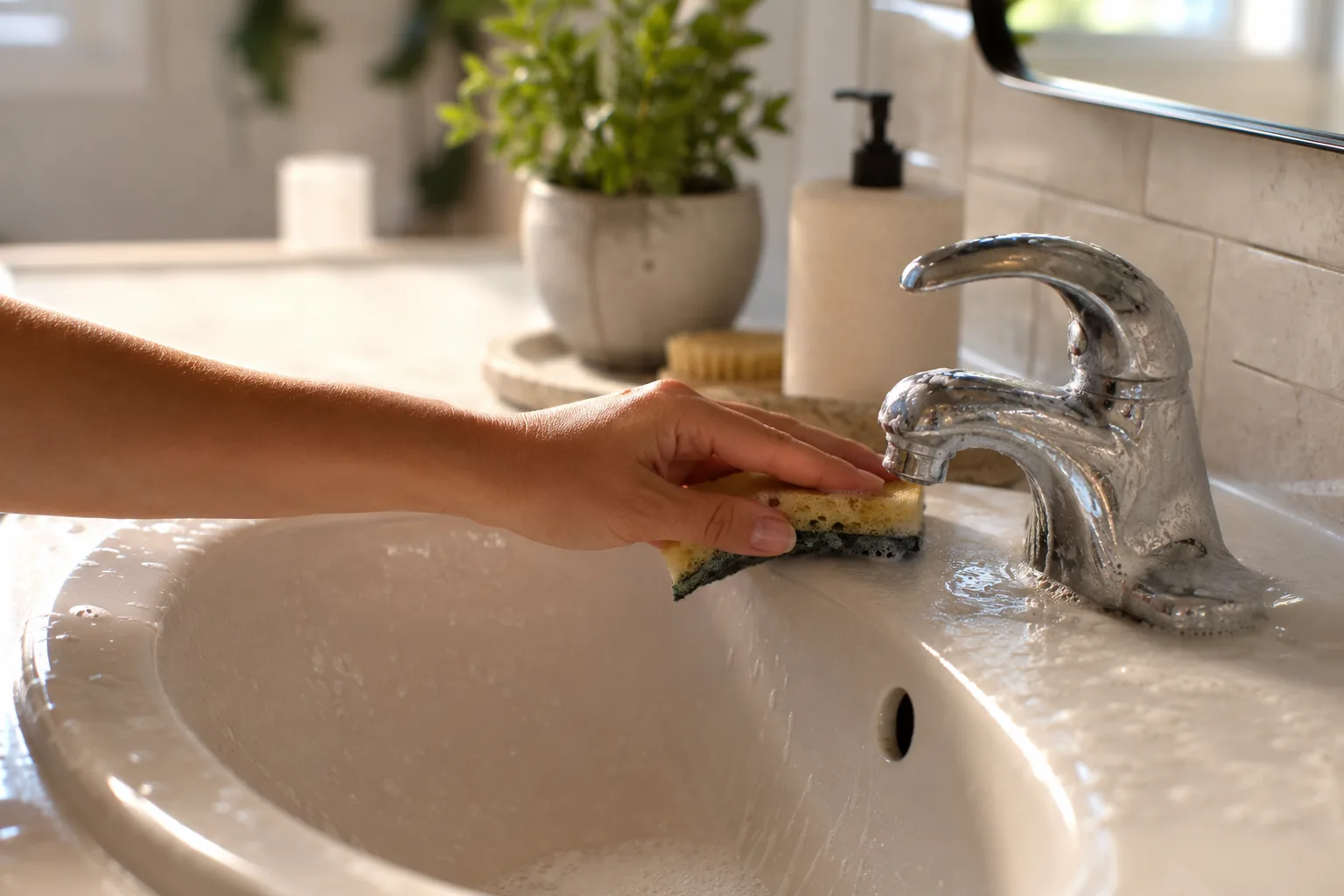
Wipe the counter and basin daily with a damp cloth, the fastest fixture to keep looking clean since it’s mostly clearing clutter and rinsing toothpaste residue before it dries into a film. Weekly, clear everything off the counter completely and clean underneath, then the faucet and handles, where hard water builds a visible ring if it’s only ever wiped around.
Mirror and light fixtures
A quick swipe for toothpaste splatter happens daily, almost as an afterthought. Weekly, use actual glass cleaner on the mirror, buffed dry with a lint-free cloth to avoid streaks, and a dry cloth on the light fixtures, where dust collects and dims the room’s light more than most people notice until it’s cleaned.
Floor
Daily, floors mostly take care of themselves if towels get hung up and hair gets swept when it’s obviously there. Weekly, sweep or vacuum first, then mop, working toward the door, and pay extra attention to the base of the toilet and around the tub, where dust and hair collect and get missed by a mop that only passes through the open middle of the room.
Quick clean vs. deep clean: where the line actually is
A quick clean and a deep clean aren’t the same job done with more or less effort, they cover different ground.
| Quick clean | Deep clean | |
|---|---|---|
| Frequency | Daily or after every shower | Weekly for the basics, every 3 to 6 months for the full reset |
| Time | Under 2 minutes | 20 to 30 minutes weekly, longer for a full seasonal reset |
| What it covers | Visible surfaces: counter, toilet seat, mirror splatter | Grout lines, shower door tracks, behind and under fixtures |
| Products needed | Damp cloth, squeegee | Bathroom cleaner with dwell time, grout brush, glass cleaner |
| What it misses | Buildup inside grout, soap scum on glass tracks, mineral deposits | Nothing, by design, it’s the reset the quick clean routine maintains |
A quick clean is maintenance. It keeps a bathroom that’s already in good shape from sliding backward day to day, the routine above under “daily.” A deep clean is a reset, the buildup a daily wipe-down was never going to touch no matter how consistent the habit is. Our guide on how to clean grout and tile covers that part in more detail, since grout needs its own method and its own products, not just a stronger spray of whatever’s already under the sink.
One mistake is forcing the quick clean to do the deep clean’s job, scrubbing harder at grout every morning instead of giving it a slower pass on its own schedule. The other is skipping the daily habit because a deep clean is coming eventually, which just means it takes longer once there’s more grime to work through.
Ventilation matters here too, since a bathroom that stays damp between cleanings undoes a lot of the routine’s work before it’s finished. Our guide on preventing mold and mildew in a bathroom covers the moisture side in depth, since a squeegee habit and a fan that runs long enough do more to keep a bathroom looking clean than any product does.
Frequently Asked Questions
How long should a weekly bathroom clean actually take? 20 to 30 minutes for an average bathroom, if the daily habits above are already happening. Skip them for a week and the clean stretches closer to 45 minutes, since more has built up to remove.
What order should I clean a bathroom in? Top to bottom, dry to wet: mirrors and fixtures first, then counters and sink, then the toilet, then the shower or tub, then the floor last, so nothing wiped earlier ends up back on a surface already cleaned.
Do I really need to let cleaner sit before wiping? Yes. Most bathroom cleaners need 3 to 5 minutes of contact time to break down soap scum and mineral deposits. Wiping right after spraying moves residue around more than it removes it.
Can I use the same cloth on the toilet and the counter? No. Even rinsed between uses, this moves bacteria from the toilet to a surface people touch directly with their hands and toothbrushes. Keep a dedicated cloth for the toilet.
How often does a bathroom need a real deep clean? Every 3 to 6 months for most households, sooner if the bathroom sees heavy use or grout and shower glass are visibly dull despite a consistent weekly routine.
Why does my shower glass still look cloudy even though I clean it every week? That’s usually mineral deposits from hard water, not soap scum, and a weekly wipe doesn’t fully remove it. A squeegee after every shower prevents most of it from forming; once it’s set in, it needs a dedicated descaling pass instead of a stronger version of the regular routine.
Is a squeegee actually worth keeping in the shower? Yes, it’s the single highest-value habit in this routine. Wiping the glass and walls while they’re still wet takes under a minute and prevents most of the soap scum buildup that otherwise needs real scrubbing later.
What’s the biggest mistake people make with their bathroom routine? Treating the toilet or floor as more important than the daily habits that prevent buildup in the first place. A bathroom that gets the after-shower squeegee and a daily counter wipe needs far less effort on cleaning day than one only touched once a week.
Keep the Routine, Skip the Backlog
A good routine keeps a bathroom looking clean day to day, but it isn’t built to catch up on months of skipped grout cleaning or a shower door track that’s never been touched. If your bathrooms have fallen behind, a deep cleaning resets what the daily and weekly habits above can’t reach on their own, so the routine actually has a clean baseline to maintain.
or call +1 (949) 330-0081.