Best Eco-Friendly Cleaning Products for a Non-Toxic Home
A genuinely eco-friendly cleaner discloses its full ingredient list, breaks down in the environment instead of persisting, and skips chlorine bleach, ammonia, and vague “fragrance” blends. Certifications like EPA Safer Choice and Green Seal are a faster shortcut than reading marketing copy on the front of the bottle. Below is what to look for by category, the greenwashing patterns worth recognizing, and a checklist to use before you buy.
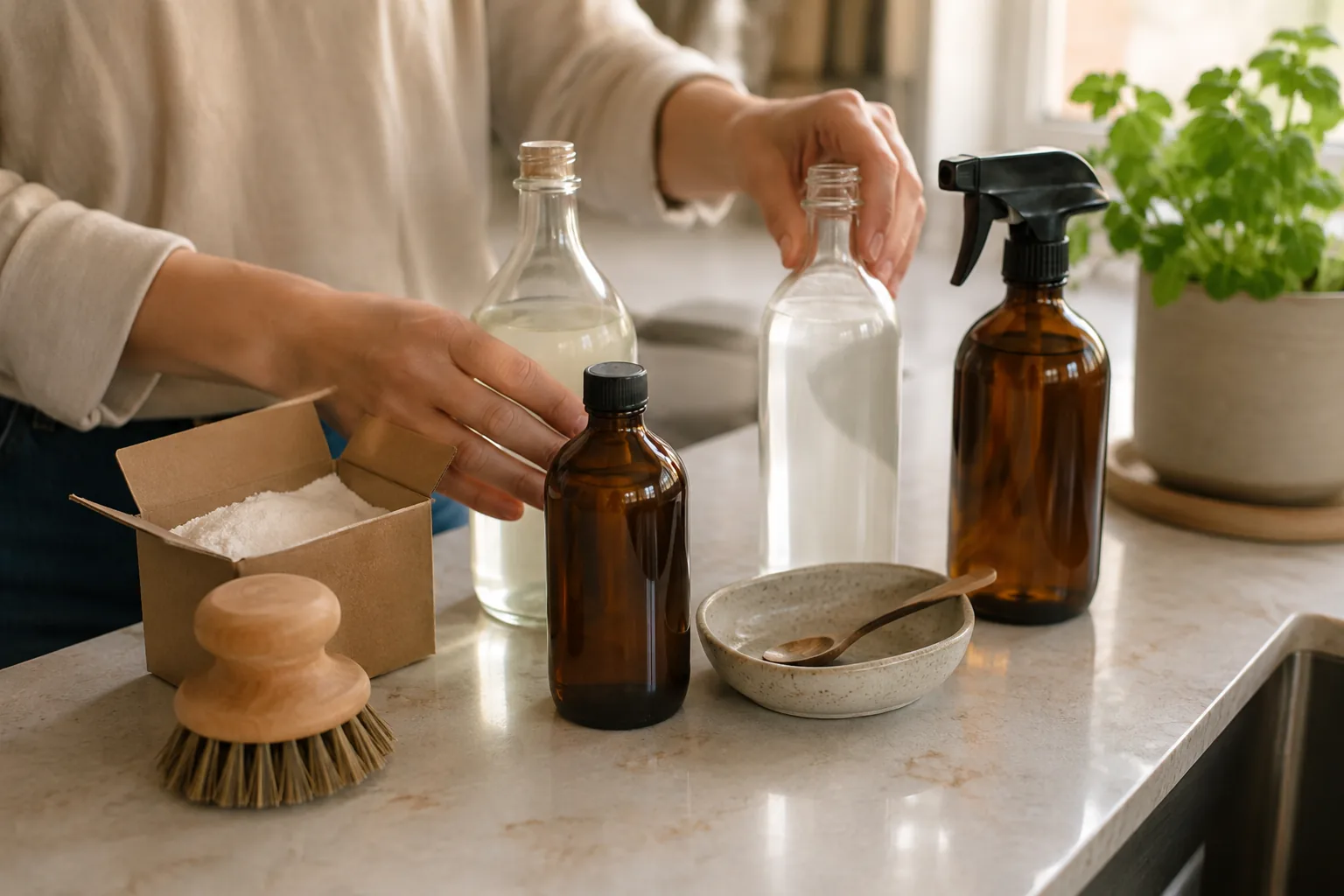
What “eco-friendly” actually means on a label
The words “natural,” “green,” and “eco” have no legal definition on a cleaning product label in the United States. Unlike “organic” on food, which the USDA regulates and enforces, a manufacturer can print “eco-friendly” on a bottle that still contains ammonia or synthetic fragrance and face no penalty for it. That gap is exactly where three concrete signals matter more than the front-label wording.
Ingredient transparency. A genuinely eco-conscious brand lists what is actually in the bottle, not just a category like “surfactant” or “fragrance.” California’s Cleaning Product Right to Know Act, passed in 2017, requires manufacturers selling products in the state to disclose ingredients on the label or online. That means Orange County shoppers can generally look up a full ingredient list for any national brand sold locally, even when the front label stays vague. If a company will not disclose what is in a formula sold here, that itself is worth noticing.
Third-party certification. EPA Safer Choice is the clearest signal available. To carry the Safer Choice label, every ingredient in a formula, not just the finished product, is reviewed by EPA scientists against health and environmental criteria before the logo can go on the bottle. Green Seal certification (the GS-37 standard for cleaning products) works similarly through an independent nonprofit, testing for volatile organic compound limits, aquatic toxicity, biodegradability, and packaging. Both require ongoing compliance, not a one-time check. A logo from either organization means a formula has been tested by someone other than the company selling it.
Biodegradability. “Biodegradable” on its own is another word with no required proof behind it. The credible version of that claim is “readily biodegradable,” a standard defined by OECD test protocols, which generally means the majority of the substance breaks down into carbon dioxide, water, and biomass within a set testing window rather than persisting in soil or waterways. Products carrying Safer Choice or Green Seal certification have already been evaluated against this bar. Products that only print “biodegradable” with no certification attached have not necessarily been tested at all.
Greenwashing red flags
These patterns show up constantly on cleaning product shelves, and recognizing them takes less time than reading a full ingredient panel every visit:
- A green leaf, a drop of water, or “plant-powered” on the front, with no certification logo anywhere on the bottle. Imagery is not evidence.
- “Fragrance” listed as a single ingredient. In most states, this word can legally represent a proprietary blend of dozens of undisclosed compounds. California’s disclosure law has narrowed this loophole for products sold here, but the practice is still common nationally.
- “Non-toxic” without a certification behind it. No US agency defines or enforces this specific word on a cleaning label.
- A long ingredient list that reads like a lab report but never states concentration or purpose. Padding a label with plant-derived-sounding words does not mean the formula is mostly plant-derived.
- Comparisons to “harsh chemicals” instead of naming what the product avoids. A specific claim, “no chlorine bleach, no ammonia,” is checkable. A vague one is not.
- Certification badges that are not from EPA Safer Choice, Green Seal, or a similarly recognized third party. Some brands design their own seal that looks official but represents nothing external.
Shopping by category
Different rooms call for different chemistry, and the eco-friendly version of each category has its own trade-offs worth knowing before you buy.
| Category | Look for | Skip |
|---|---|---|
| All-purpose | Plant-derived surfactants, full ingredient disclosure, concentrate or refill option | Labels listing only “fragrance” or “surfactants” as ingredients |
| Glass and mirror | “Ammonia-free” stated plainly, vinegar or castile-soap based formulas | Blue sprays with ammonia buried in fine print |
| Bathroom and toilet | Citric acid or vinegar-based descalers for scrubbing; hydrogen peroxide-based for real disinfecting | Chlorine bleach-based sprays for routine, non-illness cleaning |
| Floor | pH-neutral, non-wax for hardwood; diluted vinegar for tile and stone (not natural stone) | Wax-based “shine” formulas that build up residue over time |
| Laundry and dish soap | Fragrance-free or plant-based detergent, biodegradable dish soap | Optical brighteners and synthetic fragrance on items touching skin for hours |
All-purpose cleaners. This is the product used most often in a house, so it is worth getting right first. Coconut or corn-derived surfactants clean effectively without the residue that ammonia-based sprays can leave on countertops and cabinet fronts. Concentrates that you dilute yourself, rather than ready-to-use sprays shipped mostly as water, cut down on plastic and shipping weight, and tend to be cheaper per use once diluted.
Glass and mirror cleaners. Ammonia is what makes conventional blue glass cleaner streak-free fast, but it is also what leaves sharp fumes in a closed bathroom or a car interior on a hot day. A mix of water, white vinegar, and a drop of castile soap gets the same streak-free result without the fumes. If buying instead of mixing, “ammonia-free” needs to be stated plainly on the front, since some brands still include it while burying that fact in the ingredient panel.
Bathroom and toilet cleaners. This category is where “natural” claims get tested hardest, because a toilet bowl and shower actually need to kill things, not just look clean. Citric acid and vinegar-based descalers handle soap scum and hard water spots well on a routine basis. But after illness in the household, vinegar alone is not a reliable disinfectant. Hydrogen peroxide-based cleaners are the genuinely effective non-toxic exception here, since hydrogen peroxide is an actual EPA-registered disinfectant at the right concentration and contact time, unlike most “natural” bathroom sprays on the shelf.
Floor cleaners. Hardwood needs a pH-neutral, non-wax formula, since wax-based “shine” products build up a dull film over repeated use and can eventually require professional stripping to correct. Tile and sealed stone do well with a diluted vinegar solution. Natural stone like marble, granite, or travertine is the exception: the acid in vinegar etches these surfaces permanently, so a pH-neutral stone cleaner is the only safe eco-friendly option there.
Laundry and dish soap. The same logic extends past the cleaning caddy. Fragrance-free or plant-based laundry detergent reduces what sits against skin on sheets and clothing for hours at a time, which matters more here than almost anywhere else in the house. Dish soap deserves the same scrutiny as an all-purpose cleaner, since residue from it ends up on plates, cups, and pet bowls directly rather than just on a counter that gets wiped again later.
A checklist for the store or the cart
Print this or save it to your phone before you shop:
- Flip the bottle over. Does it list actual ingredients, or just categories like “surfactant” and “fragrance”?
- Look for an EPA Safer Choice or Green Seal logo, not a brand’s own leaf icon.
- Check for “ammonia-free” or “chlorine-free” stated directly, if the product is glass or bathroom cleaner.
- For bathroom disinfecting specifically, confirm the product is EPA-registered as a disinfectant, not just labeled “antibacterial” or “kills germs.”
- Choose a concentrate or refill pouch over a ready-to-use spray when the option exists.
- Avoid single-use plastic trigger bottles for a product you will buy repeatedly; a reusable bottle with concentrate refills cuts plastic waste substantially over a year.
- Skip anything advertising itself primarily through scent rather than function.
- For laundry and dish soap, confirm “fragrance-free” or “plant-based” applies to the whole formula, not just a “sensitive skin” variant sold alongside the standard one.
What this looks like in practice
Switching a household over does not require replacing everything under the sink in one trip. Starting with whichever product gets used most, usually the all-purpose spray or the floor cleaner, and converting one category at a time is a realistic way to get through the whole list without the cost or waste of tossing half-used bottles. At Clover, this is also why every recurring cleaning and deep cleaning visit uses eco-friendly, pet-safe products by default, with no upcharge for choosing the non-toxic option. It is one example of the same standard described above applied at the scale of a full home visit rather than a single bottle.
Frequently asked questions
Are eco-friendly cleaners as effective as conventional ones? For everyday grime, grease, and surface dirt, yes. Plant-based surfactants cut through kitchen and bathroom buildup about as well as conventional ones. The one place eco-friendly options genuinely lag is true disinfection, where an EPA-registered product, which can be hydrogen peroxide-based and still non-toxic, is the right tool rather than a vinegar-based all-purpose spray.
What is the difference between “natural,” “green,” and “non-toxic” on a label? Legally, nothing. None of these three words are defined or enforced on cleaning product labels in the US. Treat all three as marketing language and look for a certification logo instead.
Is EPA Safer Choice the same as USDA Organic? No. USDA Organic applies to agricultural products, mainly food. EPA Safer Choice is a separate certification specifically for cleaning and other household products, evaluating ingredient safety and environmental impact rather than farming practices.
Do concentrated cleaners count as more eco-friendly than ready-to-use sprays? Generally yes, on packaging and shipping impact. A concentrate you dilute at home ships less water and plastic per use than a ready-to-use spray bottle, even when the underlying formula is otherwise similar.
Are essential-oil-scented cleaners a safer choice than synthetic fragrance? Essential oils are still fragrance compounds and can trigger sensitivities or asthma in some people, even though they are plant-derived. If scent sensitivity is a concern in your household, fragrance-free is the more reliable choice over any scented product, natural or synthetic.
Is vinegar an eco-friendly disinfectant? No. Vinegar cleans and removes some surface bacteria through scrubbing, but it is not a registered disinfectant and is not proven to reliably kill viruses like norovirus or flu on surfaces. For genuine disinfecting, a hydrogen peroxide-based or other EPA-registered product is needed.
What packaging should I actually look for? Concentrate pouches, refill options, and cardboard-based packaging over full plastic bottles all reduce waste per use. A reusable spray bottle paired with concentrate refills is generally the lowest-waste setup for a product used regularly.
Are eco-friendly cleaning products more expensive? Certified products are sometimes priced at a premium compared to store-brand conventional cleaners, but concentrates and refills often even that out or beat it per use, since you are not paying to ship mostly water in every bottle.
Do I need different products specifically because I have pets? Not entirely different products, but the same eco-friendly standard matters more. Pets walk on floors barefoot and groom themselves afterward, so residue from ammonia or bleach-based floor cleaners is a more direct, repeated exposure for them than for a person wearing shoes.
Can I trust “biodegradable” on a label without a certification attached? Not fully. “Biodegradable” alone is not a regulated claim in the US. “Readily biodegradable” tied to an OECD testing standard, or a Safer Choice or Green Seal certification that already accounts for it, is the more reliable version of the same claim.
Are DIY cleaners with vinegar and castile soap more eco-friendly than certified store-bought options? They can be, especially for glass and general surfaces, and they avoid packaging waste from buying pre-made bottles repeatedly. The trade-off is that DIY mixes are not disinfectants and have real material limits, vinegar should never touch natural stone or hardwood finish, so they work best as a complement to a couple of certified products rather than a full replacement for every category.
How should I dispose of empty cleaning product containers? Rinse the container and check the resin code on the bottom; most HDPE (2) and PET (1) trigger bottles are curbside recyclable once empty and rinsed, but trigger sprayers themselves often are not and may need to be removed first depending on your local program. For anything that held a registered disinfectant or concentrated formula, follow the disposal instructions on the label rather than assuming standard recycling applies.
If reading labels every time you shop is not how you want to spend a Saturday, our green cleaning vs. standard cleaning guide breaks down what you actually get with a professional green clean, and our recurring cleaning service uses eco-friendly, pet-safe products on every visit by default, so the choice is already made before your crew arrives.
or call +1 (949) 330-0081.