Cleaning Products You Should Never Mix at Home
Bleach mixed with ammonia, vinegar, or rubbing alcohol produces toxic gas, not a stronger clean. Hydrogen peroxide and vinegar combine into a corrosive acid, and layering two different drain cleaners can trigger a violent, caustic reaction. The short version: never combine cleaning products unless the label explicitly says the combination is safe, and treat a strong chemical smell after mixing as a signal to leave the room immediately, not a problem to push through.
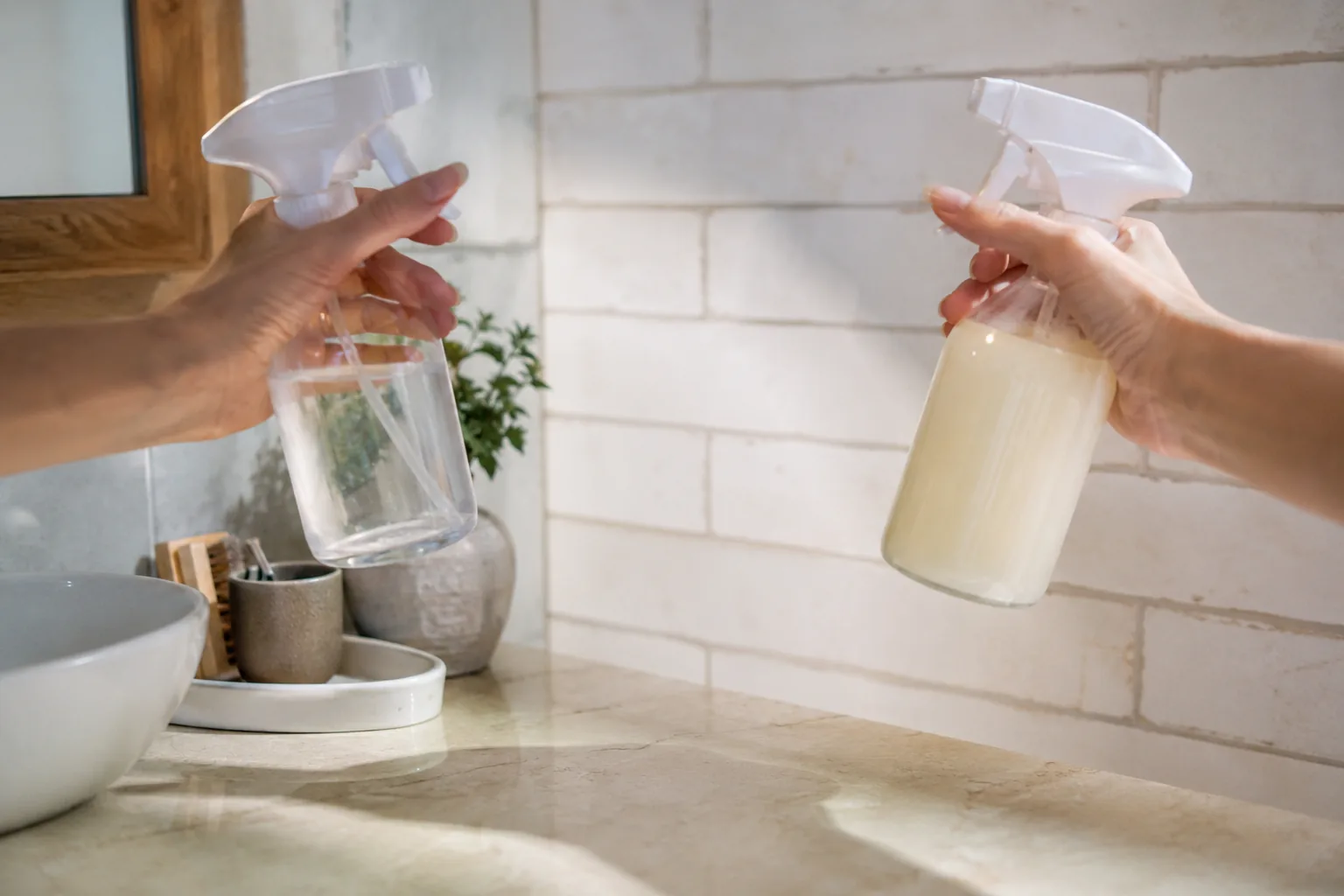
Bleach and ammonia
This is the most dangerous common combination, and one of the easiest to make by accident. Bleach (sodium hypochlorite) reacts with ammonia to form chloramine vapors, a gas that attacks the eyes, throat, and lungs. At low exposure it causes coughing and burning eyes. At higher concentrations in a closed room, it can cause chest pain, shortness of breath, and fluid buildup in the lungs.
This mix happens more than people expect, because ammonia shows up in places the front label does not always flag, including some glass and multi-surface sprays. It also happens around pet areas, since urine contains ammonia, so bleaching a litter box tray without rinsing first creates the same reaction. Never combine bleach with a product you have not confirmed is ammonia-free, and rinse thoroughly with plain water before switching between the two on the same surface.
Bleach and vinegar, or any acid
Mixing bleach with vinegar, or with any acidic cleaner, releases chlorine gas. Even brief, low-level exposure irritates the eyes, throat, and airways, and heavier exposure in a small bathroom can cause serious respiratory damage. Chlorine gas is also heavier than air, so it pools near the floor and in a bathtub, right where a person kneeling to scrub would be breathing it in.
This is an easy mistake to make when someone tries to “boost” a bleach clean with a vinegar rinse right afterward, thinking the acid will cut through remaining residue. It also happens with toilet bowl cleaners, since many are acidic even when the label does not use the word “acid.” Keep a full rinse and dry cycle between bleach and any acidic product, and ideally use them on different days.
Bleach and rubbing alcohol
Combining bleach with rubbing alcohol produces chloroform along with other chlorinated compounds. These are toxic to inhale and can cause dizziness, nausea, headache, and in a poorly ventilated space, loss of consciousness. This pairing is easy to stumble into with disinfecting wipes, since a lot of household wipes are alcohol-based, and wiping a surface with one right after cleaning it with bleach, without a real rinse in between, puts both chemicals in contact on the same wet surface. Pick one disinfectant for a given surface and cleaning pass, and rinse and dry it fully before reaching for the other.
Hydrogen peroxide and vinegar
On their own, hydrogen peroxide and vinegar are both reasonably safe, effective cleaners, which is part of why people assume combining them doubles the benefit. Mixed together in the same container, they form peracetic acid, a compound that is corrosive to skin, eyes, and the respiratory tract at higher concentrations. It is also unstable once mixed, so storing the combination in a spray bottle is worse than mixing it fresh, since pressure can build in a sealed container.
The safer approach is to use one or the other on a surface, with a rinse and dry step in between, rather than combining them in a single bottle. Apply hydrogen peroxide on its own at the concentration and contact time on the label, and save vinegar for mineral and soap scum removal on a separate pass.
Two different drain cleaners
Combining an acidic drain cleaner with an alkaline one triggers a violent, heat-releasing reaction. The mixture can splash caustic liquid out of the drain, and the reaction generates fumes along with enough heat to stress a pipe in some cases. This combination differs from the others on this list because it is not chlorine chemistry, it is a straightforward acid-base reaction that releases a lot of energy fast when both chemicals are concentrated and confined inside a pipe.
If one drain cleaner does not clear a clog, the instinct to try a second, different formula right after is understandable, but it is the wrong move. Flush the drain thoroughly with running water first, wait as long as the first product’s label recommends, and only then consider a different approach, ideally a mechanical one like a drain snake rather than a second chemical layered on top of the first.
Why these reactions happen
Most of the hazards above come down to the same underlying chemistry. Bleach is a chlorine-based oxidizer, and combining it with ammonia, acids, or alcohols knocks chlorine or chloramine gas loose into the air. That is why bleach is one side of nearly every entry on this list, it is the single most reactive product in a typical cleaning caddy.
The drain cleaner reaction works differently. It is a neutralization reaction between a strong acid and a strong base, and that reaction releases heat fast enough to cause splattering or a burst of steam inside a confined pipe. Neither situation is a rare or exotic mistake, both are the predictable result of two common, individually useful products meeting somewhere they should not.
Symptoms of exposure
Symptoms usually start where the gas or vapor first makes contact, the eyes and airway, and escalate the longer exposure continues.
Mild exposure looks like watering, stinging eyes, a scratchy or burning throat, sneezing, and a persistent cough that does not clear with a sip of water.
Moderate exposure adds chest tightness, wheezing, shortness of breath, a headache, and sometimes nausea or lightheadedness. This is the point where continuing to clean, even with a window cracked, is a mistake.
Severe exposure can include real difficulty breathing, a bluish tint to the lips or skin, and fluid buildup in the lungs. One detail worth knowing: pulmonary symptoms from chlorine or chloramine exposure can be delayed by several hours, so someone can feel mostly recovered after leaving the room and then develop worsening breathing trouble later that evening. That delay is why real breathing difficulty following a mixing incident is worth treating seriously even after the initial coughing fit passes.
Skin or eye contact with a drain cleaner splash is a separate issue from inhaled gas. Both acidic and alkaline drain cleaners cause chemical burns on contact, and the response is the same either way, flush with cool running water for at least fifteen to twenty minutes. Do not try to neutralize an acid splash with a base or an alkaline splash with an acid, that just adds a second uncontrolled reaction on top of a chemical burn.
Ventilation and immediate first response
The first move after smelling fumes from a mixed product is to leave the room, not to finish the task or air it out from inside. Get yourself, and anyone else including kids and pets, into fresh air right away.
- On your way out, open windows and doors if that takes only a few seconds and does not mean lingering in the fumes
- Turn on the exhaust fan if it is within easy reach, then leave
- Do not go back in to check on it. Crack the door open from outside first rather than walking back in
- Keep the room ventilating for at least fifteen to twenty minutes, longer for a small bathroom with no window, before anyone re-enters
- Watch for coughing, watery eyes, or a burning throat continuing once you are in fresh air. That is a sign the exposure was real, not just a strong smell
For eye or skin contact, flush with running water for fifteen to twenty minutes and remove any contaminated clothing. Mild symptoms that clear within twenty to thirty minutes in fresh air are generally reassuring, but breathing trouble, chest pain, or symptoms that do not improve are a medical situation. Poison Control (1-800-222-1222 in the US) can advise on a specific exposure, and serious breathing difficulty warrants 911 or an emergency room rather than waiting it out at home.
Safe storage practices
Good storage prevents most accidental mixing before it becomes a cleanup decision.
- Keep products in their original, labeled containers. Never transfer cleaners into an unlabeled spray bottle, since a mislabeled bottle is how a lot of accidental mixing happens
- Physically separate by chemical family, not just by shelf. Store chlorine-based products (bleach, some mildew removers) away from ammonia-based products (many glass and multi-surface cleaners) and away from acids (vinegar, toilet bowl cleaners, some drain openers), so a spill cannot bring two incompatible products into contact
- Keep drain cleaners separated from each other, not just from bleach, since the acid-versus-alkaline reaction is just as dangerous as a chlorine gas hazard
- Store away from heat sources, like above a water heater, since some reactions accelerate with temperature and pressure can build in a sealed container that gets warm
- Use childproof latches on any cabinet holding these products if kids or pets are in the home
- Do not store cleaning products near food, drink, or pet supplies
- Check bleach periodically. It loses strength over time but stays reactive, so an old, weakened bottle is not automatically a safe one
Do-not-mix quick reference
| Combination | What it produces | Why it is dangerous |
|---|---|---|
| Bleach + ammonia | Chloramine vapors | Irritates eyes and airway, can cause fluid in the lungs at high exposure |
| Bleach + vinegar or any acid | Chlorine gas | Irritates eyes, throat, and lungs, heavier than air so it pools low |
| Bleach + rubbing alcohol | Chloroform and other chlorinated compounds | Causes dizziness, nausea, possible loss of consciousness |
| Hydrogen peroxide + vinegar | Peracetic acid | Corrosive to skin, eyes, and lungs, unstable once mixed |
| Two different drain cleaners (acid + alkaline) | Violent exothermic reaction | Can splash caustic liquid, release heat and fumes, and stress pipes |
Why professional cleaners use single-purpose products
Trained cleaning crews do not layer products to boost results, and that is a deliberate choice, not a missed opportunity. Every commercial cleaning product ships with a safety data sheet spelling out exactly what it should never be combined with, and professional training includes following that sheet for each product rather than improvising combinations on the spot.
There is also a practical reason: a product engineered for one job, at the concentration and contact time on its label, already does that job correctly. A disinfectant needs a specific dwell time to actually kill what it claims to kill, and combining it with something else changes both its chemistry and its effectiveness, often in ways not visible until something goes wrong. One product per task, at the label’s instructions, is what makes the result reliable across many different homes instead of just the one where a homemade combination happened to work out.
This is also part of why eco-friendly, non-toxic products matter beyond kids and pets. A deep cleaning or recurring cleaning visit from a trained crew avoids these combinations by design, since every product used is chosen to be effective on its own. For more on choosing products for a given surface, see our guide to eco-friendly cleaning products and our breakdown of what vinegar and baking soda actually do well.
Frequently asked questions
Is it ever safe to mix two cleaning products? Only if both labels explicitly say the combination is safe. If either label is silent on it, use them separately with a rinse in between.
What should I do if I already mixed bleach and ammonia by accident? Leave the room immediately, get to fresh air, and ventilate the space for at least fifteen to twenty minutes before anyone re-enters. If breathing symptoms do not clear up quickly, call Poison Control or seek medical attention.
How long should I ventilate a room before it is safe to go back in? At least fifteen to twenty minutes with a window open or a fan running, longer for a small bathroom with no window. Crack the door from outside first to check rather than walking straight back in.
Can two products marketed as natural or non-toxic still be dangerous together? Yes. Hydrogen peroxide and vinegar are a good example, both are gentle on their own, but combined they form a corrosive acid. Natural is not the same as safe to mix with anything.
Is bleach and vinegar dangerous even in small amounts? Yes. A small splash of vinegar hitting a bleach-soaked surface can release enough chlorine gas to cause eye and throat irritation in a small bathroom.
What should I do if drain cleaner gets on my skin? Flush the area with cool running water for fifteen to twenty minutes and remove any contaminated clothing. Do not try to neutralize it with another chemical.
Are typical all-purpose cleaners safe to use around bleach? Not automatically. Some all-purpose and glass cleaners contain ammonia without a prominent label warning, so check the ingredient list before using one near or after bleach.
Can I mix bleach and hydrogen peroxide? No. That combination also produces a reaction that releases oxygen and heat rapidly, use one or the other, never both in the same container or on the same wet surface.
How can I tell if a product contains ammonia if the front label does not say so? Check the ingredient list for “ammonium hydroxide” or “ammonia,” and when in doubt, avoid using it in the same session as bleach.
Is it safe to store bleach and vinegar on the same shelf if both bottles are sealed? Sealed bottles are lower risk, but a spill or a knocked-over bottle can still bring them into contact. Separate shelves remove that risk rather than relying on nothing going wrong.
What is the difference between chlorine gas and chloramine gas? Chlorine gas comes from bleach reacting with an acid, chloramine vapors come from bleach reacting with ammonia. Both irritate the eyes and airway and can cause serious respiratory symptoms at higher exposure.
Should I call Poison Control or 911 if I am having symptoms after mixing cleaners? For irritation that is improving in fresh air, Poison Control (1-800-222-1222) can advise on next steps. For real difficulty breathing, chest pain, or worsening symptoms, call 911 or get to an emergency room.
Cleaning your home does not require any of this risk
None of these combinations make a surface cleaner than using one product correctly. They just add risk for no real benefit, and the fumes can linger in a bathroom or kitchen long after the smell seems to fade. Store your products separately, use one at a time, and ventilate whenever you are working with bleach or a strong disinfectant.
If you would rather hand this off entirely, a recurring cleaning or deep cleaning visit from Clover uses eco-friendly, pet-safe products chosen to work well on their own, so your home gets properly cleaned without a hazardous combination anywhere in the process.
or call +1 (949) 330-0081.