Daily Habits That Cut Your Cleaning Time
A few seconds spent wiping, rinsing, or putting something away the moment you touch it is almost always faster than the same task after it has had a day, or a week, to set in. The habits below are not a bigger to-do list. They are the tasks you already do, done at the point where they take the least time instead of later, when they take the most.
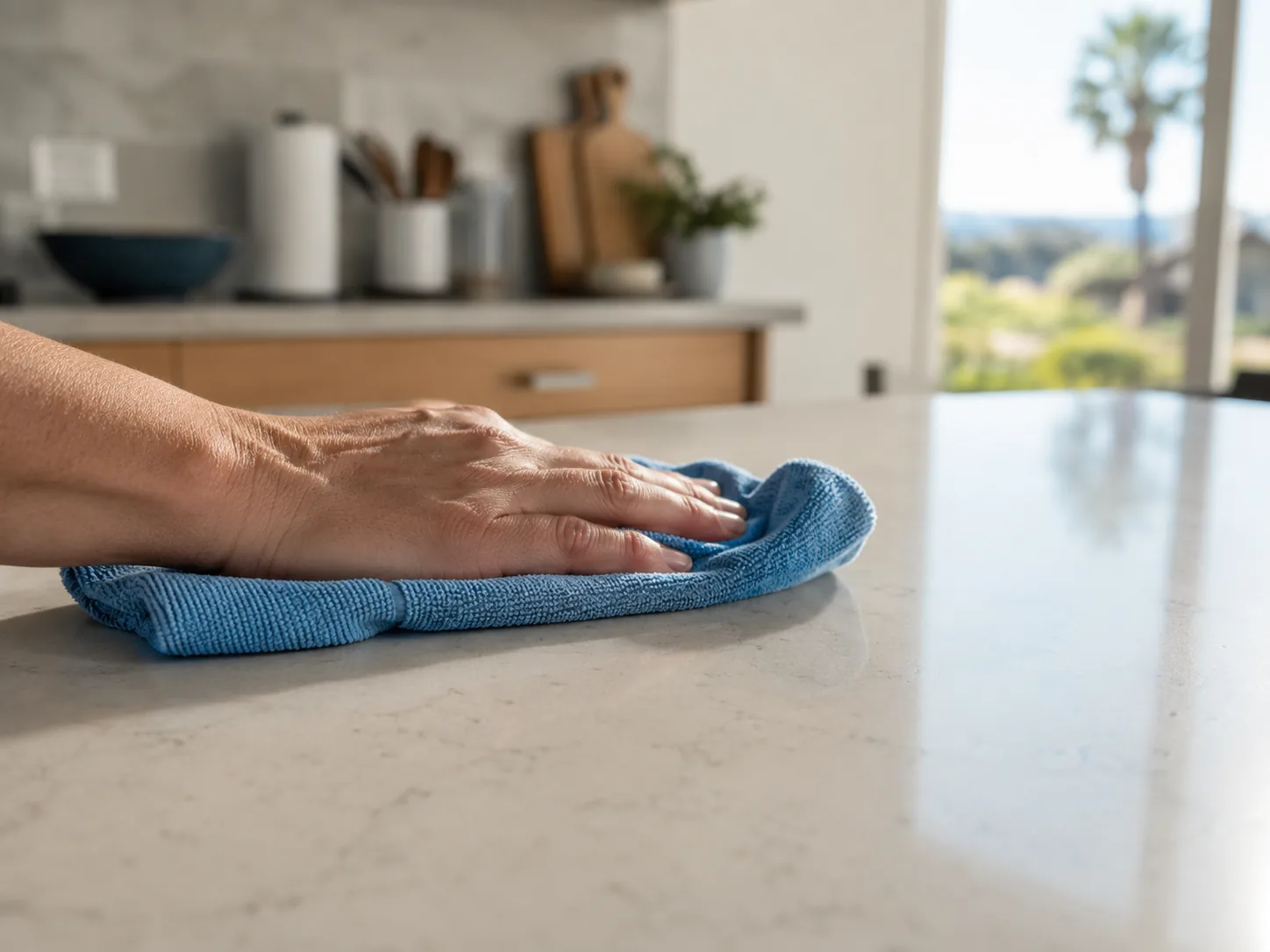
Why doing it now beats doing it later
Most cleaning tasks do not get harder because more time passes. They get harder because whatever caused the mess finishes a chemical or physical process while it sits. Toothpaste dries into a film that needs scrubbing instead of wiping. Grease on a stovetop hardens instead of staying soft enough to lift with a cloth. Soap scum reacts with hard water minerals and turns cloudy the longer it goes unrinsed.
The task itself does not change, only the state of the mess does. A wiped counter and a scrubbed counter involve the same motion, the difference is whether you are moving a cloth across a wet surface or working a cleaner into something that has bonded to it. Catch the mess before that change happens, and the same job takes a fraction of the time.
Kitchen
The kitchen generates more daily mess than any other room, which also means it has the most to gain from catching things early.
Daily, under a minute each: Wipe the stovetop and counters while something is still simmering or right after you finish cooking, while spills and splatter are still wet. Rinse a dish and load it into the dishwasher instead of setting it in the sink. Wipe up a spill the moment it happens rather than stepping around it.
Weekly, five to ten minutes: Wipe down the inside of the microwave, the fridge door and handles, and the front of the cabinets nearest the stove, where a thin layer of cooking grease builds up over several days of use.
A stovetop wiped while still warm takes about thirty seconds. The same stovetop after a week of hardened grease needs a degreaser, a scrub pad, and several minutes of real scrubbing to get back to the same result, the grease just had time to cure. For more on keeping this room under control between visits, see keeping your kitchen clean between cleanings.
Bathroom
Bathrooms punish delay more than almost any other room because of hard water. Left alone, water spots do not just sit there, they turn into mineral deposits that need a different cleaning approach to remove.
Daily, under a minute each: Squeegee the shower glass or wipe down the tub after the last shower of the day. Wipe the sink and counter after brushing your teeth, before toothpaste splatter dries.
Weekly, five to ten minutes: Wipe the shower walls and tub surround, clean the toilet exterior, and go over the counter and fixtures with a proper cleaner rather than just a wipe.
A squeegee pass takes fifteen to twenty seconds and prevents water spots from forming at all. Skip it for two weeks and those same spots turn into mineral buildup that needs a descaling product and real scrubbing to clear, the difference between rinsing something off and dissolving something that has hardened onto glass.
Bedroom
The bedroom does not generate mess the way a kitchen or bathroom does, but it accumulates clutter fast, and clutter is what makes a room look unclean even when it is not dirty.
Daily, under a minute: Make the bed. Put worn clothes in a hamper instead of on a chair or the floor.
Weekly, five minutes: Clear the nightstand of cups, wrappers, and stray items, and do a quick sweep of the floor for anything that has landed there during the week.
A bed made in under a minute changes how the whole room reads, and it removes the flat surface most people default to for dumping clothes and bags. Skip it for a week and that habit reverses: the unmade bed becomes the collection point, and a quick Saturday task turns into an actual sorting job.
Living room and common areas
This is the room guests see first and the one that shows neglect fastest, since it is where blankets, mail, and remotes tend to land throughout the day.
Daily, one to two minutes: Fold blankets and fluff cushions before bed. Clear stray dishes, mail, and any items that migrated in during the day back to where they belong.
Weekly, five to ten minutes: Dust visible surfaces, tables and shelves, and vacuum the highest-traffic path through the room.
A living room reset before bed takes about ninety seconds and means you walk into a tidy space the next morning instead of one that already looks like yesterday. The weekly vacuum matters more here than in low-traffic rooms, since dirt tracked across the same path daily gets pressed further into the fibers each time it is walked over.
Entryway and floors
Most of the dirt in a home comes through one door, on the bottom of shoes, which makes the entryway worth more attention than its size suggests.
Daily, under a minute: Shoes off at the door instead of walking them through the house. Sort mail straight into recycling or a tray instead of setting it on a counter.
Weekly, five minutes: Sweep or vacuum the entry area and the main paths leading away from it, where tracked-in dirt concentrates most.
Skipping shoes-off for even a few days means gravel and dirt from outside gets pressed into carpet fibers or scratched across hard flooring throughout the house instead of staying near the door. Confining it to one small area keeps the daily buildup down to a floor mat you can shake out, instead of a full-house sweep.
Laundry
Laundry does not run on the same daily rhythm as the rooms above, but the same logic applies.
Daily or every other day: Start a load once the hamper is reasonably full, and fold or hang each load the same day it comes out of the dryer.
Weekly: Wipe the washer gasket and empty the dryer’s lint trap.
A load folded straight out of the dryer takes a few minutes and goes into drawers. The same load left in a basket for three days wrinkles and gets picked through piece by piece, and often needs a re-wash if something with a stronger scent lands in the pile before it gets sorted.
A sample 10-minute daily routine
None of the habits above need a dedicated block of time on their own, but strung together at one point in the day, usually right before bed, they take about ten minutes total and reset the home for the next morning.
| Time | Task |
|---|---|
| 0:00 - 1:00 | Make the bed |
| 1:00 - 3:00 | Kitchen wipe-down: counters, stovetop, rinse the sink |
| 3:00 - 4:00 | Load or start the dishwasher |
| 4:00 - 5:00 | Bathroom quick wipe: sink and counter |
| 5:00 - 7:00 | Living room reset: fold blankets, clear stray items, fluff cushions |
| 7:00 - 8:00 | Entryway: shoes and bags put away, mail sorted |
| 8:00 - 10:00 | One load of laundry started, or a quick floor pass through the highest-traffic room |
The order matters less than the consistency. Some nights the kitchen needs the full two minutes and the living room needs none, other nights it is reversed. The point is to touch every room once a day so nothing goes more than 24 hours without a reset, which is short enough that mess never has time to compound.
How daily habits extend time between professional cleanings
Daily habits and a professional clean are not solving the same problem, which is why they work together. The habits above manage the surface layer, counters, sinks, floors, things that get touched every day. They do not reach what builds up regardless of how consistent you are: dust inside vents, grime worked into grout lines, the inside of an oven, or the seal around a fridge door. Those need a real deep clean on a schedule.
What daily habits change is how fast that deeper buildup accumulates. A home wiped and squeegeed daily still needs its grout, vents, and appliance interiors handled eventually, but the crew is maintaining it instead of catching up on months of compounded grease and scale, a meaningfully shorter job either way. For a broader look at how these habits stretch the gap between visits across the whole house, see how to keep your house clean longer between professional cleanings.
Frequently Asked Questions
How much time do these habits actually save each week? It depends on the household, how much cooking happens, how many people live there. What is consistent is the direction, not a fixed number: a spill wiped immediately takes seconds, the same spill scrubbed a week later takes minutes, and that gap repeats many times a week in a normal home.
What if I skip a day, does it ruin the habit? No. Missing a day means that day’s mess sits a little longer, not that the habit resets. The value comes from doing it most days, not from a perfect streak. Pick the routine back up the next day and the buildup from one missed night is still manageable.
Do these habits replace a deep clean? No. They control what accumulates on visible, frequently touched surfaces. They do not reach grout, baseboards, vents, or the inside of appliances, which need a scheduled deep clean regardless of how consistent your daily habits are.
If I can only start with one habit, which one matters most? Wiping the kitchen counters and stovetop right after cooking. The kitchen generates the most daily mess of any room, and grease left overnight is one of the fastest messes to go from a wipe to a scrub.
How do I get the rest of the household to actually do this? Make the habit require less effort than the alternative. A shoe rack by the door gets used because it is easier than walking past it. A mail tray gets used because sorting into it takes the same effort as setting mail down. Habits that depend on willpower fade, habits that remove a step tend to stick.
I don’t have a fixed 10 minutes free most nights. Can this be split up? Yes. The routine works as a single block or spread across the day, kitchen wipe-down after dinner, bathroom wipe after brushing teeth, living room reset whenever you pass through. What matters is that each task happens once daily, not at one specific time.
Do pets change which habits matter most? Yes, mainly around floors and entryways. A daily or every-other-day floor pass in high-traffic areas keeps pet hair and tracked-in dirt from building up between the weekly vacuum, and wiping paws at the door during wet weather cuts down on tracked mud.
How long before these habits feel automatic instead of like extra work? For most people, a habit like making the bed stops feeling like a task and starts happening without much thought after a few weeks of consistent repetition. Habits tied to something you already do daily, like brushing your teeth, stick faster than ones that need a separate reminder.
Keep the gap even shorter
Daily habits handle the surface layer. For the buildup they cannot reach, grout, vents, baseboards, the inside of appliances, a scheduled visit does the rest. Get an instant quote for recurring cleaning in your Orange County city and let your daily habits maintain a baseline a crew keeps reset on a schedule.
or call +1 (949) 330-0081.