Eco Natural
25 things you can clean with dish soap (and 8 you should not)
Dish soap is one of the best all-purpose cleaners in the house because it cuts grease and soil on most sealed, water-safe surfaces, rinses clean, and costs little. A few drops in a bowl of warm water handles counters, cabinets, glass, tile, and painted walls. It is the wrong choice for waxed wood, natural stone sealers, electronics, and cast iron seasoning, which we cover below.
Quick answer
- What you need: dish soap, warm water, microfiber cloths, a bowl or spray bottle.
- Time: 5 to 15 minutes for most jobs on this list.
- Cost of supplies: a bottle you already own.
- Difficulty: easy.
- Key rule: use less than you think, and rinse. Too much soap leaves a film that attracts dirt.
Why dish soap works
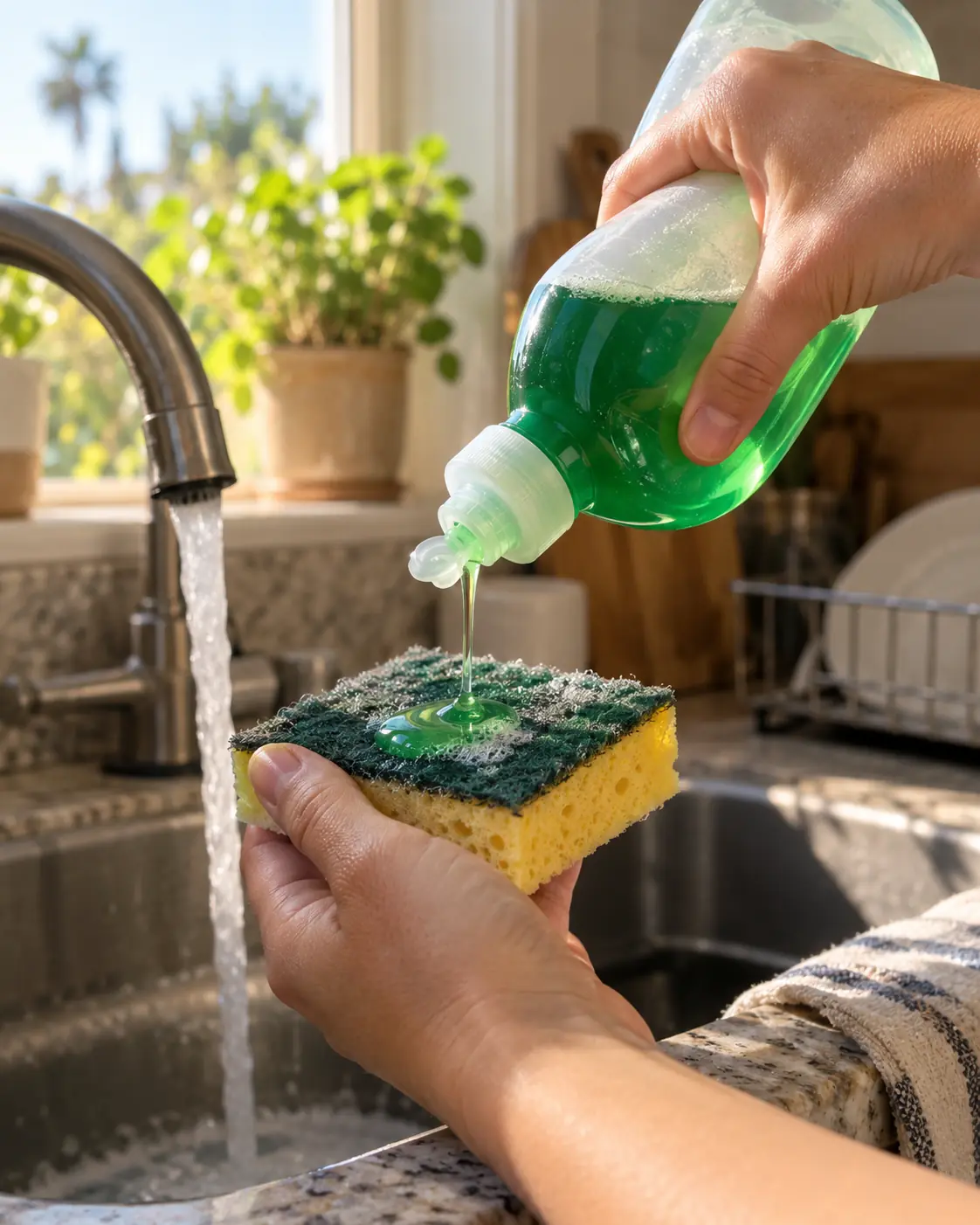
Dish soap is made of surfactants, molecules with one end that attracts water and one end that attracts oil. When you scrub, the oil end grabs onto grease and the water end lets the water carry it away. That is why dish soap beats plain water on a greasy stovetop, and why it works on skin oils, cooking splatter, and the sticky film on a kitchen cabinet.
It is designed to rinse well and to be gentle on hands, which is why it is a safer first try than most sprays. It does not dissolve limescale, it does not disinfect, and it will not lift rust. It cleans. That is the job, and it does it well.
Soap vs detergent
The word “soap” on a bottle of dish soap is usually a shortcut. Most liquid dish products are synthetic detergents, not true soaps made from fats and lye. The difference matters in hard water.
| Feature | True soap (such as castile) | Synthetic detergent (most dish liquids) |
|---|---|---|
| Source | Plant or animal fats | Petrochemical or plant-derived surfactants |
| Hard water | Reacts with minerals and leaves soap scum | Rinses much more cleanly |
| Grease cutting | Good | Usually stronger |
| Residue | Can leave film | Less likely |
| Best for | Hands, skin, gentle use | Dishes and surfaces |
Much of Orange County has hard water, so detergent-type dish liquid tends to rinse better than true soap on glass and fixtures. Check your local water quality report to see how hard yours is.
Dish soap vs laundry detergent vs hand soap
- Dish soap: formulated to cut grease and rinse without much foam residue. Best for surfaces.
- Laundry detergent: includes enzymes and brighteners meant for fabric. It can leave residue on hard surfaces and is not needed for general cleaning.
- Hand soap: often includes moisturizers and fragrance that leave a film. Fine for hands, poor for surfaces.
If you are building a supply cabinet from scratch, see our essential cleaning supplies list.
Standard dilution ratios
Dilution depends on the job. These are common starting points for typical dish liquid, but formulas vary in concentration, so check the bottle and start light.
| Job | Mix | Notes |
|---|---|---|
| General surface wipe | 1 teaspoon per 1 quart (about 1 liter) of warm water | Rinse with a damp cloth |
| Spray bottle all-purpose | 1/2 teaspoon per 16 oz spray bottle of water | Shake gently, avoid foaming |
| Heavy grease | 1 tablespoon per quart, apply directly with a sponge | Rinse well |
| Mop bucket (hard floors) | 1/2 teaspoon to 1 teaspoon per gallon | More is not better |
| Glass | A few drops in a spray bottle, then rinse with water | Use a squeegee or lint-free cloth |
| Hand-washing delicate items | A few drops in a sink of cool water | Follow the care label |
| Pot soak | A squirt in hot water | Soak 15 to 30 minutes |
How to tell you used too much
If a surface looks hazy after it dries, feels tacky, or sudsy residue appears when you wipe again, you added too much or did not rinse. Wipe with a cloth dampened with plain water and dry.
25 things you can clean with dish soap
Test in a hidden spot first, and follow the manufacturer’s care instructions for anything expensive.
Kitchen
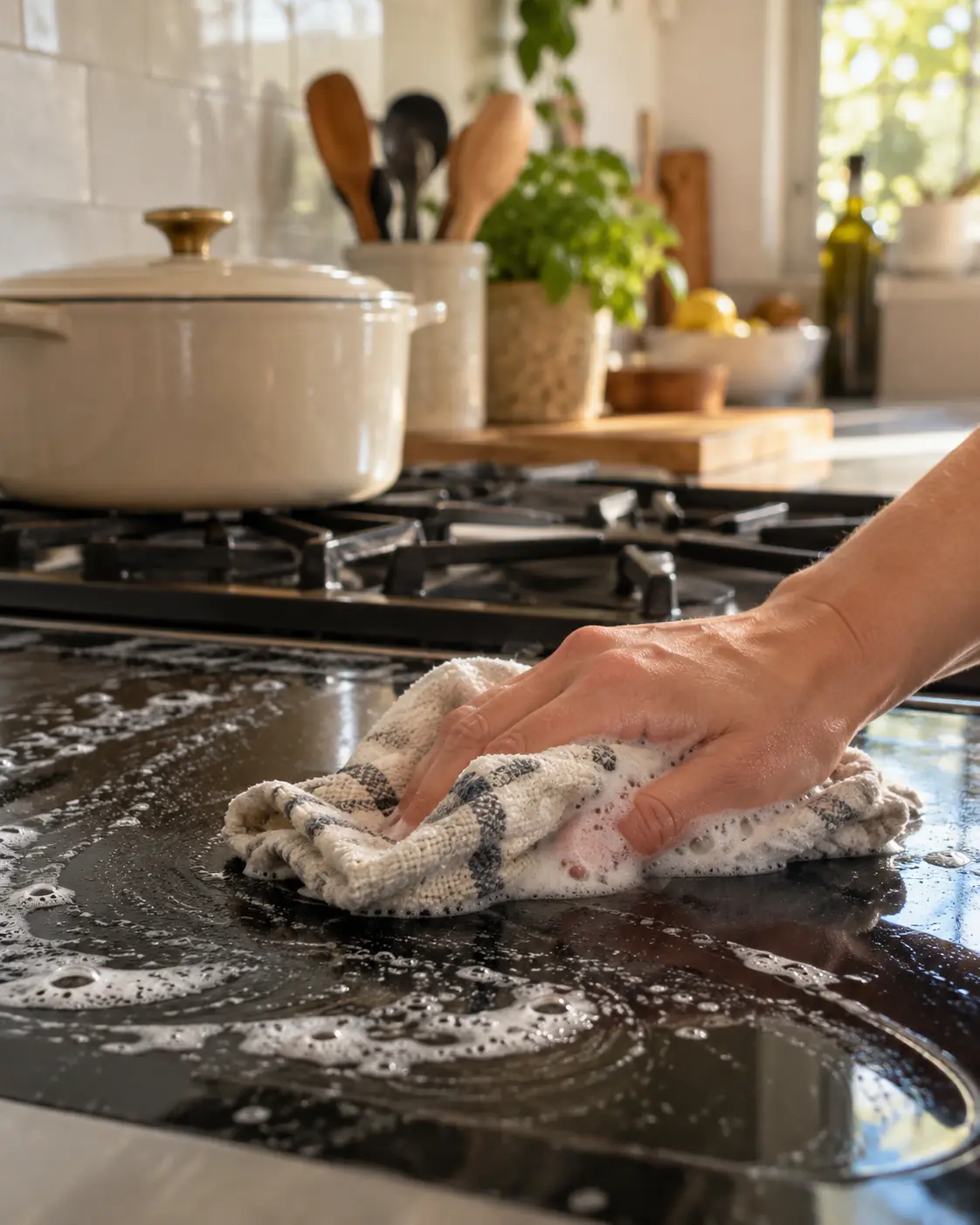
- Greasy countertops. Wipe with the general surface mix, then rinse. Skip it on unsealed stone.
- Cabinet fronts. Use a well-wrung cloth so water does not seep into edges and seams. Dry right away. For the grease zone around the stove, see our kitchen deep clean checklist.
- Stovetop (gas or electric coil). Remove grates and soak in hot water with a squirt of soap, then scrub with a non-scratch sponge.
- Stove knobs. Many pull off. Soak in warm soapy water, rinse, and dry fully.
- Range hood filter (metal mesh). Check the manual, then soak in hot, soapy water for 10 to 15 minutes and scrub with a soft brush.
- Stainless steel sink. Scrub with soap and a soft sponge, then rinse and dry with the grain. Read more in how to clean stainless steel appliances.
- Stainless steel appliances. A damp cloth with a drop of soap, then a clean damp cloth, then a dry microfiber.
- Refrigerator shelves and drawers. Remove glass shelves and let them reach room temperature before washing, since cold glass can crack with hot water.
- Microwave interior. Steam a bowl of water and a few drops of soap for a few minutes, let it stand, then wipe.
- Cutting boards (plastic and wood). Wash with hot soapy water and dry upright. Do not soak wood.
Bathroom
- Soap scum on tile and tub. Dish soap breaks down the oily component. A paste of baking soda and soap helps on stubborn spots.
- Shower curtain liner. Many liners can be wiped down or washed according to the label.
- Bathroom sink and fixtures. A damp cloth with soap, then a dry cloth to prevent water spots.
- Toothbrush holders and soap dishes. Soak and scrub, then rinse.
- Hairbrushes and combs. Remove hair, then swish in warm soapy water and rinse. Skip wooden handles.
Floors and walls
- Sealed vinyl and tile floors. Use the mop bucket ratio. Rinse with a second damp mop pass if the floor looks cloudy.
- Painted walls and baseboards. Use a damp microfiber with a drop of soap. Our baseboards and walls guide covers scuffs and paint finishes.
- Light switch plates and door frames. Wring the cloth almost dry, and avoid spraying near the switch.
Laundry and fabric
- Greasy stains on clothing. Dab a small amount of dish soap on a fresh oil stain, let it sit, then launder as usual. Check the care label first.
- Pre-treat collars and cuffs. Work a drop in, wait 10 minutes, wash.
- Hand-washing delicate items. A few drops in cool water, gentle squeeze, rinse.
- Makeup brushes. Swirl bristles in warm water with a tiny amount of soap, rinse, and dry flat.
Outdoors and miscellaneous
- Patio furniture (plastic, sealed metal). Warm soapy water and a soft brush.
- Car exterior (in a pinch). Dish soap can strip wax, so use it only when you plan to rewax, and rinse thoroughly. A dedicated car wash product is better for routine washing.
- Kids’ toys and bath toys. Wash plastic toys in warm soapy water and dry thoroughly to limit mildew in squeaky toys.
8 things you should not clean with dish soap
Dish soap is gentle, but “gentle” is not “universal.” These are the surfaces where it causes problems.
- Unsealed or waxed hardwood. Water and soap can dull wax and get into seams. Use a cleaner made for your finish, as described in our guide to hardwood floor care.
- Natural stone with an old or worn sealer. Soap can leave a film on stone, and a worn sealer lets moisture in. Use a pH-neutral stone cleaner.
- Electronics and screens. Liquid can seep into ports and speakers. Use a slightly damp microfiber cloth and the maker’s guidance.
- Cast iron cookware. Opinions differ on a little soap. Modern dish soap does not hurt well-seasoned cast iron if you dry and re-oil it, but long soaks and harsh scrubbing strip the seasoning. Rinse quickly, dry on the stove, and oil lightly.
- Non-stick pans with scratches. Gentle soap is fine, but avoid abrasive scrubbing. Dishwasher use may be limited by the maker.
- Fine wood furniture with an oil or wax finish. Moisture and soap can leave marks. Dust, then use a product the finish maker recommends.
- Carpet and upholstery (heavy use). Soap residue attracts dirt and leaves stiff patches. A tiny amount may work on a spot stain, but rinse extremely well. For fabric, see how to keep your sofa looking new.
- Leather and suede. Soap can dry or stain leather. Read our guide on leather furniture care.
Other cautions worth knowing: skip dish soap in your dishwasher (it foams), do not use it to wash a front-load washing machine, and do not pour it into a vehicle’s engine or radiator.
Is dish soap a disinfectant?
No. Dish soap removes germs by lifting them away with soil and water, but it is not a registered disinfectant. If you want to disinfect after washing, use a product that lists a surface type and a contact time on the label. Cleaning first and disinfecting second is the sequence professionals use because dirt blocks a disinfectant from working.
Can you mix dish soap with other things?
Some combinations are fine and some are not.
| Combination | Safe? | Notes |
|---|---|---|
| Dish soap and warm water | Yes | The base for nearly everything |
| Dish soap and baking soda | Yes | Makes a mild scrubbing paste |
| Dish soap and white vinegar | Generally safe | Vinegar can cut the soap’s effect, and it is a poor choice on stone |
| Dish soap and hydrogen peroxide | Use with care | Mix fresh. Do not store the mixture in a sealed bottle |
| Dish soap and bleach | No | Do not mix |
| Dish soap and ammonia | No | Do not mix |
| Dish soap and another cleaner | Avoid | If you must switch, rinse fully first |
Never combine bleach with ammonia or acids. If you are unsure, read cleaning products you should never mix. The mild vinegar and baking soda combination is covered in natural cleaning with vinegar and baking soda.
Does the brand matter?
Not much for general cleaning. What matters is concentration. Ultra or concentrated formulas need fewer drops. Look at the label for grease-cutting claims, and choose a fragrance-free version if anyone in your home is sensitive. For eco-minded households, plant-based surfactants and minimal dyes are options discussed in our eco-friendly products guide. We do not rank brands because performance depends on your water and your mess.
How to clean specific problems step by step
Greasy stovetop in 10 minutes
- Remove grates and burner caps (unplug electric units, and make sure gas is off).
- Fill a sink or tub with hot water and a squirt of dish soap. Soak the grates for 10 to 15 minutes.
- Wipe the stovetop with a hot, soapy cloth.
- Scrub the grates with a non-scratch sponge.
- Rinse everything and dry before reassembling.
The first time you do this on a very greasy stove, expect to repeat steps 3 and 4. The grease on the cooktop is polymerized, and a second pass often does what the first could not.
Cloudy shower glass and tile
Soap scum is soap combined with minerals, so a soap-based cleaner alone may not remove it fully. Try this sequence:
- Wet the surface with warm water.
- Apply dish soap on a sponge and scrub in circles.
- Rinse and squeegee.
- If cloudiness remains, it is probably mineral film, and an acid-based descaler is the next step on glass (not on stone).
Our guide to bathroom cleaning routines explains how to keep the film from coming back.
Mopping with dish soap
You can mop sealed floors with dish soap, but the dose is tiny. Use about a half to one teaspoon per gallon of warm water, mop, then go over the floor once with plain water if you see streaks. Wring the mop well so water does not sit in seams. On laminate and engineered wood, use as little water as possible, and check your flooring maker’s care instructions.
Grease on clothing
- Blot (do not rub) excess oil.
- Apply a small drop of dish soap to the stain.
- Gently work it in with your fingers or a soft brush.
- Let it sit 10 minutes.
- Wash in the warmest water the care label allows.
- Check that the stain is gone before drying, because heat sets stains.
Mistakes people make with dish soap
- Using too much. Bubbles do not equal cleaning. A heavy dose leaves residue.
- Skipping the rinse. Residue attracts dust and makes surfaces look dull.
- Using hot water on cold glass. The temperature difference can crack it.
- Soaking wood. Soaking leads to swelling, warping, and finish damage.
- Using dish soap in the dishwasher. It foams over. Use dishwasher detergent.
- Using it as a disinfectant. It cleans, it does not disinfect.
- Mixing it with bleach. Never combine.
- Scrubbing delicate surfaces hard. Soap is gentle, but the scrub pad may not be.
Skip this step: Greasy cabinets, baked-on stovetops, and soap scum that has been there for years take more time than a bottle of dish soap saves. A one-time deep cleaning handles those surfaces and gives you a clean baseline to maintain.
Does soap clean better with warm or hot water?
Warm water helps soap dissolve and loosens grease. Hot water is better for greasy pots and for sanitizing dishes in a dishwasher cycle, but it can damage some surfaces, crack cold glass, and irritate hands. For most surface cleaning, warm is enough.
Dish soap safety
- Keep it away from eyes. Rinse with water if it splashes.
- Do not ingest it. Store it out of reach of children and pets.
- Some people react to fragrance or dyes. Choose fragrance-free if you notice irritation.
- Wear gloves for long soaking sessions.
- Do not pour large amounts into a septic system or storm drain. Use the dose on the label.
How to keep surfaces clean after
A wipe-down habit matters more than a power cleaner. After cooking, wipe the counters and stovetop with a damp soapy cloth. Once a week, wash the sink and the faucet base. Once a month, soak the stove grates and range hood filter. The habits in our guide to keeping the kitchen clean between cleanings fit this approach.
| Frequency | Dish soap task |
|---|---|
| After cooking | Wipe counters and stovetop |
| Daily | Wash sink and wipe faucet |
| Weekly | Wipe cabinet fronts, microwave, and fridge handles |
| Monthly | Soak stove grates, knobs, and range hood filter |
| Seasonally | Wash patio furniture and shower liners |
Orange County angle
Hard water is common across much of Orange County, so you may see spots on faucets and glass even after washing. Dish soap cleans the soil but not the mineral spots, so dry fixtures with a microfiber after cleaning, and use a descaler for the minerals. Salt air near the coast and fine dust during Santa Ana wind days mean outdoor furniture and window sills get gritty quickly. Rinse off the grit with water before scrubbing with soap, since grit is what scratches surfaces. If you are in a condo or an HOA community, check the rules before washing balconies, because runoff may be restricted.
When to call a professional
Dish soap is a strong choice for daily and weekly upkeep. It will not remove years of baked-on grease, hard water scale, or deep stains in upholstery. When those problems show up, a professional has stronger tools and the time to do the job without damaging the surface.
If the real issue is a sofa that looks dirty, a mattress that smells, or a rug that needs more than soap, our team handles upholstery cleaning and mattress cleaning with the right extraction equipment, priced per item. For a house reset, recurring cleaning keeps surfaces at the level you can maintain with a bottle of soap. Get an instant number at our pricing page.
Frequently asked questions
What else can you use dish soap for? Beyond dishes, you can wash countertops, cabinets, sinks, tile, glass, painted walls, sealed floors, patio furniture, and pre-treat grease stains on clothing. Avoid it on waxed wood, unsealed stone, electronics, and leather.
Can I use dish soap to mop floors? Yes, on sealed hard floors. Use about a half to one teaspoon per gallon of warm water, wring the mop well, and rinse if the floor looks cloudy. Avoid it on waxed or unsealed wood.
Is dish soap a disinfectant? No. It cleans and removes germs along with soil, but it does not kill them. Use a registered disinfectant with the listed contact time when you need one.
Can you mix dish soap and vinegar? It is generally considered safe to combine them, though vinegar can weaken the soap’s cleaning action. Vinegar also damages natural stone, so do not use the mixture there.
Can you use dish soap in a washing machine? No. Dish soap creates far too many suds for a washing machine and can overflow or damage it. Use laundry detergent. A teaspoon of dish soap on a stain as a pre-treatment is a different use and is fine.
Can you put dish soap in the dishwasher? No. It foams heavily and can flood your kitchen. Use dishwasher detergent only.
Is dish soap safe for pets? Diluted dish soap on household surfaces is generally low risk, but it can irritate skin and stomachs. Rinse floors and let them dry before pets return. Do not use it to bathe a pet unless your vet says to.
What is the difference between dish soap and detergent? True soap is made from fats. Most dish liquids are synthetic detergents that cut grease and rinse cleanly, even in hard water.
Does Dawn work better than other brands? Concentration and formula matter more than the name. We do not rank brands because results depend on your water and your mess.
How much dish soap should I use for cleaning? A teaspoon per quart of warm water is a common starting point for surfaces. Use more for grease soaks, less for floors.
Next step
For the jobs dish soap cannot finish, get a quote on our pricing page, or learn what a deep cleaning covers. We send crews from Irvine across Orange County, including the Irvine area.