Eco Natural
Eco-Friendly, Pet-Safe House Cleaning in Orange County: What It Really Means
“Eco-friendly” and “pet-safe” are descriptions, not guarantees. There is no single legal definition that covers every cleaning product or every service, which is why two companies can both use the words and clean in very different ways. For a household with a dog, a cat, a baby or someone who is sensitive to fragrance, what matters is how a crew actually works: which products come into your home, how they are used, how they are kept away from animals, and how honest the company is about what the words mean. This guide explains what eco-friendly, pet-safe house cleaning means in practice, what it does not mean, and the questions that separate a real approach from a label.
We use eco-friendly, pet-safe products in every home we clean, and we try to be plain about what that does and does not promise. We do not claim any product is hypoallergenic, medically tested or certified, and you should be cautious of anyone who does without showing you evidence. Below you will find the honest version, plus a checklist you can use with any cleaner.
Quick answer
- Eco-friendly generally means products and methods chosen to reduce harsh chemicals, strong fumes and unnecessary waste. It is not a guarantee of zero risk.
- Pet-safe generally means products chosen and used with animals in mind, together with habits such as keeping pets away from wet floors. It is not a promise that nothing could ever bother a pet.
- Neither term is a certification. Ask what is actually used, and read labels yourself.
- Good practice matters more than a label: correct dilution, ventilation, no mixing, rinsing surfaces pets touch, and keeping pets out of wet areas.
- Our standard: eco-friendly, pet-safe products, insured, bonded and background-checked cleaners, a free re-clean if something is missed (tell us within 24 hours), and no need for you to be home.
- Cost: no premium. A recurring clean for a 2 bed / 2 bath home is $180 before discounts, the same formula as everything else.
What “eco-friendly” can and cannot mean
When people say eco-friendly cleaning, they usually mean some combination of the following:
- Fewer harsh chemicals. Products without strong solvents or heavy fumes where a gentler option works.
- Less fragrance. Strong artificial scents can bother people with sensitive airways, and they do not make a home cleaner.
- Less waste. Reusable microfiber cloths instead of piles of paper towels, and concentrated products diluted correctly.
- Appropriate use. Using the mildest product that does the job, and a stronger one only when a surface or a stain needs it.
What it does not mean:
- It does not mean “chemical-free.” Water is a chemical. Vinegar is a chemical. Even natural-sounding ingredients can irritate skin or damage surfaces.
- It does not mean “safe to eat” or “safe to drink.” Cleaning products of any kind belong out of reach of children and pets.
- It does not mean every product works on every surface. Our guide to green cleaning vs standard cleaning explains where gentler products work well and where a stronger option is sometimes the right call.
- It does not mean certified. Some products carry independent labels and others do not. We do not make certification claims about the products we use, so you will not find one here.
You can read how we approach this on our green cleaning page, and see a plain overview of what to look for in the guide to eco-friendly cleaning products.
What “pet-safe” can and cannot mean
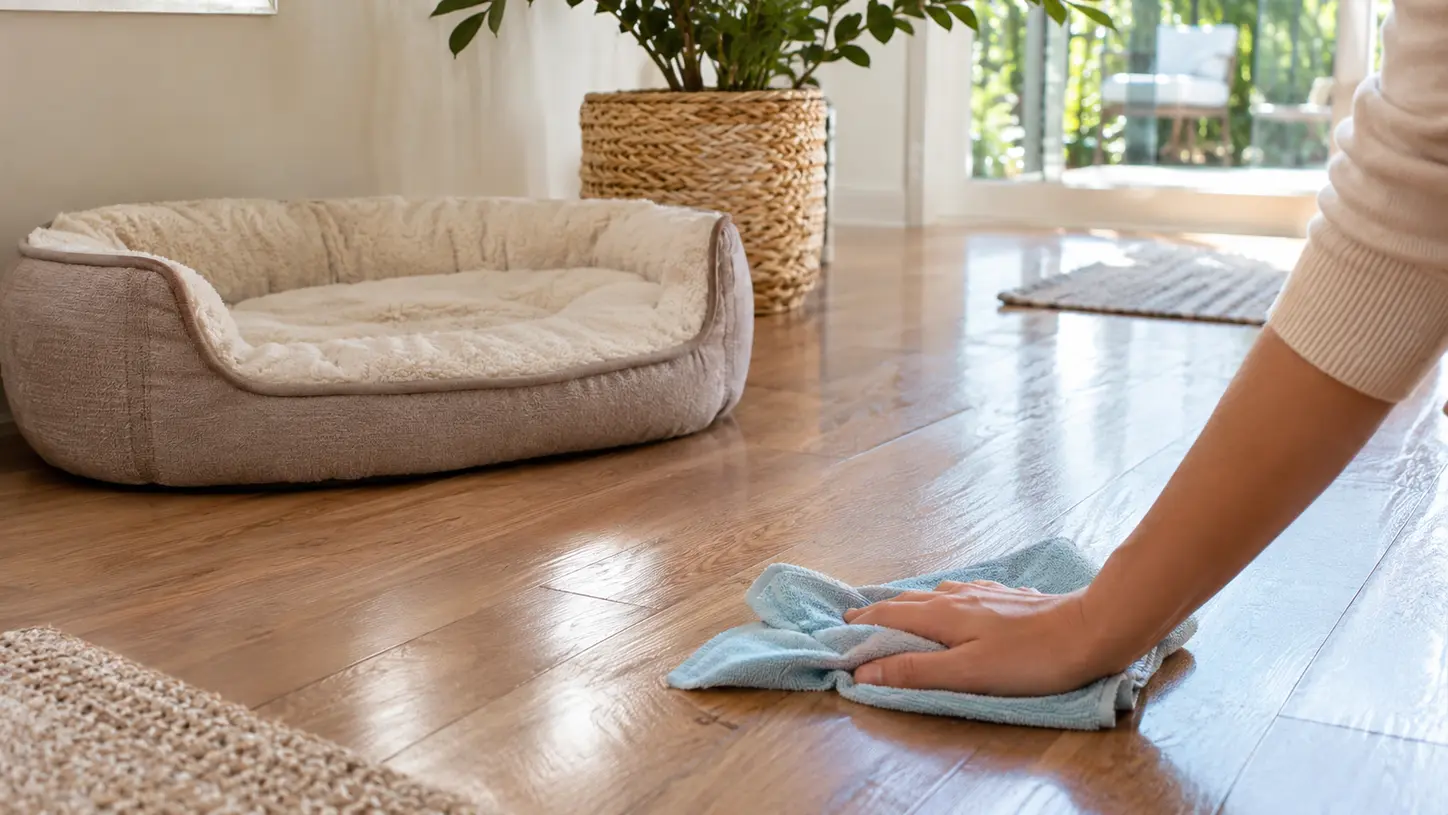
Pets live closer to the floor than people. They walk through what you mop, lick their paws, chew on things and sleep on soft furniture. A pet-safe approach pays attention to those habits.
What a pet-safe approach usually includes:
- Products chosen with animals in mind, avoiding common irritants where an alternative works.
- Keeping pets out of wet areas until floors and surfaces dry.
- Ventilation while products are in use.
- Proper dilution and rinsing on surfaces pets touch, like floors and bowl areas.
- Putting products away in closed containers and out of reach.
- Awareness of pet behavior, such as a cat that hides in closets or a dog that guards the door.
What it does not mean:
- It does not mean a product is harmless if a pet swallows it. If you think your pet has ingested a cleaner, call your veterinarian or a pet poison hotline right away.
- It does not mean every animal reacts the same way. Birds, cats, dogs, rabbits, reptiles and fish can have different sensitivities. If you have a bird or an aquarium, tell the crew in advance. Birds in particular have sensitive respiratory systems.
- It does not mean fragrance-free unless someone says so and shows you.
Our guides to keeping a clean home with pets and house cleaning with pets: what to expect go through the practical side, including what to do with your animals on cleaning day.
Words on labels and what to ask
Marketing terms are not all equal. Here is a plain table for the words you will see.
| Phrase | What it often means | What to ask |
|---|---|---|
| Eco-friendly | Chosen to be gentler on people and the environment | Which products, and how are they used? |
| Green | Similar to eco-friendly, loosely defined | Is there any independent label, and what does it cover? |
| Natural | Ingredients from plants or minerals | Natural does not always mean mild; ask about irritation |
| Non-toxic | Often used loosely | Non-toxic to whom, and at what exposure? |
| Pet-safe | Chosen and used with pets in mind | What do you do when a pet is present? |
| Fragrance-free | No added scent | Does it also cover essential oils? |
| Hypoallergenic | Marketing term with no single standard for cleaners | Be cautious, and ask for evidence |
| Certified | Passed an independent program | Which program, and which product? |
We do not use the words “hypoallergenic” or “certified” about our service, because we cannot honestly make those claims for every home and every sensitivity. If someone in your household has asthma or a skin condition, talk to your doctor about triggers, and tell us what to avoid.
The real risks in household cleaning
Most cleaning-related accidents are not caused by a “toxic” brand. They come from how products are used. The common ones:
- Mixing products. Combining bleach with ammonia or with acids can release dangerous gas. Our article on cleaning products you should never mix is worth reading for any household.
- Using too much. More product does not clean better. It leaves residue that attracts dirt and that pets can pick up on their paws.
- Poor ventilation. Closed bathrooms and small spaces concentrate fumes.
- Leaving products where pets and kids can reach them.
- Residue on surfaces pets lie on or lick. Floors, food bowl areas and pet beds need rinsing.
- Aerosol sprays and air fresheners. They add particles and scent to the air without cleaning anything.
A professional crew reduces these risks mainly through habit: measuring, not guessing, using one product at a time, and rinsing where it matters.
A practical home checklist for pet and eco-friendly cleaning
Whether you clean yourself or hire help, this list works.
- Keep pets in a separate room while floors and surfaces are wet.
- Open windows or run a fan during cleaning.
- Use one product at a time and never mix.
- Rinse food bowl areas, pet beds and floors with plain water after cleaning.
- Wash pet bedding on a regular schedule, using a mild detergent. The bedding washing guide and the laundry detergent guide help with choices.
- Store products in closed containers, up high.
- Keep essential oils, diffusers and strongly scented candles away from birds and small animals, and ask your vet if you are unsure.
- Vacuum with a good filter to catch hair and dander. See the pet hair and allergens guide.
- Treat accidents quickly. The pet odor removal guide explains how.
- Wash your hands after cleaning.
Simple homemade options and their limits
Many people prefer to use pantry ingredients. They can work, with limits.
| Ingredient | Good for | Limits |
|---|---|---|
| Dish soap and warm water | Most everyday cleaning | Not a disinfectant |
| White vinegar, diluted | Hard water spots, glass, coffee maker | Damages natural stone and some finishes, strong smell |
| Baking soda | Gentle scrubbing, odors | Can scratch some surfaces if scrubbed hard |
| Microfiber cloth and water | Dust and light grime | Needs regular washing |
| Hydrogen peroxide, diluted | Stain lightening, some disinfecting | Can bleach fabric; do not mix with vinegar |
Our guides to natural cleaning with vinegar and baking soda, dish soap cleaning uses and the oven cleaning method without harsh chemicals show specific ways to use them. Remember that “natural” is not the same as “safe for everything.” Vinegar on granite or marble can etch the surface, as the granite and quartz care guide explains.
When a stronger product is the better choice
An honest eco-friendly approach is not “never use anything strong.” Sometimes the careful, responsible choice is a targeted stronger product, used correctly, instead of scrubbing for an hour or damaging a surface.
Examples:
- Heavy mold or mildew on grout, where a specific product and ventilation matter. See the guide to preventing mold and mildew in the bathroom.
- Baked-on grease or built-up mineral scale.
- Disinfecting after illness, when a label’s contact time matters.
In those cases the right steps are: read the label, wear gloves, ventilate, keep pets and children out, rinse and never mix. If you want a particular approach, say so. If you want only the gentlest options, say that too, and tell us which surfaces are your priority.
How we approach eco-friendly, pet-safe cleaning
This is what we do and what you can rely on:
- Eco-friendly, pet-safe products for the homes we clean.
- Insured, bonded and background-checked cleaners. The article on what insured, bonded and background-checked mean explains why it matters when a crew is in your home with your pets.
- No need for you to be home. Leave access instructions and tell us about your animals: names, hiding spots, and whether doors should stay shut.
- Free re-clean. If something is missed, tell us within 24 hours.
- Clear pricing. No premium for our approach.
What we do not claim:
- We do not claim any product is certified, hypoallergenic or medically tested.
- We do not promise a germ-free or allergen-free home.
- We do not promise that no pet will ever react to anything. Tell us about sensitivities and we adjust.
For what a first visit looks like, read what to expect from your first house cleaning and do house cleaners bring their own supplies. If you have a preference for specific products, tell us when you book.
What it costs
Choosing gentler products does not change our prices. A regular clean uses the same formula as every other: $60 base, plus $25 per bedroom, plus $35 per bathroom. Recurring discounts apply on top: 10% off monthly, 15% off biweekly and 20% off weekly.
| Home | Regular price | Monthly (10% off) | Biweekly (15% off) | Weekly (20% off) |
|---|---|---|---|---|
| 2 bed / 2 bath | $180 | $162 | $153 | $144 |
| 3 bed / 2 bath | $205 | $184.50 | $174.25 | $164 |
Add-ons are priced separately: pet hair $25, fridge $35, oven $35, laundry $25. A weekly clean for a three bedroom, two bathroom home with the pet hair add-on is $164 plus $25, or $189 for that visit. A deep cleaning is the formula times 1.5, so the same 3 bed / 2 bath home is $307.50 once. If you have a regular schedule in mind, see recurring cleaning and the guide to weekly vs biweekly vs monthly cleaning. New customers can ask about the $39 first-visit offer.
Furniture and carpet are priced separately by item. Pet odor treatment is $40 per treated item, and the details are in the carpet and upholstery cleaning cost guide. For general house pricing, read the house cleaning cost guide for Orange County.
Special households: babies, seniors and allergies
Eco-friendly and pet-safe thinking applies to anyone who spends a lot of time at floor level or indoors.
- New parents. Babies crawl and put hands in mouths, so floors and toys matter. Our guide to house cleaning for new parents covers the practical side.
- Seniors and aging parents. Fragrance and fumes can bother older adults, and safety on wet floors matters. See house cleaning for seniors and aging parents.
- Allergies and asthma. Dust, dander and pollen are bigger triggers than cleaning products in many homes. A regular schedule, damp dusting and a filtered vacuum help. Read how to reduce household allergens and how to reduce dust. Always follow your doctor’s advice for medical conditions.
Local notes for Orange County
Many Orange County homes have open windows for much of the year, indoor-outdoor living and pets that go to the beach or the park. That means sand, pollen and fine dust come in on paws. Doormats, a paw-wiping habit and a regular vacuum rhythm cut the load more than any product choice. We serve pet-owning households across the county, including Irvine and Laguna Beach. Our article on why Orange County homes get dusty fast explains the local pattern.
How to check any company’s claims
Use these questions with any cleaner, including us.
- Which products do you use, and can I see the labels?
- Do you use the same product on every surface?
- How do you handle homes with pets, birds or aquariums?
- Do you use fragrance, and can you skip it?
- What do you do with pets during the clean?
- Are your cleaners insured, bonded and background-checked?
- What is your policy if something is missed?
- Do you claim certifications, and which ones apply to which products?
The list of questions to ask before hiring a cleaning company and the red flags when hiring a house cleaner cover this in more depth.
Frequently asked questions
What does eco-friendly house cleaning mean?
It generally means products and methods chosen to avoid unnecessary harsh chemicals, strong fumes and waste. It is not a legal standard and not a promise of zero risk, so ask what is actually used in your home.
Are your products pet-safe?
We use eco-friendly, pet-safe products, and we keep pets in mind during the clean. No cleaning product is safe for a pet to swallow, so keep animals away from wet areas and stored products. If your pet has a health condition, tell us and your vet.
Are your products hypoallergenic or certified?
We do not make those claims. Hypoallergenic has no single standard for cleaning products, and we do not describe our products as certified. If you are sensitive to a particular ingredient or scent, tell us and we will adjust.
Should I be home or should I keep my pets somewhere?
You do not need to be home. Tell us where your pets are, whether any are shy or protective, and whether doors should stay closed. Many clients keep pets in one room or with a friend during the visit.
Will natural products clean as well as stronger ones?
For routine cleaning, usually yes. For heavy buildup or disinfecting, a stronger targeted product may do the job better, used carefully. A good crew picks by surface and dirt level, not by marketing.
Is vinegar safe for pets and for every surface?
Diluted vinegar is a common household cleaner, but it can damage natural stone and certain finishes, and the smell bothers some animals. It is not a disinfectant for every situation. Check the surface first.
Does eco-friendly cleaning cost more?
Not with us. Pricing follows the same formula whatever products are used. A 2 bed / 2 bath recurring clean is $180 before any frequency discount.
What if I am unhappy with the results?
Tell us within 24 hours and we re-clean anything we missed for free. You can also cancel or reschedule with 24 hours notice and no fee, and your card is charged after the clean, not before.
Ready to book a gentler clean?
Use the instant quote on our pricing page to see your price in under a minute, and add a note about your pets and any product preferences. There is no minimum booking and no upfront payment. To learn more about how we work, visit our green cleaning page, or read how to choose a house cleaning company in Orange County.