Care Habits
How to Clean a Bathtub: Soap Scum, Stains, and Textured Surfaces
The right way to clean a bathtub depends on what the tub is made of. Acrylic and fiberglass scratch and dull easily, so they need a soft cloth and a gentle cleaner. Porcelain enamel over steel or cast iron is harder, but it chips, and a chipped spot rusts. For most tubs the safe default is the same: warm water, dish soap, a soft sponge, a short soak time, and a thorough rinse.
This guide helps you identify your tub, match the cleaner to the material, handle soap scum, hard water, rust and textured non-slip floors, and avoid the products and tools that quietly ruin the finish.
Quick answer
- What you need: Dish soap, a non-scratch sponge or soft cloth, a soft brush, baking soda, an acid cleaner type such as citric acid or diluted white vinegar (for some materials), a squeegee or microfiber towel, gloves.
- Time: 15 to 20 minutes for a tub that is cleaned regularly. 45 to 90 minutes, mostly waiting, for heavy soap scum or hard water film.
- Cost of supplies: Low. Most of this is already under your sink.
- Difficulty: Easy for routine cleaning. Moderate for old scum, rust, or a textured floor.
- How often: A quick wipe after use if you can, a proper scrub every one to two weeks.
- Skip the DIY if: The surface is cracked, the finish is worn through to a rough layer, or the tub has been refinished and you do not know the product. Test gently first, or ask the refinisher for care instructions.
Identify your tub material first
Everything else in this guide depends on this step. Two tubs that look identical can need different care.
| Material | How to recognize it | Feels and sounds like | Main weakness |
|---|---|---|---|
| Acrylic | Lightweight, slightly warm to the touch, often a molded one-piece shape | Tapping sounds dull and plastic | Scratches and dulls from abrasives and harsh cleaners |
| Fiberglass | Common in older builder-grade alcoves and surrounds, often with a glossy gel coat | Slightly flexible when pressed on the rim, tapping sounds hollow | Gel coat wears thin, then stains and scuffs show |
| Porcelain enamel over steel | Cold, hard, glassy surface | Tapping sounds like a metal pan with a thin ceramic coat | Chips expose steel that can rust |
| Porcelain enamel over cast iron | Very heavy, thick rim, cold to the touch | Solid, deep sound when tapped | Chips and dull spots where enamel wears |
| Refinished (reglazed) tub | Looks glossy and new on an older shape | Can be a coating on top of any of the above | The coating can be damaged by abrasives and some chemicals |
A magnet helps. A magnet sticks to enamel over steel or cast iron but not to acrylic or fiberglass. If you are unsure, assume the softer material and use the gentlest method. You can always escalate. You cannot undo a scratch.
If your tub was refinished at some point (common in older Orange County homes and rentals), check with whoever did the work. Many refinishing coatings do not tolerate abrasive powders, ammonia, or strong acids.
What you need
| Item | What it does | Notes |
|---|---|---|
| Dish soap | Cuts body oils and soap film | The best first step on every material |
| Non-scratch sponge or microfiber cloth | Scrubs without marking | Avoid sponges with a green scouring side on acrylic and fiberglass |
| Soft toothbrush or small soft brush | Reaches around drains, overflow plates, and caulk lines | Keep one just for bathrooms |
| Baking soda | Mild abrasive paste for stubborn spots | Soft enough for most tubs, but still rub gently |
| Citric acid powder or diluted white vinegar | Dissolves mineral film and soap scum | Do not use on every material, see the table below |
| Oxygen bleach powder (sodium percarbonate) | Lifts organic stains without chlorine | Follow the label and test first |
| Squeegee or microfiber towel | Removes water so films cannot dry on the surface | The cheapest prevention tool in the bathroom |
| Rubber gloves, ventilation | Protects skin and lungs | Open a window or run the exhaust fan |
| Old towels or a plastic cup | For soaking and rinsing | Handy for vertical walls |
Do not use: steel wool, scouring powders with hard grit, razor blades, stiff wire brushes, or any cleaner you cannot identify on a soft tub.
Safety first
Bathroom cleaning is where most accidental chemical mixing happens, because people reach for three different bottles in a small, closed room.
- Never mix bleach with ammonia or with an acid. Mixing chlorine bleach with ammonia or with vinegar and other acids can release toxic gas. Use one product at a time and rinse the tub fully before switching products. Our guide to products you should never mix covers the list in detail.
- Ventilate. Run the exhaust fan and open a window or door.
- Wear gloves. Acids and degreasers can irritate skin, and hot water makes it worse.
- Test in a hidden spot. The inside edge near the drain or the back of the rim works well. Wait the full contact time before judging the result.
- Mind the floor of the tub. Wet soap and cleaners are slippery. Rinse completely and keep a mat or towel outside the tub.
- Check your tub’s care label or manufacturer page. Manufacturer instructions override anything general. If you can find the brand and model number, read their cleaning section.
Which cleaner works on which material
This is the table most guides skip. It is general guidance, not a promise. Always test and follow the label of any product you use.
| Cleaner type | Acrylic | Fiberglass | Porcelain enamel (steel or cast iron) | Notes |
|---|---|---|---|---|
| Dish soap and warm water | Safe | Safe | Safe | Start here every time |
| Baking soda paste | Usually safe with a soft cloth | Usually safe with a soft cloth | Safe | Light pressure only |
| Diluted white vinegar | Use briefly and rinse, some sources warn it can dull | Often used diluted, rinse well | Often used, but avoid long soaks on worn enamel | Test first and never combine with bleach |
| Citric acid solution | Short contact, rinse well | Short contact, rinse well | Short contact, rinse well | Good on mineral film, stop if it dulls the surface |
| Oxygen bleach (sodium percarbonate) | Test first | Test first | Usually fine | Dissolve in warm water per label |
| Chlorine bleach | Avoid, can discolor or weaken | Avoid on the gel coat | Occasional dilute use on sound white enamel, if the label allows | Never with ammonia or acids |
| Abrasive scouring powder | No | No | Only if the label allows and the enamel is in good shape | The most common cause of dull tubs |
| Magic eraser style melamine sponge | Gentle pass only, may dull | Gentle pass only, may dull | Usually fine | They work as a very fine abrasive |
| Plastic scraper | Careful use for scum ridges | Careful use | Careful use | Never metal |
The safest ladder is: soap and water first, then baking soda paste, then a mild acid for mineral film, then an oxygen-bleach soak for stains. Stop climbing as soon as the tub is clean.
Step by step: the standard clean
This is the method for a tub that gets cleaned every week or two. Allow about 20 minutes.
- Clear the tub (2 minutes). Remove bottles, razors, and the mat. Shake out the mat and set it aside. Run warm water over the walls and floor so the surface is wet, not dry.
- Pre-rinse (1 minute). Rinsing loosens loose soap film and makes the cleaner work evenly.
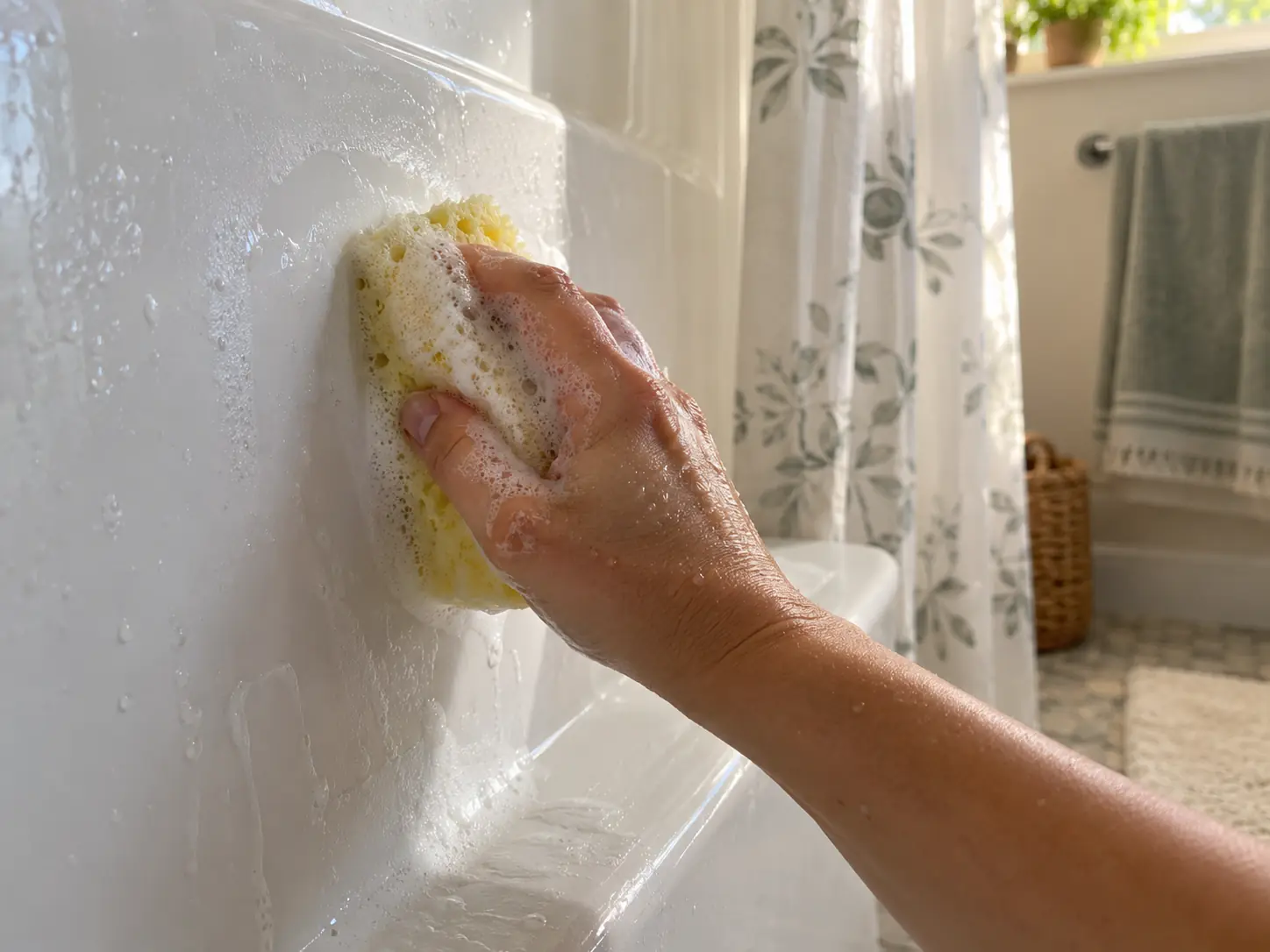
- Apply dish soap (1 minute). Squirt a bit of dish soap on a damp sponge and wipe the walls, rim, and floor. Dish soap is built to cut body oils and soap scum. Let it sit for 5 minutes.
- Scrub in sections (6 to 8 minutes). Work top down: walls, then the rim, then the floor. Use light, overlapping strokes with a soft cloth. Pressure is not the goal, contact time is.
- Detail the edges (3 minutes). Use the soft brush on the drain ring, overflow plate, faucet base, and along caulk lines. Hair and soap gather there.
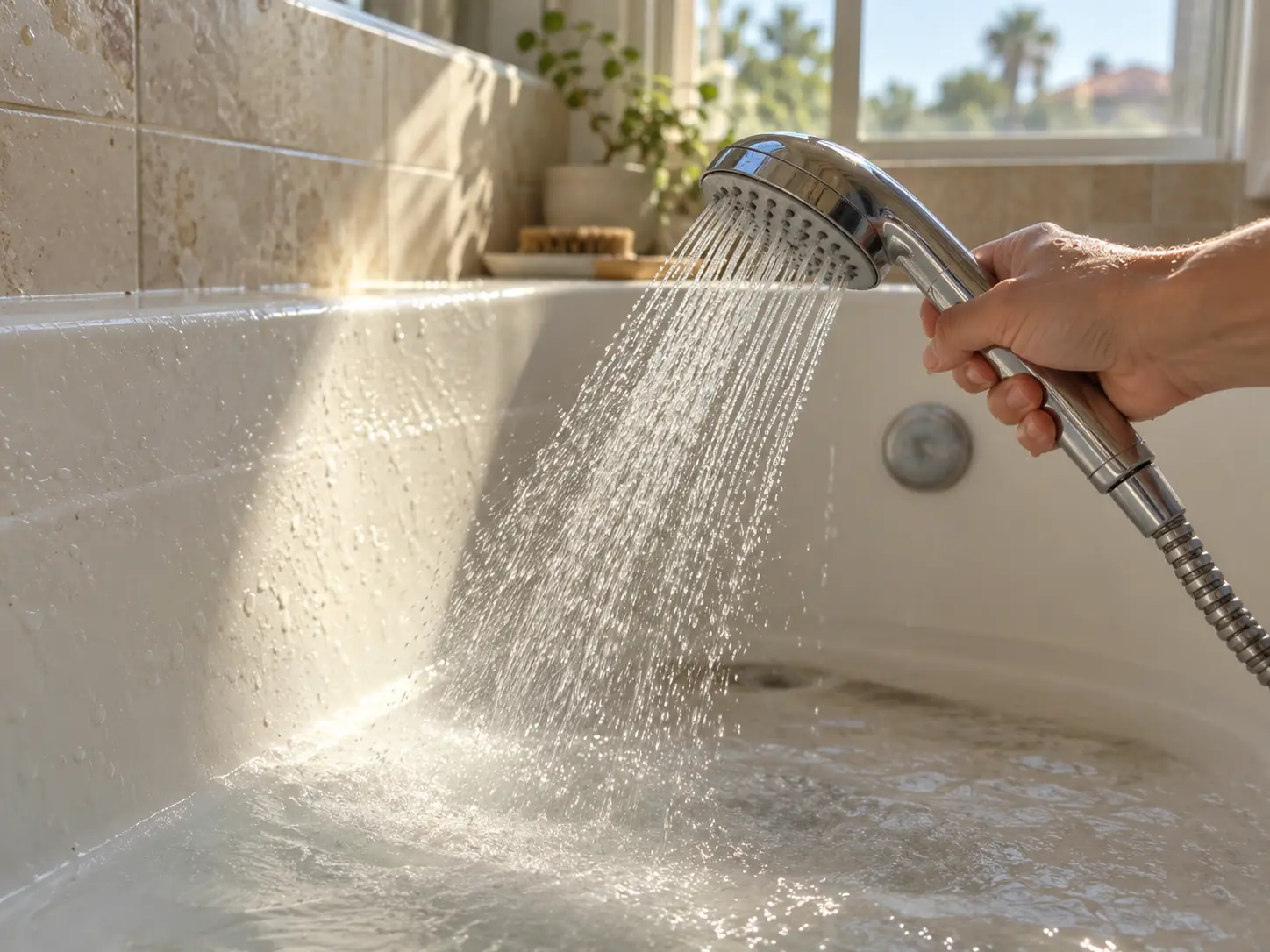
- Rinse thoroughly (2 minutes). Use warm water until no suds remain. Leftover soap becomes tomorrow’s film.
- Dry (2 minutes). Squeegee the walls and wipe the rim and floor with a microfiber towel. This one step is what keeps water spots and film from returning.
Why this works: most “soap scum” is a mix of body oils, skin cells, and the minerals in your water. Dish soap handles the oil part, and removing standing water handles the mineral part.
Heavy soap scum
When the surface feels waxy or you can write your name in the film, the standard clean will not be enough. You have a built-up layer that has hardened over weeks.
- Soften it. Spray warm water, then apply a thick layer of dish soap with a damp cloth. Let it sit for 15 to 30 minutes.
- Add baking soda. Sprinkle baking soda onto the damp sponge, not straight onto the tub, and scrub in small circles on the worst areas.
- Use a mild acid if you see a white or chalky layer. If the film feels gritty or crusty, minerals are part of the problem (see the hard water section below).
- Use a plastic scraper on ridges. A plastic putty tool or old gift card works well along caulk lines. Keep the angle low so it slides, not digs.
- Repeat rather than scrub harder. Two rounds with patience beat one round with muscle. Scrubbing hard is how finishes get ruined.
If the scum is on a tub you have never cleaned properly, it may take three sessions across a week to fully lift it.
Hard water film and spots
Much of Orange County has hard water, which means more dissolved calcium and magnesium. It leaves a cloudy white film and chalky rings, especially near the waterline and around the drain. Check your local water provider’s annual water quality report for your area’s actual hardness, because it varies by city and sometimes by neighborhood.
Mineral film does not respond well to soap alone. It dissolves in mild acids.
Citric acid method (works on most materials with a short contact time):
- Dissolve about a tablespoon of citric acid in a cup of warm water in a spray bottle, or follow the product label.
- Spray the film, wait 5 to 10 minutes, and keep the surface wet.
- Wipe with a soft cloth, then rinse thoroughly.
- Repeat if needed. Stop if the surface starts to look dull.
Diluted vinegar method: Some sources suggest equal parts white vinegar and warm water for fiberglass and enamel, and cautious, short use for acrylic. If you are unsure, use the citric acid method with a brief contact time, or ask the manufacturer.
Do not leave acid on the surface for hours and never combine it with bleach. For a deeper look at limescale on glass and fixtures, see how to remove hard water stains.
When it is worth handing off: If you are dealing with years of buildup across the tub, glass, tile and grout, a deep clean usually covers the bathroom from top to bottom in one visit. For a 2 bedroom, 2 bathroom home the deep clean price is (60 + 25 x 2 + 35 x 2) x 1.5 = $270 before add-ons, and you can see an exact number for your home in the instant quote.
Stains: rust, hair dye, and discoloration
Not every mark is scum. Treat stains by cause.
| Stain | Looks like | Likely cause | Method |
|---|---|---|---|
| Rust ring or streak | Orange or brown, often under the faucet or where a can sat | Iron in water, rusty metal items, or exposed steel under a chip | Mild acid such as citric acid, then rinse. If rust comes back from a chip, the enamel needs repair |
| Hair dye | Blue, purple, or red tint | Pigment that stained porous or worn surfaces | Fresh: dish soap and warm water right away. Set stain: oxygen bleach soak if the surface allows |
| Yellowing | Dingy tone on white fiberglass or acrylic | Worn gel coat, product residue, or age | Baking soda paste first. If it does not lift, the finish may be worn and cleaning cannot restore it |
| Black or gray spots | Often at caulk and corners | Mildew | Wipe with a bathroom cleaner suitable for mildew, dry, and improve ventilation. See preventing mold and mildew |
| Scuffs from shoes or buckets | Gray streaks | Rubber or plastic transfer | Dish soap, then a baking soda paste. A melamine sponge with a very light touch if the label allows |
| Dull patches | Flat spots in the shine | Abrasive damage or old coating | Cleaning will not fix this. Polish compounds or refinishing are separate repairs |
A note on rust and chips: On a porcelain enamel tub, a small chip exposes metal underneath. Rust then bleeds out of the chip. You can clean the rust off, but it will return until the chip is sealed. Repair kits exist for small chips, and professional refinishing exists for larger damage. We are a cleaning company, so for repairs check with a tub repair specialist.
Textured and non-slip tub floors
Textured floors are the hardest part of the tub to clean because soap and body oils get trapped in the grooves. A flat cloth rides over the top and leaves the dirt behind.
- Wet the surface and apply dish soap with a soft brush. Let it sit for 10 minutes.
- Use a soft-bristle brush and scrub with the pattern, then across it. A soft toothbrush handles tight areas.
- Use baking soda on the brush, not on a dry floor, so you get gentle grit without gouging.
- Rinse with a cup or the shower head and check from a low angle. If a gray or beige film remains in the grooves, repeat.
- For stubborn grime, a citric acid soak for a few minutes can loosen mineral film. Rinse well so the surface does not stay slippery.
Be careful with anti-slip stickers and decals. Peeling them off can damage the finish, and grime builds up underneath. If you remove them, use a plastic scraper and warm soapy water, and replace them before they become a dirt trap.
Be especially careful with stiff brushes. A stiff brush that grinds across a textured acrylic or fiberglass floor will wear down the texture, which is the thing keeping you from slipping.
Drains, overflow plates, and faucets
The tub is not clean until these are.
- Drain stopper and strainer: Lift out the stopper, remove hair, and scrub the underside with a toothbrush and dish soap. Rinse before putting it back.
- Overflow plate: Unscrew if possible and clean behind it. Gunk behind the plate often causes the smell people blame on the drain.
- Faucet and spout: Use citric acid solution on a cloth for mineral spots. Check your fixture finish first: some finishes, such as brass or oil-rubbed bronze, do not tolerate acid.
- Caulk lines: Scrub gently with a soft brush and dish soap. If caulk is discolored all the way through or peeling, cleaning will not fix it and the caulk may need replacing.
A slow drain is a plumbing problem, not a cleaning problem. Hair clogs can be pulled out with a drain tool. Avoid pouring strong drain cleaners into a tub drain without reading the label, since they can be hard on older pipes and unsafe to mix with other chemicals.
Mistakes that damage tubs
- Scrubbing with abrasive powder on acrylic or fiberglass. It leaves fine scratches that hold dirt and make the tub look dull.
- Using steel wool or a metal scraper. Even on enamel, steel can leave metal marks and scratch the glaze.
- Mixing products. The mixing of bleach with ammonia or acids is the most dangerous mistake in bathroom cleaning.
- Leaving acid to sit for hours. It can etch finishes and harm metal fixtures and grout.
- Using bleach as a first resort. It does not dissolve mineral scale, and repeated use can yellow or weaken some surfaces.
- Skipping the rinse. A leftover film of cleaner attracts soil and makes the next clean harder.
- Using a hot, dry scrub. Scrubbing a dry tub grinds grit across the surface. Wet it first.
- Ignoring chips. Small chips in enamel rust and expand. Sealing them early costs less than a refinish later.
- Putting heavy items on the tub floor. Hard cans and razors can scratch or chip.
Troubleshooting
| Problem | Likely cause | What to try | When cleaning will not work |
|---|---|---|---|
| Tub feels rough even after cleaning | Mineral deposits | Citric acid soak, then rinse | Surface is worn or etched |
| Tub is still dingy after scrubbing | Worn finish or residue | Fresh dish soap scrub, then baking soda | Gel coat is worn through |
| White film returns in a day | Hard water drying on surface | Squeegee after each use | Very hard water may need a softener |
| Pink or orange slime near the drain | Bacteria that grow in moisture | Scrub with a bathroom cleaner and dry the area | Moisture stays and the problem returns |
| Water beads off but stays cloudy | Residue from soap or conditioner | Warm water and dish soap, rinse longer | Switching to a different product |
| Rust spots keep returning | Chipped enamel or rusting item | Remove rust, seal chip | Chip is larger than a repair kit can handle |
| Strong chemical smell lingers | Not enough rinsing or ventilation | Rinse again and run the fan | Residue of a mixed product, ventilate and rinse |
How to keep the tub clean
Prevention matters more than any cleaner. Five minutes a week can save an hour later.
| Frequency | Task |
|---|---|
| After use | Squeegee the walls or wipe them with a towel. Hang the towel to dry |
| Weekly | Wipe the tub with dish soap and a soft cloth, rinse, dry |
| Every 2 weeks | Scrub the floor texture and wipe around fixtures and the drain |
| Monthly | Remove the stopper and clean it. Descale the faucet and check caulk |
| Every 3 months | Wash the shower mat, clean the overflow plate, check for chips and rust |
| Yearly | Inspect caulk, grout and any refinish coating for wear |
Other habits that help:
- Switch to liquid body wash or a soap with less residue. Bar soap leaves more scum, especially in hard water.
- Use a shower spray cleaner designed for daily use if you want an easier routine. Follow the label and rinse after, and never combine it with another product.
- Keep ventilation running for 20 to 30 minutes after a hot shower.
- Keep products off the tub floor. Bottles with wet bottoms leave rings.
- Rinse the walls with cool water at the end of a shower to move soap off the surface.
For the rest of the room, see our bathroom cleaning routine that works, the guide to cleaning shower glass and hard water, and cleaning grout and tile.
The Orange County angle
Three things come up often in Orange County bathrooms.
Hard water. Many cities in the county have moderately hard to hard water. The result is the chalky film around the faucet and the cloudy look on glass and tubs. Your water provider’s annual report lists hardness, so you can check your own area. If hardness is high, daily squeegeeing makes the single biggest difference.
Condos, apartments and HOAs. Many homes here have builder-grade fiberglass or acrylic tubs, and rentals often have refinished tubs. Refinish coatings are easy to damage. If you rent, check your lease before using anything strong, and note the condition of the tub at move-in. Our guides on the move-out inspection and security deposits in California explain what landlords commonly look for.
Coastal humidity. Near the coast, bathrooms stay damp longer and mildew shows up faster at caulk lines. A working exhaust fan and a quick wipe-down matter more there.
When to call a professional
You can do almost all tub cleaning yourself. A cleaning pro makes sense when:
- You have not had time for a deep bathroom clean in months and the buildup is heavy.
- You are preparing for a move out or a sale and need the whole bathroom done in one pass.
- The tub, glass, tile and grout all need work at once, and you would rather spend your weekend elsewhere.
What we do well is the repeatable, safe work: pH-appropriate products, soft tools, the right order from top to bottom, and not mixing chemicals. What we do not do is repair. If the tub has chips, rust coming through, a worn gel coat, or a failing coating, a tub repair or refinishing specialist is the right call, and we will tell you so.
Our crews are insured, bonded and background-checked, and we use eco-friendly, pet-safe products. If we miss something, tell us within 24 hours and we re-clean that area free. A deep cleaning covers bathrooms in detail, and recurring cleaning keeps them from building up again. First-time customers get $39 off the first clean. You can get exact numbers for your home in the instant quote.
Frequently asked questions
What is the best thing to clean a bathtub with? Dish soap and warm water, with a soft sponge, is the safest starting point for every tub material. Add baking soda for stubborn spots, and use a mild acid like citric acid only for mineral film.
Can I use bleach to clean a bathtub? Often you do not need to. Bleach does not dissolve mineral deposits and can discolor or weaken acrylic and fiberglass. On sound white porcelain enamel, some people use it occasionally and diluted, if the product label allows. Never use it with ammonia or acids.
Is vinegar safe for a bathtub? It depends on the material. Diluted vinegar is commonly used on fiberglass and porcelain, but some sources warn it can dull acrylic and worn enamel. Keep contact times short, rinse well, and test a hidden spot first.
How do I clean a bathtub with a textured bottom? Soak the surface with dish soap, then scrub with a soft-bristle brush along and across the pattern. Rinse and check from a low angle. Avoid stiff brushes, which wear down the texture.
How do I get yellow stains out of a white tub? Try dish soap, then a baking soda paste. If the yellow is in the material (worn gel coat or aged acrylic), cleaning may not restore the color. A polish or refinishing is a repair, not a cleaning step.
Why does my tub get cloudy right after I clean it? Usually either leftover soap or mineral film from drying water. Rinse longer, and wipe the surface dry. In hard water areas this makes a visible difference.
Can I use a magic eraser on a bathtub? It is a fine abrasive, so use it lightly and test first. It can dull glossy acrylic and some refinished surfaces. Check the tub manufacturer’s guidance if you can.
How often should I clean a bathtub? A quick wipe after use if possible and a proper scrub every one to two weeks. Households with several people or very hard water may need weekly cleaning.
How do I remove rust stains from a tub? Use a mild acid such as citric acid, rinse well, and check the source. If rust comes from a chip in the enamel, the stain will return until the chip is repaired.
Do I need to clean the overflow plate? Yes. It collects soap film and mildew, and it is often the real source of a bathroom smell.