Furniture Carpet Care
How to Clean a Mattress at Home: Stains, Odors, Dust Mites
The safest way to clean a mattress is to strip it, vacuum every surface, treat stains with a small amount of cleaner (never a soaking), deodorize with baking soda, and let it dry completely before the sheets go back on. Most of the damage people do comes from using too much liquid, because a wet mattress core can grow mildew for weeks. A full clean takes about an hour of work plus several hours of drying.
This guide walks through the full method, then covers stains one by one, how mattress type changes the rules, what to do about dust mites, and the point where it is smarter to hand the job to a professional.
Quick answer
- Time: about 60 to 90 minutes of work, plus 4 to 8 hours of drying (longer for thick foam or a humid day).
- Supplies cost: usually under $15 if you already own a vacuum. Baking soda, dish soap, hydrogen peroxide, and an enzyme cleaner cover almost everything.
- Difficulty: easy for dust and light odor, moderate for old stains.
- How often: vacuum and air out every 1 to 3 months, spot treat as stains happen, and do a full deodorizing clean every 6 months or when you change seasons.
- Skip the DIY if: the mattress has soaked through with urine, shows black mold spots, or has bed bug signs. Those need different handling.
How often to clean a mattress
There is no single rule that fits every bed. A guest room mattress with a protector on it needs far less attention than a child’s bed or a pet’s favorite napping spot. Use this table as a starting point.
| Task | Typical frequency | Why |
|---|---|---|
| Wash sheets and mattress protector | Weekly to every 2 weeks | Most skin cells, sweat, and oils land in the bedding first. |
| Vacuum the mattress surface | Every 1 to 3 months | Removes dust and skin flakes that dust mites feed on. |
| Rotate (and flip if the maker says to) | Every 3 to 6 months | Spreads body weight evenly and lets each side air out. |
| Deodorize with baking soda | Every 6 months, or after illness or a spill | Pulls moisture and odor out of the top layers. |
| Spot treat stains | As soon as you see them | Fresh stains come out far easier than dried ones. |
| Full clean plus airing in sunlight or fan flow | Twice a year | Resets the surface and checks for early mildew. |
| Replace the mattress | Check the manufacturer’s guidance, often around 7 to 10 years | Sagging and lost support matter more than cleanliness at that point. |
If you have allergies, a child who has accidents, or pets on the bed, move every item up one step in frequency.
What you need
| Item | What it does | Notes |
|---|---|---|
| Vacuum with upholstery attachment | Lifts dust, hair, and skin flakes from the surface and seams | A crevice tool helps with piping and tufts. HEPA filtration is a bonus if anyone has allergies. |
| Baking soda | Absorbs moisture and neutralizes odor | Plain, unscented works best. Scented versions can irritate sensitive noses. |
| Mild dish soap | Lifts sweat, oils, and general soil | Use a few drops in cool water, not a cupful. |
| 3% hydrogen peroxide | Breaks down blood and some organic stains | Can lighten dark fabric. Test first. Mix fresh. |
| Enzyme cleaner (look for “enzymatic” on the label) | Breaks down urine, vomit, and pet accident proteins | The right tool for urine. Follow label dwell time. |
| Spray bottle | Applies cleaner in a fine mist | A mist is easier to control than pouring. |
| White microfiber cloths | Blot without leaving dye behind | Use white so you can see what you are lifting. |
| Fan or open window | Speeds drying | Moving air matters more than heat. |
| Gloves and a mask for dusty beds | Protects hands and lungs | Optional but sensible if you have allergies. |
Do not use: a steam cleaner on memory foam or latex without checking the manufacturer’s care instructions, a carpet shampooer, heavy scrubbing brushes, or chlorine bleach. Bleach weakens fabric, leaves a smell, and can leave yellow marks.
Safety first
- Open a window or run a fan while you work, especially with hydrogen peroxide or enzyme sprays.
- Never mix cleaning products. Peroxide plus vinegar creates peracetic acid, which irritates the lungs. Bleach plus anything acidic or ammonia based is dangerous. Our guide to cleaning products you should never mix has the full list.
- Test every cleaner on a hidden spot such as the side seam or under the label tag. Wait for it to dry before judging color change.
- Wear gloves when you handle urine, vomit, or blood, and wash your hands afterward.
- Check the tag or the manufacturer’s website for care instructions. Some mattress covers are not removable and some foams specifically say “spot clean only.”
Step by step: the full mattress clean
Set aside a morning. The drying time is the part that takes patience, so start early in the day if you can.
Step 1: Strip the bed and wash everything (15 minutes)
Remove sheets, the mattress protector, and any pillow topper. Wash bedding on the hottest setting the fabric label allows. Heat helps remove dust mite allergens, and the label always wins over a general rule, so check each item. Mattress protectors and toppers often have their own care tag.
While the wash runs, look at the bare mattress in good light. Note stains, yellowing near the center, damp spots, and any dark specks near seams. Those details decide which spot treatments you need.
Step 2: Vacuum the whole surface (10 to 15 minutes)
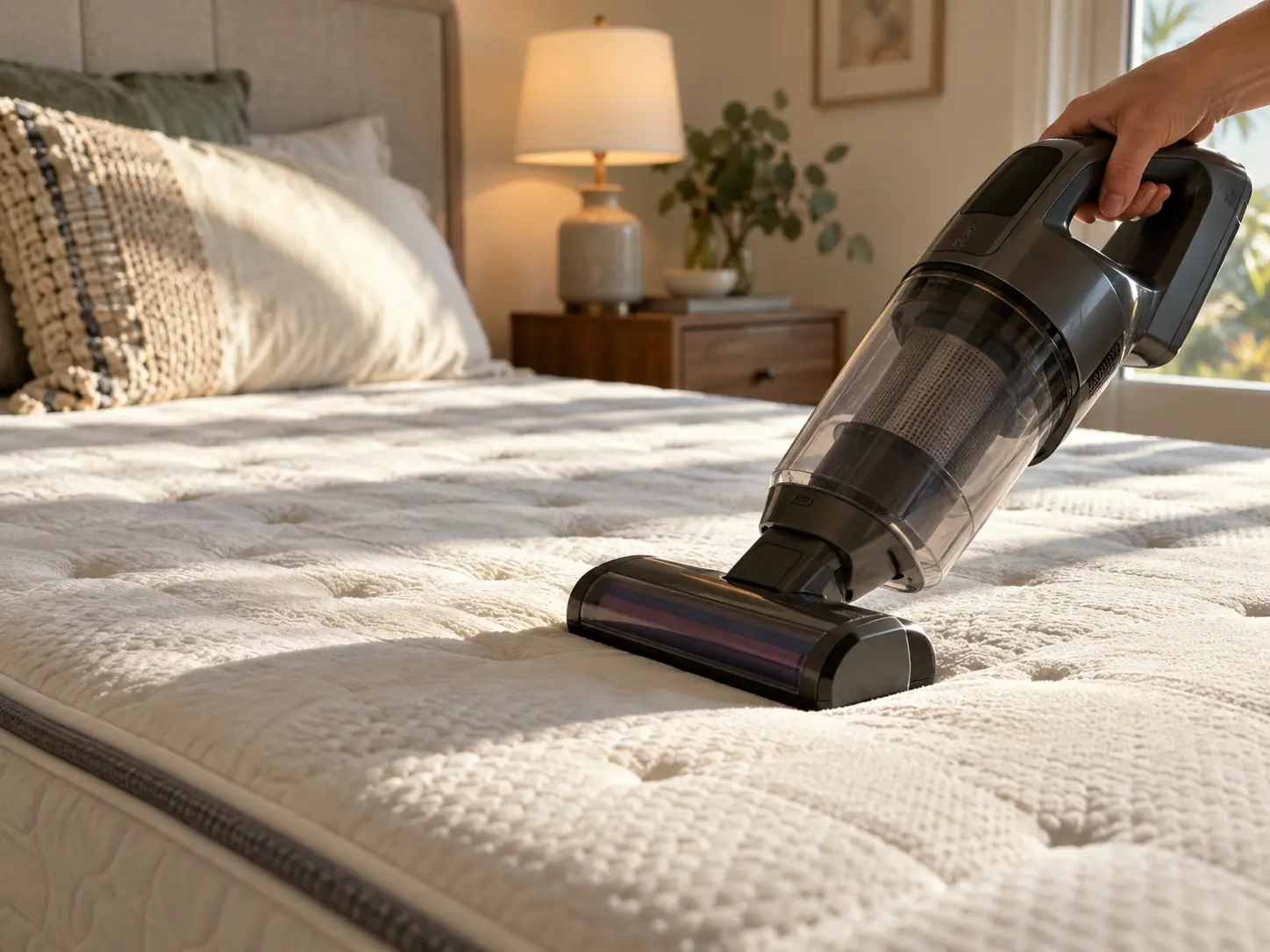
Use the upholstery attachment and go slowly. Work in overlapping strips from head to foot, then repeat in the other direction. Slow passes lift much more than fast ones.
Switch to the crevice tool along the piping, seams, and any buttons or tufts. Vacuum the sides too, and the top of the box spring or foundation if you have one. If the bed has a skirt or sits on a slatted base, vacuum those as well, since dust and hair collect there.
This one step removes most of what makes a mattress feel unclean, and it costs nothing.
Step 3: Spot treat stains (10 to 30 minutes, depending on the stain)
Do this before deodorizing. Baking soda is meant to go on a mostly clean, dry surface. Jump to the stain-by-stain section below for the right method for each type. The general rules are:
- Blot, never rub. Rubbing pushes the stain deeper and frays fabric.
- Use the smallest amount of liquid that works.
- Work from the outside of the stain toward the center so it does not spread.
- Blot with a dry white cloth until no more transfers.
Step 4: Deodorize with baking soda (20 minutes to several hours)
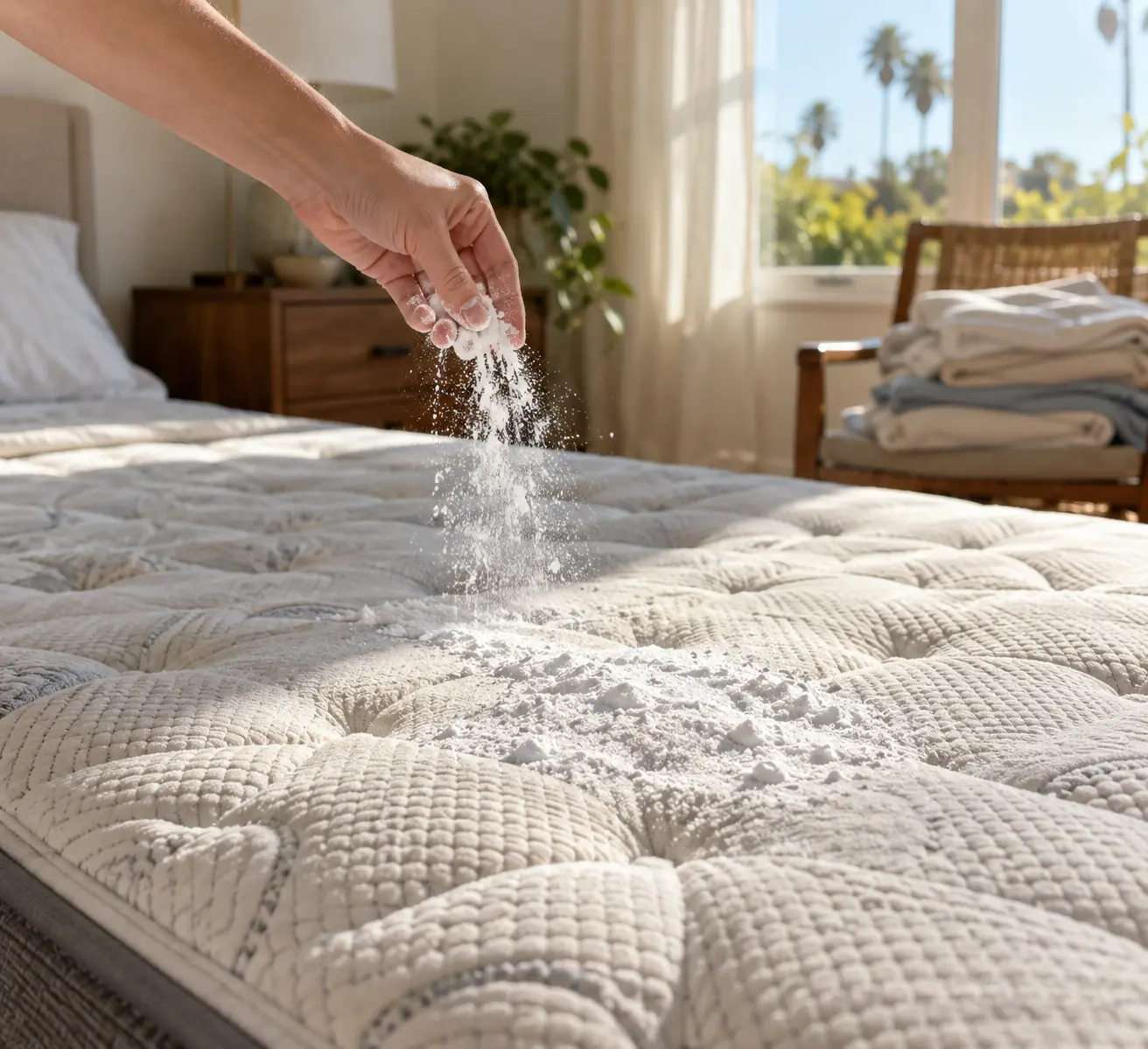
Sprinkle a thin, even layer of baking soda over the whole top surface. A light dusting is enough: you should still see the fabric through it. Thick layers are harder to vacuum out and do not work any better.
Let it sit at least 20 minutes. For a stubborn smell, leave it for several hours, and open a window or run a fan in the room. Sunlight through a window can help freshen the room air, but do not leave a mattress in direct sun for long periods, since heat and UV light can damage some foams and fabrics.
Step 5: Vacuum again (10 minutes)
Use the upholstery attachment and go over the surface slowly until no baking soda remains. Missed powder can feel gritty and cake into sheets later. Go over seams and piping twice.
Step 6: Dry completely (4 to 8 hours or more)
Leave the mattress bare with a fan pointed at it and a window open if the weather allows. Stand it on its side against a wall if you can do so safely (a helper makes this easier), since air then reaches both faces. Do not put sheets back until the surface feels dry to the touch and the stained areas no longer feel cool or damp.
Cool spots mean moisture is still there. Press the back of your hand against the mattress. If it feels cooler than the rest, wait longer.
Step 7: Rotate or flip (5 minutes)
If your mattress is designed to be flipped, flip it. Many modern mattresses are one-sided and should only be rotated head to foot. Check the tag or the maker’s website. Putting a no-flip mattress upside down can damage its comfort layers.
Step 8: Make the bed with a protector (10 minutes)
Put a clean waterproof or water-resistant mattress protector on first, then the sheets. A protector is the single most useful accessory for keeping a mattress clean. More on choosing one below.
Stain by stain guide
Fresh stains are far easier than old ones. If you can, treat within minutes. If a stain is old, expect to repeat the process and accept that some marks will fade rather than vanish.
| Stain | Best approach | Avoid |
|---|---|---|
| Sweat and body oils | Dish soap and cool water mist, blot, then baking soda | Hot water, heavy soaking |
| Urine | Blot, enzyme cleaner per label, then baking soda | Heat, vinegar on its own, scrubbing |
| Blood | Cold water blot, then 3% hydrogen peroxide dabbed on | Hot water (sets protein stains) |
| Wine and coffee | Blot, dish soap solution, then peroxide if needed | Rubbing, which spreads the stain |
| Vomit | Scrape solids, blot, enzyme cleaner | Large amounts of water |
| Pet accidents | Enzyme cleaner, repeated if needed | Ammonia based cleaners (smells like urine to pets) |
| Makeup or ink | Dab with a cloth dampened with dish soap solution | Scrubbing in circles |
Urine
Blot as much as you can with dry towels, pressing firmly. Then apply an enzyme cleaner according to the label so it reaches as deep as the urine did. Cover with a damp white cloth to slow evaporation if the label says so, and give it the full dwell time. Blot again, then cover with baking soda until completely dry and vacuum.
Old urine stains take more than one round. If the smell returns when the mattress warms up, the urine reached the core, and a professional extraction is more likely to help than another round at home. Our article on removing pet odor from carpet and furniture covers why enzymes work where soap does not.
Blood
Use cold water. Hot water sets blood into fibers. Dab (do not pour) cold water on a cloth, blot the stain from the outside in, then apply a few drops of 3% hydrogen peroxide. It will foam, which is normal. Wait a minute or two, blot, and repeat if needed. Rinse the area by blotting with a damp cloth, then dry thoroughly. Peroxide can lighten dark or colored fabric, so test first.
Sweat and yellowing
Yellow patches mostly come from body oils and perspiration, which build up over months. Lightly mist the area with a solution of a few drops of dish soap in cool water. Blot with a clean cloth. A second pass with a barely damp cloth lifts soap. Finish with baking soda. Yellowing that has been there for years may only fade.
Wine, coffee, and food
Blot first to lift as much as possible. Mist lightly with dish soap solution, blot again, and use a dab of peroxide if the color remains. These stains respond best when fresh.
Vomit
Remove solids with a spoon or paper towel. Blot with a dry cloth. Apply enzyme cleaner to the area, wait, then blot. Finish with baking soda to draw out odor. Because vomit contains acids and proteins that can leave lingering smell, treat it promptly.
Pet accidents
Treat like urine. Pets return to spots that still smell like urine to them, and an enzyme cleaner breaks down the odor source instead of covering it. Skip ammonia based products, which can smell like urine to an animal.
Skip this step: Deep urine, old pet accidents, or a mattress that smells even after you dry it are the jobs home methods rarely finish, because the liquid reached the core. Our crews handle mattress cleaning with a pet odor option, and the mattress cleaning service lists exactly what is included.
Mattress types compared
The right method depends on what the mattress is made of. Use this table, then check the manufacturer’s care instructions.
| Mattress type | Moisture tolerance | Cleaning notes |
|---|---|---|
| Memory foam | Low | Absorbs liquid and dries slowly. Use a damp cloth, not a spray soak. Avoid steam unless the maker allows it. |
| Latex (natural or synthetic) | Low to moderate | Resistant to dust mites but can degrade with harsh cleaners and sun. Mild soap only, air dry in shade. |
| Innerspring | Moderate | Fabric top dries faster, but metal coils can rust if liquid reaches them. Avoid soaking. |
| Hybrid (foam plus coils) | Low to moderate | Treat like memory foam on top, like innerspring underneath. Go light on liquid. |
| Pillow top | Low | Extra padding holds moisture. Spot clean only, and dry thoroughly. |
| Flip-able (two-sided) | Varies | Clean and air each side. Flip as the maker directs. |
| One-sided (no-flip) | Varies | Rotate head to foot. Never flip. |
| Adjustable base mattress | Varies | Vacuum around the base mechanisms and lower the head so you can reach seams. |
Water-based cleaning works best when you can get the mattress dry fast. If your bedroom stays damp, which can happen in coastal spots, use a dehumidifier or fan to help.
Dust mites and allergies
Dust mites are tiny organisms that live in bedding and feed on skin flakes. They do not bite, but the proteins in their waste are a common trigger for sneezing, congestion, and itchy eyes. You cannot remove them all, but you can lower the amount.
What helps:
- Wash sheets and pillowcases weekly in the hottest water the label allows.
- Use a zippered, allergen-proof mattress and pillow encasement.
- Vacuum the mattress regularly, ideally with a HEPA filter.
- Keep bedroom humidity moderate. Dust mites do better in damp air, so a fan or dehumidifier can help, especially in muggy months.
- Keep pets off the bed if allergies are a problem.
What does not help: sprays that promise to “kill” mites without addressing the bedding, or heavy fragrance, which can make sensitive airways worse. If allergy symptoms are severe, talk to a doctor. Our broader guide on reducing household allergens covers the rest of the house.
Signs of mold or mildew
Mattress mold is rare in a dry bedroom, but it happens after spills, humid weather, or storing a mattress on the floor in a damp room.
Look for:
- A musty smell that does not go away after airing.
- Dark specks, often black, green, or gray, on fabric or the underside.
- Damp or cool spots, especially under the mattress against a solid floor.
- Staining that comes back after you clean it.
For a small, surface-level spot of mildew, you can wipe with a cloth dampened in a mix of water and a little dish soap, dry in moving air, and recheck. If mold has spread across the mattress or you or a family member have respiratory trouble, the safer choice is to replace the mattress. Soaking a mattress with bleach or vinegar does not reach the inside and can leave the moisture that mold wants.
Drying time and moisture mistakes
Drying is where most DIY mattress jobs go wrong. Remember:
- Foam can take many hours to dry through. Plan the day around it.
- Do not use a hair dryer on high heat. It can damage foam and dry only the surface.
- Do not cover a damp mattress with a protector or sheets. The trapped moisture is what grows mildew.
- Elevate the mattress if the room is damp. Air flow under a bed (a slatted base or a frame with open sides) helps; a solid platform with no ventilation traps moisture.
- Using a wet/dry vacuum helps pull moisture out of fabric, but follow with a fan. Rental extractors made for carpet can push water too deep, so be cautious on thick foam.
Choosing a mattress protector
A protector costs far less than a mattress and prevents most of what this guide fixes. Compare these features when you shop.
| Feature | What to look for | Notes |
|---|---|---|
| Waterproof layer | “Waterproof” or “water-resistant” on the label | Blocks spills from reaching the core. Quiet, breathable versions exist. |
| Fit | Deep pockets that match your mattress thickness | Pillow tops often need extra deep pockets. |
| Material | Cotton surface with a thin membrane, or similar | Avoid crinkly plastic feel if you sleep warm. |
| Allergen barrier | Zippered encasement | Best for allergies and bed bug prevention. |
| Washability | Machine washable, per the care tag | You will wash it often. |
Replace a protector when the waterproof layer cracks or peels.
A note on Orange County bedrooms
Coastal areas tend toward higher humidity and cool nights, which means a mattress that sits against a cold exterior wall can hold moisture. Pull the bed a few inches from the wall to let air move. In inland areas and during Santa Ana wind periods, fine dust drifts in through open windows and settles on bedding, so closing windows on windy nights and vacuuming more often keeps the surface cleaner. Both things are general patterns, not guarantees, so adjust to your own home.
When DIY is enough and when it is not
Home cleaning is enough for:
- Dust, hair, and light odor.
- Fresh spills you treat within minutes.
- Sweat marks and general freshening twice a year.
A professional is a better choice when:
- Urine has soaked through the surface, especially if it is old.
- Smells return after a home treatment.
- The mattress has been in a humid space and smells musty.
- Anyone in the house has significant allergies, and you want deeper extraction than a household vacuum gives.
- You are preparing to move out and want the bed cleaned for a landlord or buyer.
When it is worth handing off: Professional mattress cleaning is priced per mattress: $55 for a twin, $65 for a full, $75 for a queen, and $95 for a king, with pet odor treatment available as an add-on. If you want to compare it with the cost of replacing a bed, read how much mattress cleaning costs. If you also have a sofa or armchairs with the same problem, see upholstery cleaning.
Maintenance schedule
| When | What |
|---|---|
| Weekly | Wash sheets and pillowcases. |
| Every 2 to 4 weeks | Wash the mattress protector and any topper if the label allows. |
| Monthly | Quick vacuum of the top and seams, especially with pets or allergies. |
| Every 3 to 6 months | Rotate (and flip if allowed). Air out the bare mattress for an hour. |
| Twice a year | Baking soda deodorize and a full surface vacuum. |
| After illness, a spill, or a guest | Spot treat promptly and launder bedding. |
Mistakes that damage mattresses
- Soaking it. More liquid does not mean more cleaning. It means slower drying and a higher chance of mildew.
- Scrubbing hard. Rubbing frays fabric and pushes stains deeper.
- Using hot water on blood or protein stains. Heat sets them.
- Skipping the test spot. Peroxide and other cleaners can lighten fabric.
- Making the bed while damp. Always wait until fully dry.
- Ignoring the care tag. Some mattresses forbid steam, spray, or flipping.
- Vacuuming only the top. Seams and piping hold the most debris.
- Mixing products. It can create harmful fumes. See our list of products to never combine.
Frequently asked questions
Can I use vinegar on a mattress? Diluted white vinegar can help with some odors, and many people use it on light spots. But it can leave its own smell, can affect some fabrics, and does not break down urine proteins the way an enzyme cleaner does. Never mix it with hydrogen peroxide. Test first and use sparingly.
How often should you wash a mattress? You do not wash a mattress like a sheet. Vacuum it every 1 to 3 months, spot treat as needed, and do a baking soda deodorizing clean about twice a year. Wash the bedding and protector far more often.
How do you get urine out of a mattress? Blot first, apply an enzyme cleaner per the label, let it work for the full dwell time, blot again, and dry with baking soda and airflow. Old or deep stains often need more than one round or professional extraction.
Can you steam clean a mattress? Sometimes. Some innerspring mattresses tolerate it if you dry them well, but memory foam and latex often do not. Always check the manufacturer’s instructions first, because steam pushes moisture into layers that dry slowly.
How do you deodorize a mattress? Vacuum, dust a thin layer of baking soda over the surface, wait at least 20 minutes (hours for strong smells), then vacuum it off. Keep the room ventilated and let the bed air out.
Does baking soda really clean a mattress? It absorbs moisture and odor, so it freshens a mattress, but it does not lift deep stains or remove allergens by itself. Use it as the final step after vacuuming and spot treating.
How long does a mattress take to dry? Often 4 to 8 hours for a light spot clean, and longer for thick foam, humid days, or heavy spills. It is dry when it feels the same temperature as the rest of the mattress.
Is it okay to use a hair dryer to speed things up? Low heat from a distance can help dry fabric, but high heat can damage foam and only dries the surface. A fan and an open window are safer.
What if my mattress has bed bugs? Do not rely on cleaning. Bed bugs need a pest control professional. Cleaning can help afterward, but it will not solve an infestation.
When to call a professional
A professional mattress service does a few things that home methods struggle with: extracting moisture and soil from deeper in the mattress, treating pet odors at the source, and drying with equipment that moves a lot of air. What you can do yourself is everything that keeps a mattress from getting that bad in the first place: a protector, regular vacuuming, prompt spot treatment, and a dry room.
If you want a price for a mattress or for the whole home, our instant quote shows it in about 30 seconds with no obligation. If your bedroom is part of a larger reset, a deep cleaning covers the rest of the house, and our crews serve all of Orange County from Irvine. You can see the Irvine service page for details.