Care Habits
How to clean blinds and ceiling fans without making a mess
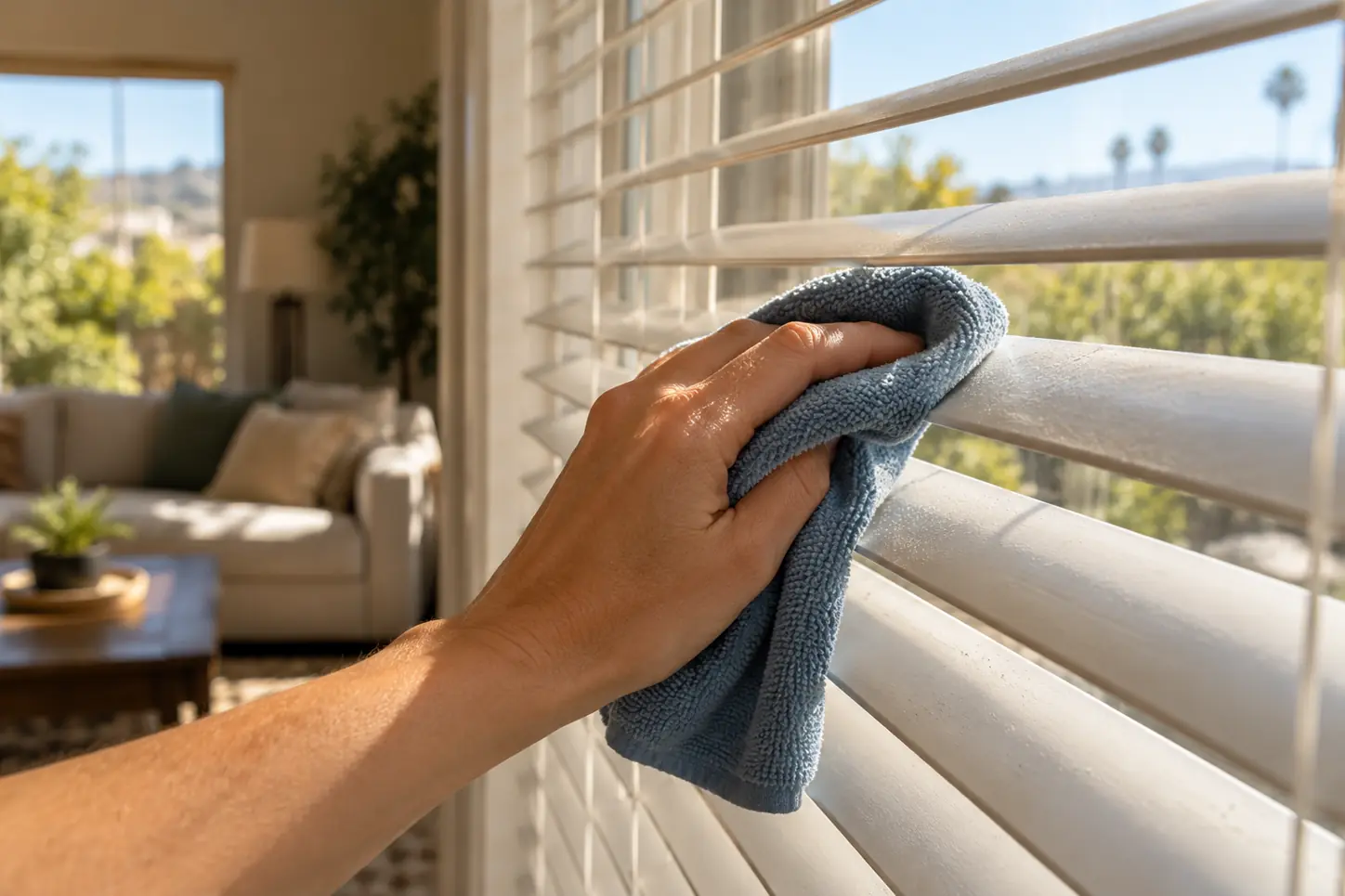
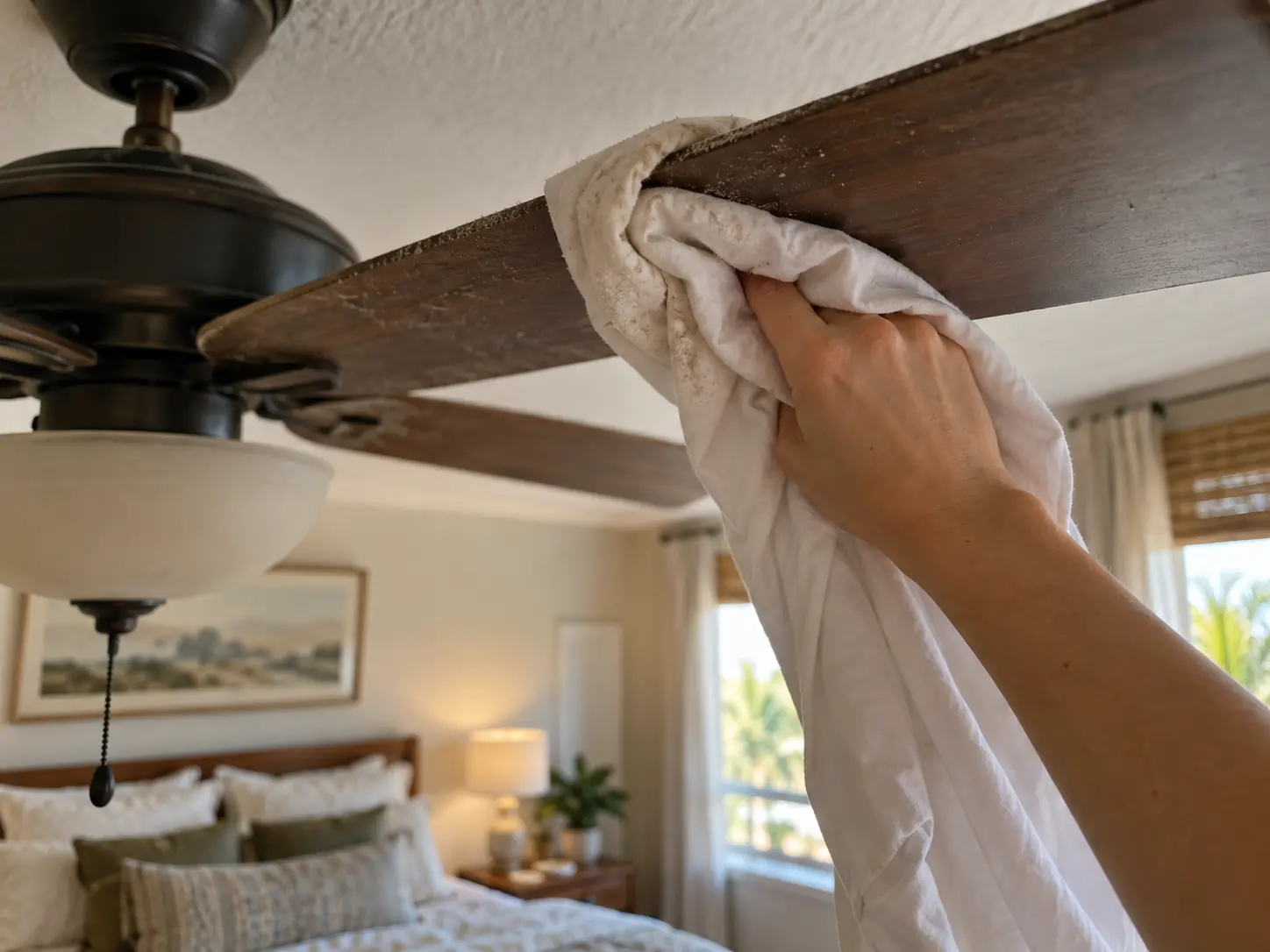
The easiest way to clean most blinds is to dust them first with a microfiber cloth or soft brush, then wipe each slat with a damp cloth. For ceiling fans, slide an old pillowcase over each blade and pull it back so the dust stays inside. Wood and fabric blinds should never be soaked. Metal, vinyl, and faux wood can handle a damp wipe or a tub soak.
Quick answer
- What you need: microfiber cloths, a vacuum with a brush attachment, an old pillowcase, a stable step stool or ladder, mild dish soap, warm water.
- Time: about 20 to 40 minutes per window set for a full wipe, and 10 to 15 minutes per fan.
- Cost of supplies: supplies you likely own.
- Difficulty: easy, but the reach and the mess make it tedious.
- Biggest risk: dust falling onto your furniture, and water damage on wood or fabric.
Safety first
Ceiling fans and tall windows mean you are working above your head. A few precautions prevent most injuries.
- Turn the fan off at the wall switch and wait until it stops. If your fan has a pull chain, a remote, and a wall switch, turn off the wall switch, since a remote can restart it.
- Use a stable step stool or ladder on a flat surface. Do not stand on a chair, a bed, or a counter.
- Have someone hold the ladder if the ceiling is high.
- Cover furniture and floors with an old sheet or a drop cloth.
- Wear safety glasses if you are brushing dust above your head, since it falls into eyes.
- Do not spray cleaner directly onto a fan motor or a light fixture. Spray onto the cloth.
- Check the manual for your fan. Some blades cannot get wet.
If you have asthma or allergies, wear a mask when you dust, and use a damp cloth rather than a dry one. Our post on reducing household allergens explains why dry dusting can spread what you are trying to remove.
What you need
| Item | What it does | Notes |
|---|---|---|
| Microfiber cloths | Traps dust instead of pushing it | Keep two or three on hand |
| Vacuum with soft brush attachment | Lifts loose dust from slats | Use the low-suction setting on fabric |
| Old pillowcase | Catches fan dust | Cotton works well |
| Blind duster or tongs | Cleans both sides of a slat at once | Microfiber-wrapped kitchen tongs also work |
| Mild dish soap | Cuts grease and sticky film | See dish soap uses for ratios |
| Spray bottle | Applies a light mist | Keep water amount small |
| Old sock or glove | Hand-held cleaning tool | Wear it on your hand and wipe each slat |
| Step stool | Reaches high spots | Stable and non-slip |
| Drop cloth | Protects floors and furniture | An old sheet works |
| Soft toothbrush | Cleans cord and tilt mechanisms | Optional |
Do not use: abrasive pads, steel wool, harsh solvents, or heavy ammonia products on blind finishes. They strip coatings and leave cloudy marks.
Blinds by type
Blinds are not all alike. Choosing the wrong method is the main way people damage them.
| Blind type | Dust | Wipe | Soak in tub | Notes |
|---|---|---|---|---|
| Aluminum (metal mini blinds) | Yes | Yes | Yes, with care | Bends easily, so be gentle |
| Vinyl or PVC | Yes | Yes | Yes | Can yellow from sun, avoid harsh chemicals |
| Faux wood | Yes | Yes | Usually yes (check the maker) | Water is fine, but avoid soaking if the slats are composite with exposed edges |
| Real wood | Yes | Barely damp only | No | Water causes warping and finish damage |
| Fabric or woven wood | Vacuum only | Spot clean only | No | Water can stain or shrink |
| Vertical (vinyl) | Yes | Yes | Usually no (hang and wipe) | Wipe in place |
| Vertical (fabric) | Vacuum | Spot clean | No | Check the label |
| Cellular or honeycomb | Vacuum or dust | Spot clean | No | Do not soak, the cells trap moisture |
| Roller shades | Vacuum | Spot clean | No | Depends on the fabric |
If you do not know which material you have, test a hidden corner with a damp cloth and check how the finish responds.
Quick dust method (every 1 to 2 weeks)
This is the method that matters most. A regular dust keeps blinds from needing a heavy cleaning.
- Tilt the slats closed in one direction so the surface faces you.
- Dust from top to bottom with a microfiber cloth or a duster. Dust falls, so work down.
- Tilt the slats the other way and repeat on the other side.
- Vacuum the headrail and the sill with a brush attachment.
- Wipe the sill and window frame so the dust does not return.
Takes about 5 minutes per window. Done weekly, blinds almost never need a deep cleaning.
The sock method
Put a clean cotton sock or a microfiber glove on your hand. Dampen it slightly, pinch a slat between your thumb and fingers, and slide along its length. You clean the top and bottom at once. This works well for aluminum and vinyl blinds and is gentler than most tools.
Using tongs
Wrap a microfiber cloth around the ends of kitchen tongs with rubber bands. Pinch a slat and slide. It is a lower-tech version of the blind duster sold in stores.
Deep clean methods
Do a deeper clean once or twice a year, or when the dust has turned sticky from cooking grease or humidity.
Method 1: Wipe-down with soapy water (all non-wood blinds)
- Dust first so you are not turning dust into mud.
- Mix a few drops of dish soap into a bowl of warm water.
- Dip a microfiber cloth, wring it so it is damp and not dripping.
- Wipe each slat from end to end, then flip the slats and repeat on the back.
- Rinse the cloth often.
- Dry with a second cloth to prevent water spots and streaks.
Method 2: Tub soak (aluminum, vinyl, and many faux wood blinds)
Use this when blinds are filthy or sticky. Check the manufacturer’s care label first.
- Lay a towel in the bathtub to prevent scratches.
- Take the blinds down. Unhook the brackets and lay them flat, folding them up as needed.
- Fill the tub with enough warm water to submerge them, and add a small amount of dish soap.
- Soak for 15 to 30 minutes.
- Wipe each slat with a soft cloth or sponge.
- Rinse with clean water.
- Hang them outside or over the shower rod to drip dry, or lay them flat on a clean towel.
- Rehang when fully dry.
Do not put wood blinds in the tub. Do not use hot water on vinyl, since high heat can warp it.
Method 3: Vinegar and water for hard-water spots
On vinyl, aluminum, and faux wood, a 1 to 1 mix of white vinegar and water can cut light mineral film. Spray it onto a cloth, not directly onto the blinds, wipe, and rinse. Do not use vinegar on real wood or any natural stone sill. If you need background on what vinegar does and does not do, see natural cleaning with vinegar and baking soda.
Method 4: Vertical blinds
Hang them as they are. Wipe each vane from top to bottom with a damp cloth, working one side at a time. Vinyl vertical blinds can be removed and washed in a tub. Fabric vertical blinds need a vacuum and spot cleaning.
Method 5: Cellular shades and fabric blinds
Vacuum with a soft brush attachment on low suction. For a mark, dab with a clean cloth dampened with water and a drop of dish soap, blot, then blot with water and let it air dry. Do not soak them, since moisture can get trapped inside the cells.
Cleaning the cords, wands, and headrail
The parts you touch collect oils and dirt. Wipe wands and tilt knobs with a damp cloth. Use a toothbrush for the tilt mechanism and corners. Cords can be wiped with a lightly damp cloth, but do not soak or pull them hard.
If you have children or pets, check that cords are safe and out of reach. Cord safety is a separate topic, but it is a good moment to look at your window coverings.
How to clean a ceiling fan without a mess
A fan throws dust when you disturb it. The trick is catching the dust before it lands on the floor and furniture.
The pillowcase method
- Turn the fan off at the wall and wait until the blades stop.
- Cover furniture or the bed below, or move it.
- Set up a stable step stool.
- Slip a clean pillowcase over one blade, so the blade is inside.
- Press the open end against the top of the blade and slowly pull the pillowcase toward you. The dust gets caught inside.
- For sticky dust, spray a little water or an all-purpose cleaner into the pillowcase first, or use a damp pillowcase.
- Repeat for each blade.
- Take the pillowcase outside, shake it out, and wash it.
The wipe-down
After dust is removed, wipe each blade with a damp microfiber cloth, top and bottom. Go with the grain on wooden blades. Dry with a dry cloth.
The vacuum method
Use a soft brush attachment and run along the top of each blade. This works well when you have a lot of dust, but keep the suction gentle so you do not bend the blades.
Tools made for fans
A long-handled duster or a fan blade cleaner head lets you work from the floor. Handy for high ceilings, but you will not get the same thoroughness as the pillowcase method.
The motor housing and light kit
Wipe the motor housing with a dry or barely damp cloth. Do not spray liquids into it. If your fan has a light kit, remove the glass shades (when the bulbs are off and cool), wash them in warm, soapy water, rinse, and dry. Use the same approach we outline for other fixtures below.
Fan balance
Some people use water on fan blades and notice a wobble afterward. Do not bend blades or add weight to them. If the fan wobbles after cleaning, check that the blades are screwed in tightly and look for a balance kit from the fan’s maker.
Light fixtures and vents
While you are up there, you can clean other overhead items.
- Glass light shades: remove, wash in warm soapy water, rinse and dry.
- Dome covers: remove, wash, and check for dead insects.
- Bulbs: make sure they are cool and off before wiping. Do not wet them.
- Air vents and grilles: vacuum, then wipe with a damp cloth. Remove covers if they unscrew easily.
- Smoke detectors: vacuum the cover lightly. Do not spray cleaner into them.
For tall ceilings, these tasks go faster with a telescoping duster. The tools are listed in our essential cleaning supplies guide.
Troubleshooting
| Problem | Cause | Fix | When it will not work |
|---|---|---|---|
| Sticky, gray slats near the kitchen | Cooking grease and dust | Soapy water wipe | Heavy buildup may need a tub soak |
| Yellow vinyl blinds | Sun damage or age | Cleaning will not fix color | Replace the blinds |
| Streaks after cleaning | Too much soap or hard water | Wipe with a damp cloth, then dry | Hard water spots may need a vinegar wipe |
| Bent aluminum slats | Too much pressure | Gently reshape by hand | Badly creased slats stay creased |
| Water spots on wood blinds | Moisture | Wipe dry and use furniture polish | Warping is permanent |
| Dust falls everywhere | Dry dusting a fan | Use the pillowcase method | None |
| Fan wobbles after cleaning | Loose blade screws | Tighten them | If not fixed, call a technician |
| Mildew on blinds | High humidity | Wipe with vinegar and water, dry fully | Fabric mildew may be permanent |
How often to clean
| Item | Dust | Deeper clean |
|---|---|---|
| Blinds in living areas | Every 1 to 2 weeks | Twice a year |
| Blinds in kitchens | Weekly | Every 3 months (grease) |
| Blinds in bathrooms | Weekly | Every 3 months (humidity) |
| Ceiling fans | Every 2 to 4 weeks | Twice a year |
| Fans in dusty or coastal homes | Every 1 to 2 weeks | Quarterly |
| Light fixtures | Monthly | Twice a year |
| Vents | Monthly | Twice a year |
The allergy angle
Blinds and fans catch dust, pollen, and pet dander. Many people notice more sneezing when a fan blows settled dust into the room. Cleaning them regularly reduces what circulates. If anyone in your home has allergies or asthma, do these jobs when they are out, damp-dust instead of dry-dust, and run the fan on low afterward to clear stray particles. Read more in our guide on reducing household allergens.
Mistakes that damage things
- Soaking wood blinds. Water warps and cracks them.
- Spraying cleaner directly into a fan motor. Liquid in the motor is dangerous and ruins it.
- Standing on a chair. Use a stable stool or ladder.
- Using a dry cloth first on a sticky blind. It smears grease. Use a damp cloth.
- Using abrasive pads. They scratch and dull the finish.
- Bending the slats. Use light pressure, and support the slat with your other hand.
- Cleaning with the fan running. It is unsafe and tosses dust around.
- Hanging damp blinds. Let them dry completely so you do not trap moisture or invite mildew.
- Mixing chemicals. Never combine bleach with ammonia or acids. See cleaning products you should never mix.
Orange County angle
Fine dust is a fact of life in Orange County, and it spikes when Santa Ana winds blow through. Open windows and ceiling fans move that dust around your home, and the film builds quickly on blinds. Homes near the coast may find a slightly sticky film from salt air, which a soapy wipe removes better than dry dusting. Much of the county also has hard water, so if you rinse blinds in the tub, dry them well to avoid mineral spots. Condos and HOA communities sometimes require uniform window coverings, so check your rules before replacing blinds. For more on why dust accumulates so quickly, read why Orange County homes get dusty fast.
A simple routine you can follow
Weekly (10 minutes)
- Dust blinds in kitchens and bathrooms.
- Run a microfiber over fan blades you can reach.
Monthly (30 minutes)
- Dust all blinds.
- Pillowcase-clean the fans.
- Vacuum vents.
Twice a year (2 hours)
- Deep clean blinds that can be washed.
- Clean fan blades and light shades.
- Wipe cords and headrails.
This fits neatly into a seasonal reset. Our spring cleaning checklist for Orange County lists the same items alongside the rest of the house.
Skip this step: Cleaning blinds throughout a whole house, especially two-story rooms with tall windows, takes an afternoon and a lot of climbing. A deep cleaning includes vent and fan dusting, so you can hand off the overhead work. You can see your price in seconds on our pricing page.
Do blinds or shades hold more dust?
Horizontal blinds hold the most, because every slat is a shelf. Vertical blinds collect less because dust slides off. Cellular shades trap dust inside the honeycomb. If dust is a concern and you are choosing new window coverings, roller shades or vertical blinds are the easiest to maintain.
When to call a professional
The routine above handles regular upkeep. You may want a professional when you have many windows, tall or hard-to-reach ceilings, wood or delicate blinds you do not want to risk, or blinds that have built up years of kitchen grease. Professionals bring the tools and the experience to avoid bending slats and splashing liquids into the wrong places.
When it is worth handing off: For a house reset that includes fans, vents, and detail dusting, ask about deep cleaning. If your window glass needs the same attention, see our window cleaning service. For a 2 bedroom, 2 bathroom home, the deep clean formula comes to (60 + 50 + 70) x 1.5 = $270 before add-ons, and new customers get $39 off the first clean.
For help setting a regular schedule, see weekly vs biweekly vs monthly house cleaning. If you are in Irvine, check our Irvine page.
Frequently asked questions
What is the easiest way to clean blinds? Close the slats, dust with a microfiber cloth from top to bottom, flip the slats, and dust the other side. For sticky blinds, wipe with a damp cloth and a drop of dish soap. A sock on your hand works well.
Can you wash wood blinds? Not with water. Wood warps, cracks, and loses its finish when wet. Dust them and wipe with a barely damp cloth, then dry immediately. Use a wood-safe cleaner if the maker recommends one.
Can you put blinds in the bathtub? Aluminum, vinyl, and many faux wood blinds can be soaked in a tub with warm water and a little dish soap. Check the label first. Never soak real wood, fabric, or cellular shades.
How do you clean a ceiling fan without a mess? Turn it off, cover the furniture, and slide a pillowcase over each blade. Pull it back so the dust stays inside. Wipe the blades with a damp cloth after.
How often should you dust ceiling fans? Every 2 to 4 weeks is typical, and more often if you have pets, allergies, or live near construction or open areas. A fan running year-round collects dust faster.
Can I use vinegar on blinds? On vinyl, aluminum, and faux wood, a diluted vinegar and water mix is fine for light spots. Do not use it on real wood. Spray it onto the cloth, not the blinds.
How do I clean mini blinds fast? Close them, wipe with a damp microfiber cloth or a sock, flip, and repeat. It takes about 5 minutes per window.
Is it safe to wet a ceiling fan blade? A damp cloth on the blade is fine in most cases. Keep liquid away from the motor and the wiring, and check the manual for your model.
Do ceiling fans wobble after cleaning? They can if blade screws are loose or if you bent a blade. Tighten the screws and look for a balancing kit. If it persists, ask an electrician or the fan’s maker.
Should I clean the blinds or the windows first? Clean blinds first, then the windows, since dust falls. For tips on glass, see how often to clean windows.
Next step
If cleaning blinds, fans, and vents is the chore that never makes it onto your list, get an instant quote on our pricing page. Our crews are insured, bonded, and background-checked, and we use eco-friendly, pet-safe products across Orange County.