How to Clean Grout and Tile at Home (Without Ruining It)
Grout and tile clean up well with baking soda, warm water, and some dwell time, no specialty cleaner required. Damage almost always comes from the wrong product on the wrong tile, not from cleaning too often. This guide covers the method that actually works, what sealing does and why it matters, what ruins grout and tile, and when a stain has gone past what scrubbing can fix.
The Method That Actually Works
What you need:
- A soft-bristle grout brush or an old toothbrush for tight lines
- Baking soda
- A spray bottle of warm water, or a mild pH-neutral tile cleaner
- A microfiber cloth or mop
- Gloves
Steps:
- Clear the surface first. Sweep or vacuum loose dirt and grit so you’re not grinding it into the grout while you scrub.
- Make a paste by mixing baking soda with a small amount of water, then work it into the grout lines with the brush.
- Let it sit for 10 to 15 minutes. This is the step most people skip, and it’s the one that actually loosens buildup instead of just moving it around.
- Scrub along the grout line, not across it. Short strokes following the joint clean the full width without grinding at the edges where grout meets tile, the spot most likely to chip.
- Rinse thoroughly. Baking soda left behind dries into a dull, chalky film that becomes its own cleanup job later.
- Dry the area. Standing water in grout lines is exactly what feeds mildew, so finish with a dry cloth or run the fan.
For grout that’s past what baking soda touches, a mild oxygen-based cleaner (sodium percarbonate, not chlorine bleach) mixed to a paste and left on for 15 to 20 minutes handles older, set-in staining without the discoloration risk bleach carries. Test a hidden section first, oxygen cleaners can still lighten dyed or tinted grout.
What Sealing Does, and Why It Matters
Cement-based grout is porous. Left unsealed, it absorbs water, soap residue, and skin cells the same way a sponge does, and that’s what causes deep gray or black staining a surface scrub can’t touch. At that point the dirt isn’t sitting on the grout, it’s inside it.
A penetrating grout sealer doesn’t paint over the joint or change its color. It fills the microscopic pores in the cement with a water-repellent compound, so liquid beads on the surface instead of soaking in. Sealed grout still gets dirty, it just holds the dirt on top, where a normal wipe-down actually reaches it. That’s the entire value of resealing: it keeps grout as a surface you can clean instead of a material you’re cleaning through.
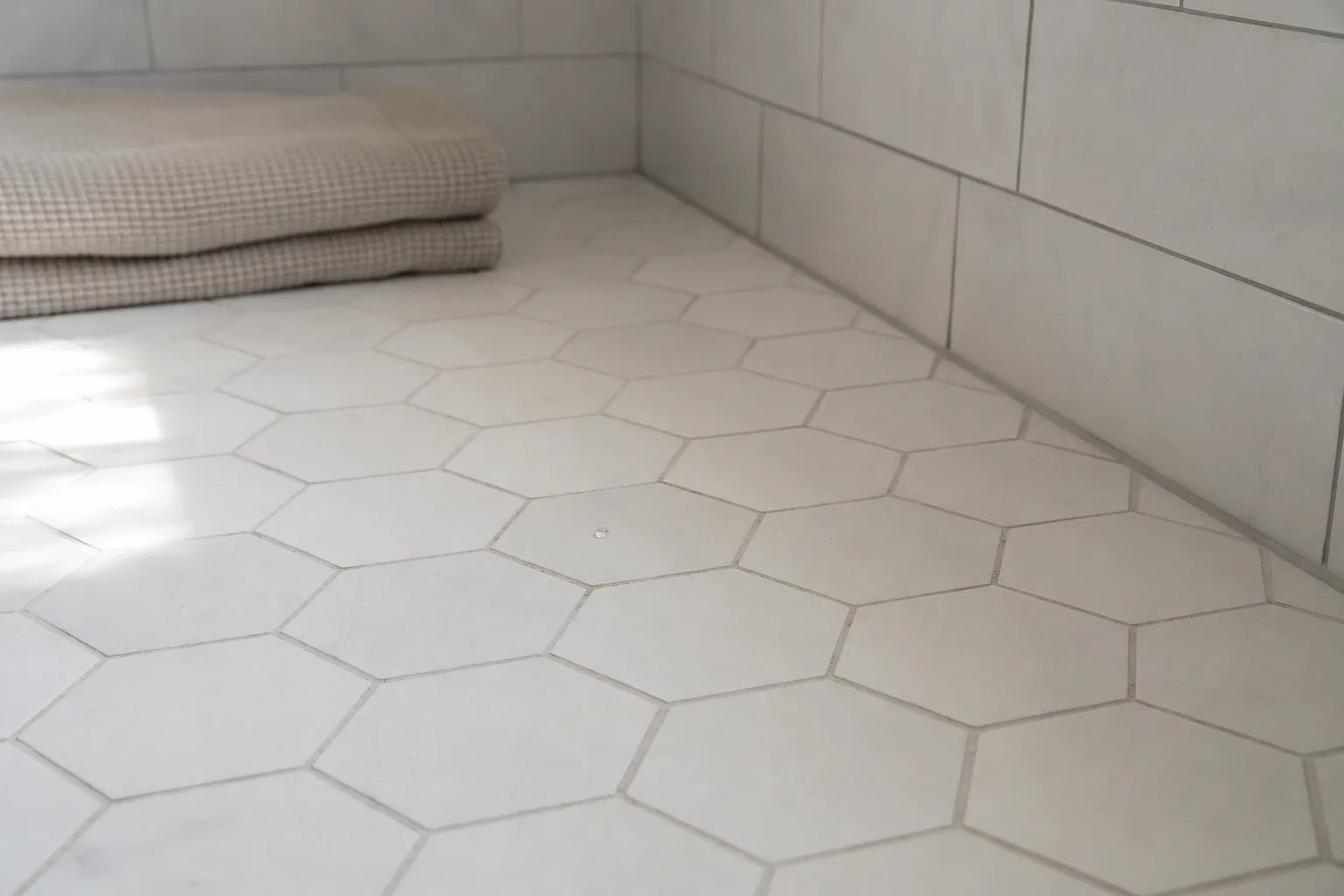
A quick way to check whether grout needs resealing: drip a little water onto a line and watch it. Water that beads up means the seal is still working. Water that darkens the grout and soaks in within a minute means it’s due. For a daily-use shower, that’s usually every 12 to 18 months, longer for a low-traffic spot like an entryway.
To reseal, the grout needs to be clean and fully dry first, ideally 24 hours with no water on it, since sealing over trapped moisture or existing mildew locks both in rather than fixing anything. That same porous quality is what makes grout a mildew magnet, covered in more detail in how to prevent mold and mildew in your bathroom. Apply the sealer with a small brush, keep it off the tile face on unglazed stone since it can leave a haze, and let it cure for the time the product specifies, usually a day or two, before the area gets wet again.
What Damages Grout and Tile
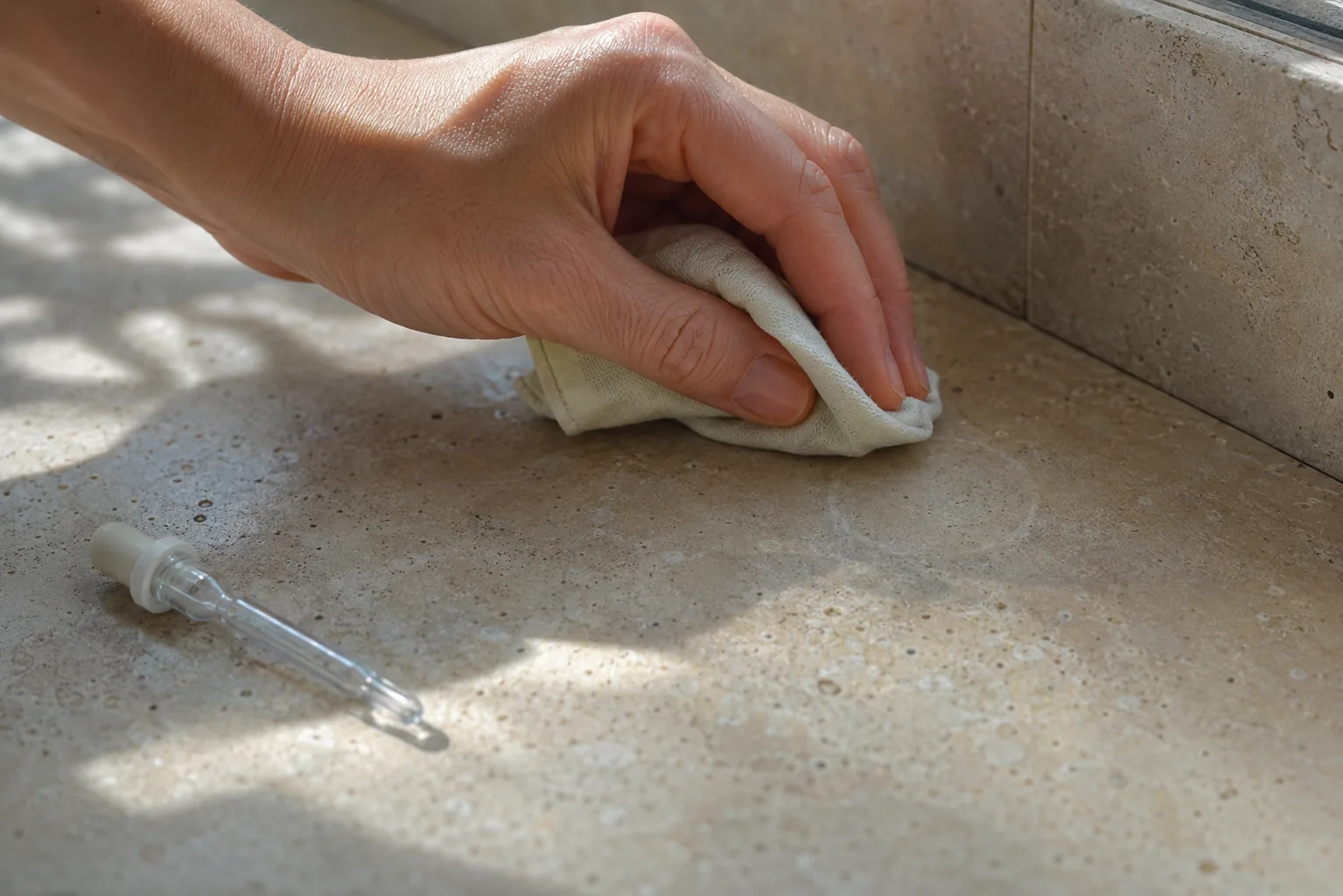
Vinegar and other acids on natural stone. Marble, travertine, and limestone are calcium-based, chemically close to the mineral deposits vinegar dissolves so well. The acid can’t tell the difference, so it etches the stone itself, leaving a permanently dull, cloudy patch no scrubbing fixes. Vinegar is fine on ceramic or porcelain, never on natural stone. That chemistry is covered in more detail in our guide to vinegar and baking soda.
Bleach on colored or dyed grout. Bleach lightens tinted grout unevenly, leaving patchy spots more noticeable than the original stain. Repeated use also breaks down grout sealant faster than gentler cleaners, so bleach can shorten the life of a seal you just paid to have applied.
Steel wool, wire brushes, and abrasive pads. These scratch glazed tile and roughen grout permanently, and a scratched glaze gives dirt a rougher surface to grip going forward, so the tile gets harder to keep clean over time. A drill-mounted brush attachment left running in one spot too long does the same to soft grout, wearing a groove instead of just cleaning it.
Stacking cleaning chemicals. Mixing bleach-based and ammonia-based products, even at different times without a full rinse between them, produces dangerous fumes. Use one product at a time and rinse completely before switching.
Heavy steam on unsealed grout. A steam cleaner loosens buildup fast, but on grout that’s overdue for resealing it also pushes moisture deeper into the joint, the opposite of what you want in a shower. Reseal first if it’s due, then steam clean.
Keeping It Clean Between Deep Cleans
A quick daily squeegee on shower tile prevents most of the buildup that eventually needs heavy scrubbing, the same habit covered in our guide on preventing mold and mildew in the bathroom. Pairing that with the weekly wipe-down in our bathroom cleaning routine that actually works keeps grout from needing an aggressive scrub, or an early reseal.
When DIY Isn’t Enough
Scrubbing has real limits. A few signs it’s time to call a professional instead of reaching for a stronger product:
- Discoloration that goes deeper than the surface. If a grout line still looks dark right after it’s scrubbed and fully dried, the staining is inside the material and needs more than baking soda.
- Grout that’s been unsealed and stained for years. Buildup that old has usually bonded into the cement, and getting it back to a sealable, even color takes stronger products applied correctly for the tile and grout type.
- Tile in a shower that’s clearly holding moisture behind it, cracked grout, loose tile, or a line that stays wet-looking longer than the tile around it. That’s water getting past the surface, and scrubbing harder doesn’t fix a leak or a failed seal.
- You’re not sure what your tile actually is. A stronger chemical cleaner on tile you can’t confidently identify as ceramic, porcelain, or natural stone risks etching or discoloring it permanently.
A professional deep cleaning includes grout and tile scrubbing done with products matched to your tile type, so you’re not guessing which cleaner is safe for marble versus porcelain, and it reaches buildup a home scrub isn’t making a dent in anymore.
Frequently Asked Questions
What’s the best homemade cleaner for grout?
Baking soda paste, left to sit 10 to 15 minutes before scrubbing, handles most everyday grime. For older, set-in staining, a mild oxygen-based cleaner works without bleach’s discoloration risk.
Can I use vinegar on grout and tile?
On ceramic or porcelain, yes. On natural stone like marble, travertine, or limestone, no, the acid etches it permanently. Skip vinegar if you’re not sure which you have.
How often should grout be resealed?
Roughly every 12 to 18 months for a shower used daily, longer for lower-traffic grout. Drip water on the grout: if it darkens and soaks in within a minute, it’s due.
Does steam cleaning damage grout?
Not if it’s properly sealed. On unsealed or overdue grout, steam can push moisture deeper into the joint instead of just lifting surface dirt, so reseal first if it’s due.
Is a drill brush attachment safe on grout?
In moderation. Stiffer attachments can wear grout down if left running in one spot too long. A hand brush with a baking soda dwell time clears most stains without that risk.
Why does my grout look dark even right after I clean it?
The staining or moisture has usually worked into the grout itself, not just the surface. A scrub can lighten porous, unsealed grout but won’t fully clear it, resealing or a professional clean is the next step.
How can I tell if my tile is natural stone or ceramic?
Natural stone has visible mineral veining and a cool, dense feel, and it etches if you test a hidden spot with a drop of vinegar. Ceramic and porcelain have a uniform glaze and won’t react at all.
Keeping Grout and Tile Looking New
The method above, baking soda, patience, and the right product for the right tile, handles the vast majority of grout and tile cleaning at home. If yours has gone past that, stained for years, cracked, or holding moisture it shouldn’t be, our deep cleaning service resets it properly so your regular routine has a clean baseline to maintain.
or call +1 (949) 330-0081.