Furniture Carpet Care
How to Clean Hardwood Floors Without Damaging the Finish
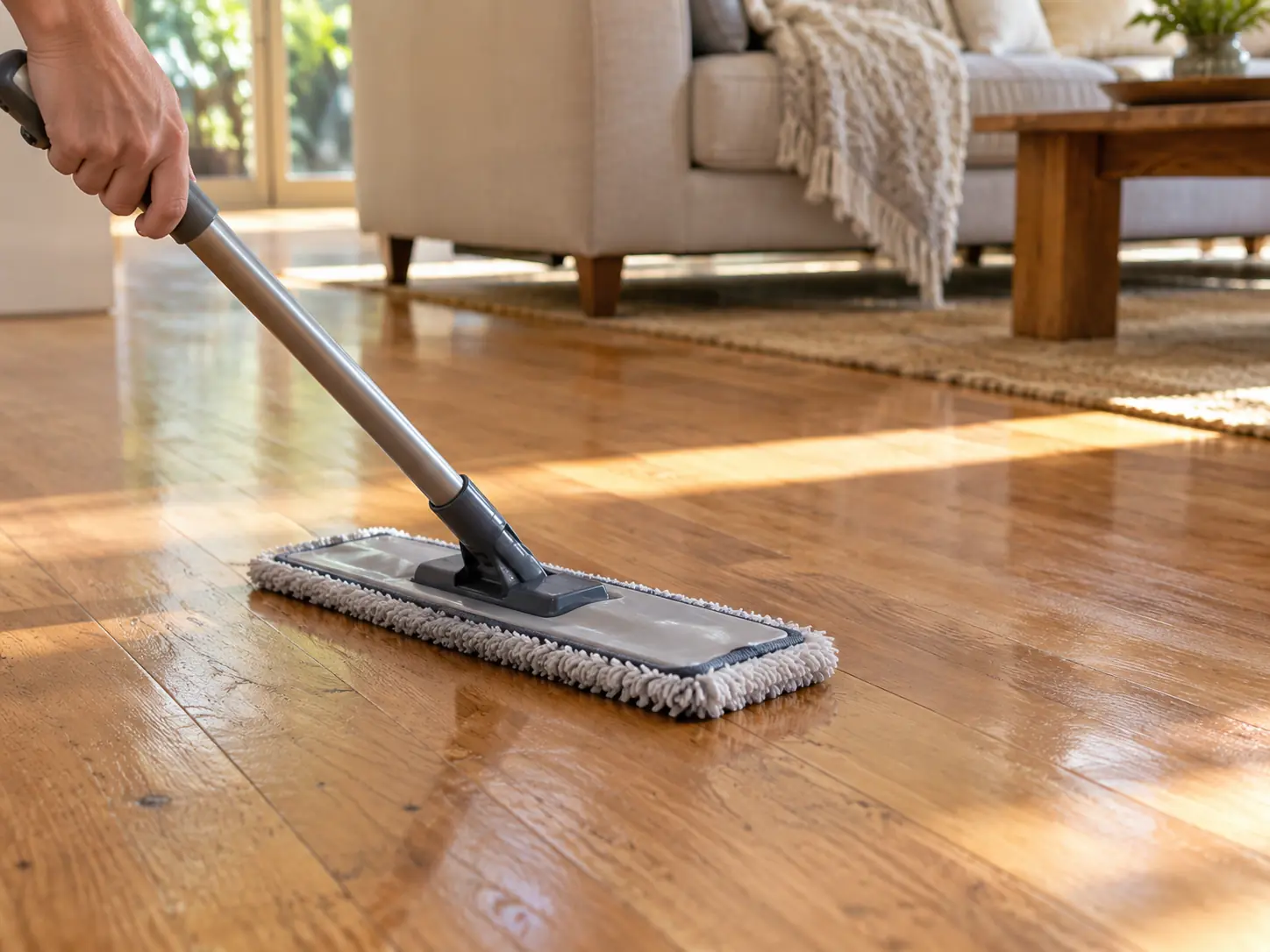
Clean hardwood floors by removing dust and grit first, then mopping with a barely damp microfiber mop and a pH-neutral cleaner made for wood. Never flood the floor, never use a steam mop, and wipe up spills quickly. Most damage to hardwood comes from too much water and from grit under shoes, not from dirt itself.
The right method depends on the finish on top of the wood, not on the wood species. A polyurethane-coated floor can take a damp mop. A waxed or oiled floor cannot. This guide shows you how to find out which one you have, then walks through weekly care, stain removal and the products worth using or avoiding.
Quick answer
- Time: 15 to 20 minutes of dust control plus 20 to 30 minutes of damp mopping for a typical living area.
- Difficulty: Easy, once you know your finish.
- Cost of supplies: Low. A microfiber mop, a spray bottle and a pH-neutral wood floor cleaner cover most homes.
- How often: Dust or vacuum weekly (more with pets). Damp mop every 1 to 4 weeks, depending on traffic.
- Skip this if: Your floor is waxed or has a worn finish. Use a method for that floor type (see below).
Identify your finish first
Most of the confusion about hardwood floors comes from not knowing what is on top of the wood. There are four common situations.
| Finish | What it is | Water tolerance | Cleaning approach |
|---|---|---|---|
| Surface-sealed (polyurethane, aluminum oxide, other urethane) | A clear plastic-like layer on top of the wood. The most common finish on modern floors | Moderate. Water on the surface is fine briefly; standing water seeps into seams | Damp mop with a pH-neutral cleaner |
| Penetrating oil or hardwax oil | Oil soaks into the wood; no hard layer on top | Low | Dry dust, spot clean, use a cleaner made for oiled floors, re-oil periodically |
| Wax over wood | Paste wax buffed on, common in older homes | Very low. Water can cloud wax | Dry methods and wax-safe products only; re-wax occasionally |
| Engineered wood | A real wood veneer on a plywood or composite core, usually with a factory finish | Moderate to low depending on veneer thickness | Same as sealed floors, with even less water |
The water-drop test
Put a few drops of water on the floor in a low-traffic spot, such as inside a closet or under a sofa edge, and watch for a few minutes.
- Water beads up and stays on top: You likely have a surface-sealed finish.
- Water slowly darkens the wood or soaks in within a few minutes: The finish is worn or it is an oil finish.
- A white haze appears after wiping: Possibly wax.
You can also rub a clean finger across the floor. A greasy, wax-like smear points to wax. A smooth, hard feel points to a sealed finish. If you are unsure, ask the installer, check any paperwork from the home purchase, or ask a flooring professional. When in doubt, use less water.
What you need
| Item | What it does | Notes |
|---|---|---|
| Soft broom or microfiber dust mop | Picks up dust and pet hair without scratching | A dust mop traps debris better than a broom |
| Vacuum with a hard floor setting | Removes grit from seams and edges | Turn off the beater bar or use a soft brush head |
| Flat microfiber mop with washable pads | Applies a thin film of cleaner | The pad should be damp, not wet |
| pH-neutral hardwood floor cleaner | Cleans without dulling or stripping the finish | Look for “pH neutral” and “for sealed hardwood” on the label |
| Spray bottle | Lets you control how much liquid touches the floor | Spray the pad, not the floor, when in doubt |
| Dry microfiber cloths | Buff, spot clean, wipe spills | Keep several on hand |
| Felt furniture pads | Prevent scratches from chairs and tables | Replace when worn or dirty |
| Doormats and runners | Catch grit at entry | Use ones with a non-staining, breathable backing |
Do not use: steam mops, string or sponge mops that hold a lot of water, ammonia, bleach, wax-and-polish combos on polyurethane, oil soap on a surface-sealed floor (see below), or abrasive pads.
What to avoid and why
Steam mops
Steam forces heat and moisture into the seams between boards. Over time that can cause cupping, finish clouding and peeling. Many flooring manufacturers say their warranty does not cover steam damage. Even on sealed floors, it is a risk with no benefit that a damp microfiber mop does not already give you.
Standing water
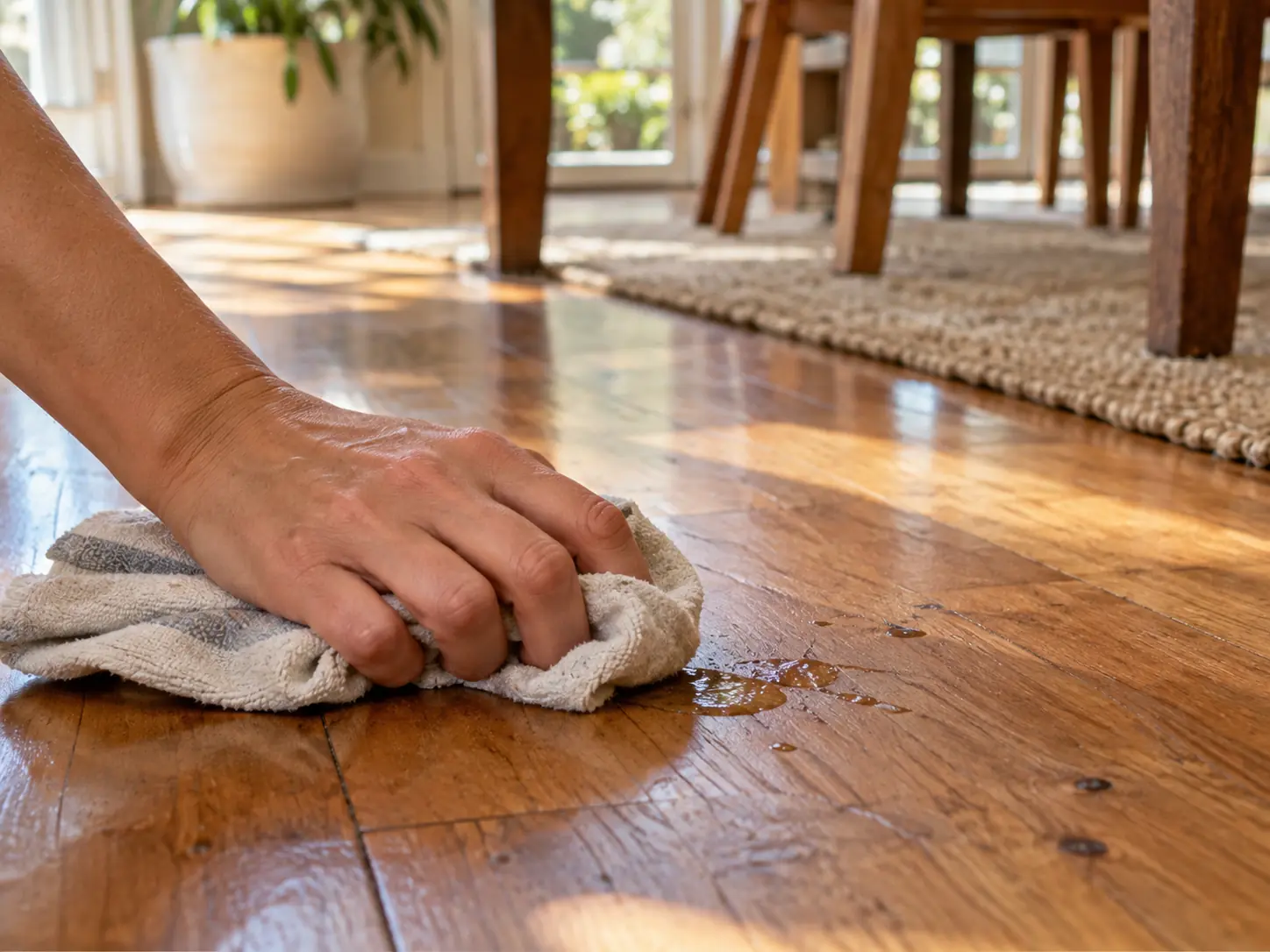
Water that sits on hardwood finds the gaps between boards. The wood swells at the edges, which can show up as cupping weeks later. Wipe spills right away, and use only a lightly damp pad when mopping.
Strong vinegar
Straight vinegar is acidic. Repeated use can dull polyurethane over time and break down the glossy surface. Some people use a very diluted mix, and some flooring makers specifically warn against it. If you use vinegar at all, keep it diluted and occasional, and check your finish maker’s guidance. A pH-neutral floor cleaner is the safer default. For other uses, our guide to natural cleaning with vinegar and baking soda lists where vinegar belongs and where it does not.
Ammonia and bleach
Both can strip or cloud a finish. Ammonia also reacts badly with bleach, so keep them apart. See what never to mix.
Oil soap
Murphy Oil Soap and similar products are often recommended for old wood. On a surface-sealed floor, the oil can leave a film that attracts dirt and makes later refinishing harder. Some flooring manufacturers say not to use it on polyurethane. On a floor with a penetrating oil or a worn finish, it may be fine, but check with the maker of your floor.
Wax and polish products
A wax or “shine” polish applied to polyurethane builds up a cloudy layer and can make the surface slippery. Do not use them unless the floor was finished with wax.
Sandy grit
Grit under a shoe works like sandpaper. This is the single most common cause of dull, scratched floors, and it matters in a region with fine dust and sand tracked in from outdoors. More on that in the Orange County section below.
Weekly dust control
Dust control does more for the look of hardwood than mopping does.
- Dry dust mop or vacuum first. Do this before every mopping session, since wet grit scratches.
- Work with the boards. Follow the grain direction to pick up debris from the seams.
- Do edges and corners. Use a soft brush attachment along baseboards.
- Check under furniture. Dust bunnies collect there and get pulled across the floor later.
- Empty the dust mop pad or vacuum canister outside. Do not shake it over the floor.
A home with pets or children needs this step more often. Hair, litter and cereal crumbs all act as grit.
Step-by-step: damp mop a sealed hardwood floor
Plan 20 to 30 minutes for a standard room. This method suits surface-sealed floors and most factory-finished engineered floors.
1. Clear the floor (3 minutes)
Move small furniture, rugs and toys. Check for sticky spots or dried spills that need pre-treatment (see the stain guide below).
2. Dust or vacuum thoroughly (5 to 8 minutes)
Do not skip this step. A damp mop over dusty floor makes mud that dries into streaks.
3. Mix or prepare the cleaner (2 minutes)
Use a pH-neutral hardwood cleaner and follow the dilution on the label. Concentrates are usually diluted with water in a spray bottle. If you do not have a dedicated cleaner, a tiny amount of mild dish soap in a spray bottle of water is a common stopgap. Use only a few drops per 16 ounces so it does not leave a film.
4. Wet the pad, not the floor (1 minute)
Spray the microfiber pad until it is lightly damp. It should feel like a wrung-out washcloth. If you squeeze the pad and water drips out, it is too wet.
5. Mop in small sections (10 to 15 minutes)
Work in the direction of the boards, in straight lines. Overlap each pass slightly. Do not scrub hard on a sealed floor. If the pad gets dirty, flip or swap it. Avoid pooling water at seams and edges.
6. Dry as you go (2 to 5 minutes)
Follow with a dry microfiber cloth or a second dry pad, especially at edges and near doors. The floor should look matte and dry within a minute or two.
7. Let it air dry before heavy use (10 minutes)
Keep pets and shoes off until the surface feels fully dry. Open a window to speed it up.
Why this works: light moisture lifts surface film without reaching the seams, and a neutral cleaner rinses clean instead of leaving a layer.
How to treat an oiled or waxed floor
Oiled and waxed floors are less forgiving.
- Dry clean first: dust mop or vacuum often.
- Spot clean spills right away with a dry cloth.
- Use a cleaner made for oiled floors (often a soap-based product designed to replenish the oil). Mop with a very well wrung pad.
- Re-oil or re-wax on a schedule. The interval depends on traffic and product, so follow the maker’s guidance.
- Skip standard pH-neutral cleaners made for polyurethane unless the label says the product is safe for oiled floors.
If you are not sure, treat the floor as oiled or waxed until you know otherwise, and use only dry methods.
Stain removal by stain type
Always blot, do not rub. Test in a hidden area first. Work from the edge of the stain toward the center so it does not spread.
| Stain | Method | Notes |
|---|---|---|
| Food spills and sticky residue | Damp cloth with a drop of dish soap, wipe, then dry | Do not let it sit; sugar and acids can dull the finish |
| Grease or cooking oil | Absorb with a paper towel, then clean with a damp cloth and mild soap | Repeat if needed |
| Candle wax | Let it harden, lift with a plastic card (never metal), then wipe the film with a damp cloth | Ice in a bag can speed hardening |
| Chewing gum | Harden with ice in a bag, then lift gently with a plastic scraper | Do not pick with a knife |
| Ink or marker | Dab a cloth with a small amount of rubbing alcohol and blot | Test first; alcohol can dull some finishes |
| Pet urine | Blot immediately; clean with an enzyme cleaner safe for floors; wipe and dry | Old stains may be in the wood, not the finish |
| White water rings | Rub gently with a dry cloth; if it persists, the finish may be clouded | Sometimes needs a professional touch-up |
| Black stains | Usually moisture and age in the wood itself | Needs refinishing or a professional repair |
| Heel marks and scuffs | Wipe with a clean dry microfiber cloth, or a barely damp one | A tennis ball is a classic tool, but a cloth is safer |
| Scratches | Light ones may blend with a touch-up marker or wax filler stick | Deep scratches need a professional |
Engineered, solid and bamboo floors compared
| Floor type | Structure | Water risk | Notes |
|---|---|---|---|
| Solid hardwood | One piece of wood, often 3/4 inch thick | Cupping, gaps and swelling with water | Can be sanded and refinished several times |
| Engineered hardwood | Real wood veneer on a layered core | Veneer can lift or swell if soaked | Thicker veneers can be refinished once or twice; thin veneers may not be |
| Bamboo | Grass pressed into planks | Moisture sensitive; can scratch | Check the maker’s care guide |
| Laminate (looks like wood) | Photo layer on fiberboard | Very sensitive at seams | Not real wood; use a laminate cleaner and almost no water |
Check the box, the warranty or the installer’s notes to confirm which one you have. Engineered floors usually tolerate the same pH-neutral cleaners as solid sealed floors, but with a dryer mop.
Product types compared
| Product type | Best for | Avoid on | Notes |
|---|---|---|---|
| pH-neutral hardwood cleaner | Sealed floors, regular mopping | Waxed floors unless the label allows | The safest default |
| Diluted dish soap (a few drops) | Occasional stopgap on sealed floors | Oiled or waxed floors | Too much leaves film |
| Diluted vinegar | Rarely; light residue on sealed floors | Anything with a worn finish, or if the maker advises against it | Not a daily product |
| Oil soap | Some older or oiled floors | Polyurethane finishes | Can leave film |
| Hardwood polish or restorer | Reviving a sealed floor with a dull coat | Waxed floors | Follow the label; some prevent a future recoat |
| Steam cleaner | Nothing on hardwood | All hardwood | Skip it |
| Wax or paste wax | Waxed floors only | Polyurethane | Needs buffing |
Look at the label for “safe for sealed hardwood” or “for oiled floors.” If the label does not name wood, it is not made for it.
Prevent scratches and dullness
Prevention is cheaper than refinishing.
- Take shoes off at the door. High heels and cleats concentrate pressure and can dent the wood.
- Use mats at every entry, inside and out, and shake them out regularly.
- Put felt pads under furniture legs. Check them every few months. Replace flattened or dirty ones.
- Lift, do not drag, heavy furniture.
- Trim pet nails. They scratch the finish at the edges.
- Use rugs in high-traffic areas, with a breathable non-slip pad. Rubber backings can stain some finishes.
- Place a mat under rolling chairs, or use soft wheels.
- Keep the sunlight in check. Direct sun fades wood over time, so rotate rugs and use curtains in bright rooms.
- Wipe wet boots and umbrellas at the door.
Humidity and seasons
Wood expands when it absorbs moisture and shrinks when it dries. Small gaps in winter and slight cupping in damp months can be normal. Try to keep indoor humidity steady, roughly in the middle range that your flooring maker recommends. A hygrometer costs little and tells you when the air is too dry or too wet.
In coastal areas, humidity can rise in summer mornings, while Santa Ana wind days can dry the air quickly. Neither is a reason to panic, but sudden water exposure is much worse than a seasonal gap.
When to refinish instead of clean
Cleaning cannot fix a finish that has worn through. Signs that the floor needs more than a mop:
- Water soaks in instead of beading
- Gray or dull traffic paths, with bare wood showing
- Deep scratches across many boards
- Black stains that have gone into the wood
- Peeling finish or a hazy cloud that does not clean off
A screen and recoat (a light abrasion followed by a fresh topcoat) can refresh a floor whose finish is dull but intact. A full sand and refinish is needed when the finish is gone or the wood is stained. Engineered floors may allow fewer sanding rounds, depending on the veneer. A flooring professional can tell you which option your floor can take.
When it is worth handing off: Weekly and biweekly mopping adds up. Our recurring cleaning crews use damp-mop methods and pH-neutral products on hardwood, and you can mention your floor type when you book. As an example, a 3 bedroom, 2 bathroom home is (60 + 75 + 70) = $205 per clean, or $174.25 on a biweekly plan after the 15% discount. You can see your own price in about 30 seconds on our instant quote.
The Orange County angle
Fine dust and sand travel inside on shoes, especially in homes near beaches and on windy days. That grit is why entry mats matter so much here. Santa Ana wind days can coat floors in a light film of dust, so a dry dust mop pass before any mopping saves your finish.
Many Orange County homes are slab-on-grade, which means moisture can come up through the slab. If you have engineered or solid wood over a slab, check what moisture barrier was used and avoid extra water on the surface. Condos and HOA communities often have rules about flooring, including underlayment and noise, so check your HOA documents before replacing or refinishing floors. Hard water spots can also show on sealed floors where a damp mop dries slowly, so buff with a dry cloth after mopping.
When to call a professional
Call a flooring professional if you see:
- Cupping, buckling or boards lifting
- Black stains or widespread water damage
- A worn-through finish
- Deep gouges or large pet urine stains
- A floor you cannot identify and want to treat properly
A pro can screen and recoat, repair boards and match a stain. We do not refinish floors. What we do is the regular maintenance that makes refinishing less frequent: dust control, damp mopping and cleaning the edges and baseboards, as part of a deep cleaning or recurring visit.
If you are planning a move, floors are one of the places landlords look. Our move-out cleaning checklist and security deposit guide for California explain what that inspection usually covers. For a regular routine, the weekly house cleaning checklist shows where floors fit, and how often to clean everything gives frequencies for the rest of the house. Homes with pets may also like keeping a clean home with pets.
Get a price any time with the instant quote. We serve all of Orange County, including Irvine and Newport Beach.
Frequently asked questions
Can you use vinegar on hardwood floors? It is not the best choice. Vinegar is acidic and, used strongly or often, can dull a polyurethane finish. If you use it, dilute it heavily and keep it occasional, or check your flooring maker’s advice. A pH-neutral hardwood cleaner is safer for regular use.
Is Murphy Oil Soap safe on hardwood floors? It depends on the finish. On surface-sealed polyurethane floors it can leave an oily film, and some floor makers advise against it. On oiled or older floors it may be acceptable. Check your manufacturer’s guidance and test a hidden spot.
Can you steam mop hardwood floors? No. Steam pushes moisture and heat into the seams and can cause cupping, clouding and finish damage. Many warranties exclude steam damage. A lightly damp microfiber mop does the job without the risk.
How often should you mop hardwood floors? Every one to four weeks, depending on traffic, pets and children. Dust or vacuum weekly or more often. Spot clean spills right away rather than waiting for the weekly mop.
How do you make old hardwood floors shine? Dust and damp mop thoroughly first, since dirt dulls the finish. If the floor still looks flat, a hardwood polish or restorer made for your finish type can help. If the finish is worn through, a screen and recoat or a refinish is the real fix.
What is the best homemade hardwood floor cleaner? A few drops of mild dish soap in a spray bottle of warm water, sprayed on a microfiber pad, works for occasional light cleaning on sealed floors. A commercial pH-neutral wood cleaner is more consistent and rinses cleaner.
How do you get pet urine out of hardwood? Blot right away, clean with an enzyme cleaner approved for floors, and wipe dry. If the stain has turned dark or the smell stays, the urine has probably reached the wood and a pro may need to sand and refinish that area.
Can you use a Swiffer or disposable pad on hardwood? Dry pads are fine for dust. Wet pads add moisture and often leave a film, so use them sparingly on sealed floors only, and not on oiled or waxed ones.
Will rugs damage hardwood floors? Rugs with rubber backings can stain or discolor some finishes. Choose a breathable non-slip pad made for hardwood, and lift the rug now and then to clean beneath it.
How do I clean hardwood floors between professional cleanings? Dust mop or vacuum a few times a week, wipe spills right away, keep mats at the doors and use a damp mop every week or two. That alone keeps most floors looking good.