How to Clean and Maintain Stainless Steel Appliances Without Streaks
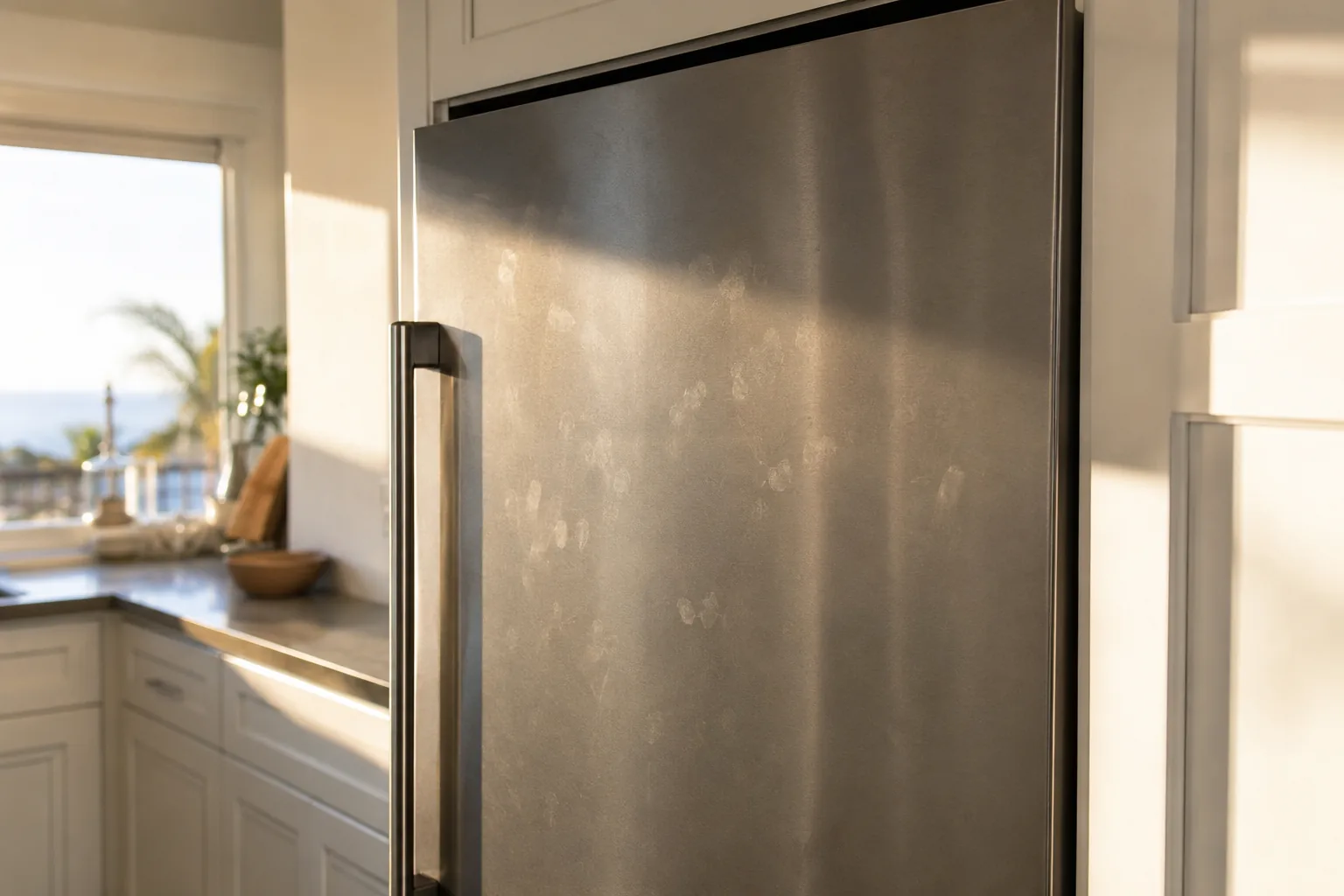
Wipe with the grain, not against it, using a soft microfiber cloth with warm water and a little dish soap, then dry immediately with a second dry cloth. That single habit, wash then dry, both times following the grain, prevents most of the streaks, water spots, and fine scratches that make stainless steel look worse after cleaning instead of better. The rest is knowing which products to avoid and how to manage the high-touch spots that show fingerprints fastest.
Find the grain direction first
Stainless steel has a visible grain, fine brushed lines pressed into the metal during manufacturing, running in one direction. Tilt the panel toward a window or overhead light and the lines show up clearly, usually vertical on a fridge door and horizontal across a dishwasher front or stove hood. Every wipe, scrub, or polish should follow those lines. Wiping across the grain is the most common cause of the fine scratch patterns that show up under kitchen lighting, especially on darker or brushed finishes. A single wipe against the grain won’t scratch it, but repeated cleaning that ignores the direction accumulates into a hazy, scuffed look over months.
The two-cloth wash-and-dry method
The actual cleaning technique is simple, and the order matters more than the product:
- Wash with a damp, soft microfiber cloth and a small amount of dish soap, working in long strokes with the grain.
- Rinse the cloth, wring it out, and wipe the surface again with plain water to lift any soap residue.
- Dry immediately with a second, clean, dry cloth, following the same grain direction, until no damp patches remain.
Skipping that third step is the single biggest reason stainless steel ends up streaky. Water left to air-dry evaporates unevenly and leaves behind mineral deposits, faint white or cloudy marks that are especially noticeable with hard water, which is common across Orange County.
Products that work and products to avoid
| Use this | Avoid this |
|---|---|
| Microfiber cloth | Steel wool or scouring pads |
| Warm water and dish soap | Bleach or chlorine-based cleaners |
| Dedicated stainless steel cleaner | Powdered abrasive cleansers |
| A few drops of mineral or olive oil on a dry cloth, for polishing | The rough side of a sponge |
| White vinegar and water, for mineral spots | Ammonia-based glass cleaner sprayed directly and left to dry |
Bleach and other chlorine-based products can pit and discolor stainless steel over time, even with a single strong exposure, so keep them off these surfaces entirely. Anything abrasive, steel wool, the scrubby side of a sponge, powdered cleansers, dulls the surface and creates fine scratches that catch the light.
For an occasional polish, a few drops of mineral or olive oil on a dry cloth, applied with the grain in a thin layer, brings back shine and adds a light barrier against fingerprints. Wipe off any excess so it doesn’t leave a greasy film, and skip this near a stove burner, since oil residue near a heat source is a fire risk.
For grease splatters or dried food, a paste of baking soda and water, applied gently with the grain and left to sit a few minutes, is milder than any abrasive and usually enough. For hard water spots near a dishwasher door or sink faucet, a white vinegar and water solution cuts through mineral deposits, wiped on with the grain, left a minute, then wiped clean and dried immediately.
Preventing fingerprint buildup on high-touch spots
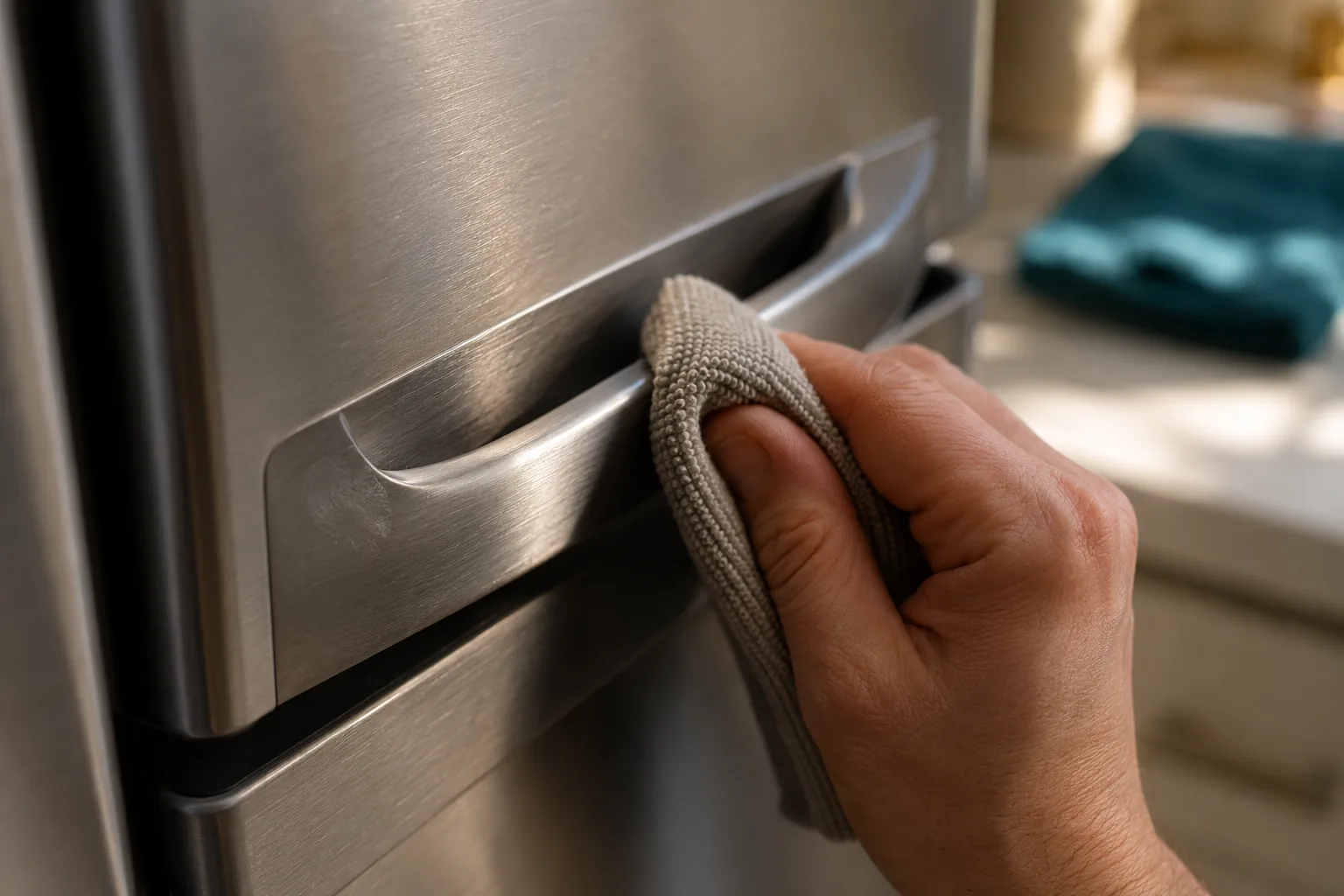
Fingerprints and smudges concentrate on a predictable set of spots: refrigerator door handles, dishwasher control panels, stove and oven knobs, and any drawer pull that gets touched with food-prep hands. These areas build up oil faster than the rest of the appliance simply because of how often they’re touched.
- Wipe handles and knobs with a dry microfiber cloth daily, even on days without a full clean. This alone catches most buildup before it sets.
- After a full wash-and-dry, add a very thin coat of mineral oil or a dedicated stainless steel polish to these spots specifically. The light film makes new fingerprints show up less and wipe off faster.
- Keep a dry cloth within reach in the kitchen so a quick wipe after cooking becomes a five-second habit instead of a task that gets postponed.
Stainless steel looks best maintained lightly and often rather than deep cleaned occasionally. A single intensive clean every few months, with nothing in between, gives fingerprints and water spots weeks to set into a haze that takes more effort to remove than it would have the day it appeared. A quick daily wipe on handles, a weekly wash-and-dry on the full panel, and an occasional oil pass keeps appliances looking new far longer than periodic deep cleans alone.
Frequently Asked Questions
How do I find the grain if I genuinely can’t see it? Rake light across the surface from the side, using a flashlight or angling a lamp low, rather than looking straight on under overhead light. If it’s still unclear, wipe a small, inconspicuous section in both directions and compare which leaves a smoother finish.
Can I use glass cleaner on stainless steel? A plain ammonia-free glass cleaner in a light spray, wiped immediately with the grain, is fine for occasional use, but it won’t add the fingerprint resistance a dedicated stainless cleaner or oil finish does. Avoid letting any glass cleaner sit and air-dry on the surface.
Why does my stainless steel look streaky right after I clean it? Almost always a drying issue, either the surface air-dried instead of being buffed dry immediately, or the wipe direction crossed the grain at some point. Redo the dry step with a clean cloth, following the grain closely, and the streaks usually disappear.
Will scratches from wiping against the grain ever come out? Very fine scratches sometimes fade with a light, consistent oil-polishing routine over several weeks, since the oil fills in micro-scratches and reduces how much they catch the light. Deeper scratches are permanent and only reduced in appearance, not removed, by professional buffing.
Does a stainless steel refrigerator need different care on the sides versus the front? The technique is the same, but the sides get touched and leaned on less, so they typically need cleaning far less often than the door and handle. Check the grain direction separately on each panel, since it isn’t always oriented the same way front versus side.
How do I clean the underside of appliance handles, where grime actually collects most? Use a damp microfiber cloth folded to a corner or wrapped around a finger to reach the underside and edges, following the grain as closely as the shape allows, then dry the same way. This spot gets missed in a quick daily wipe but collects the most oil from grip contact.
If your kitchen appliances need more than a wipe-down, a professional deep cleaning covers the inside and outside of the oven, fridge, and dishwasher, along with the rest of the kitchen. See the kitchen deep clean checklist for what’s included, or get an instant quote for your Orange County city to see the price before booking.
or call +1 (949) 330-0081.