Care Habits
How to Remove Toilet Bowl Stains (Hard Water Rings, Rust, Mold)
Most toilet bowl stains are one of three things: a mineral ring from hard water, an orange or brown stain from iron, or dark and pink growth from mold and bacteria. Each needs a different cleaner. Mineral and rust stains dissolve with an acid (citric acid, vinegar, or a toilet bowl descaler), while mold and biofilm respond to a scrub with a disinfecting cleaner. The one rule that matters most: never mix bleach with an acid or with ammonia, and never use two different toilet cleaners at the same time.
This guide shows how to tell the stains apart, how to remove each type safely, how to reach the spots below the waterline and under the rim, and how to stop them from coming back.
Quick answer
- What you need: Rubber gloves, a toilet brush, a pumice stone (optional), citric acid or a toilet bowl descaler, a disinfecting cleaner, and good ventilation.
- Time: 10 minutes for a light ring, 30 to 60 minutes with soaking for heavy buildup. Add overnight soak time for stubborn mineral deposits.
- Cost of supplies: Low. A box of citric acid or a bottle of descaler lasts many cleanings.
- Difficulty: Easy to moderate. Hard water stains take patience, not force.
- How often: Brush weekly, treat stains as soon as you see them, and descale monthly in hard water areas.
- Skip the DIY if: The porcelain is cracked or the stain is under a chipped glaze. Chips hold stains permanently. Replacing the bowl or refinishing it is the only fix.
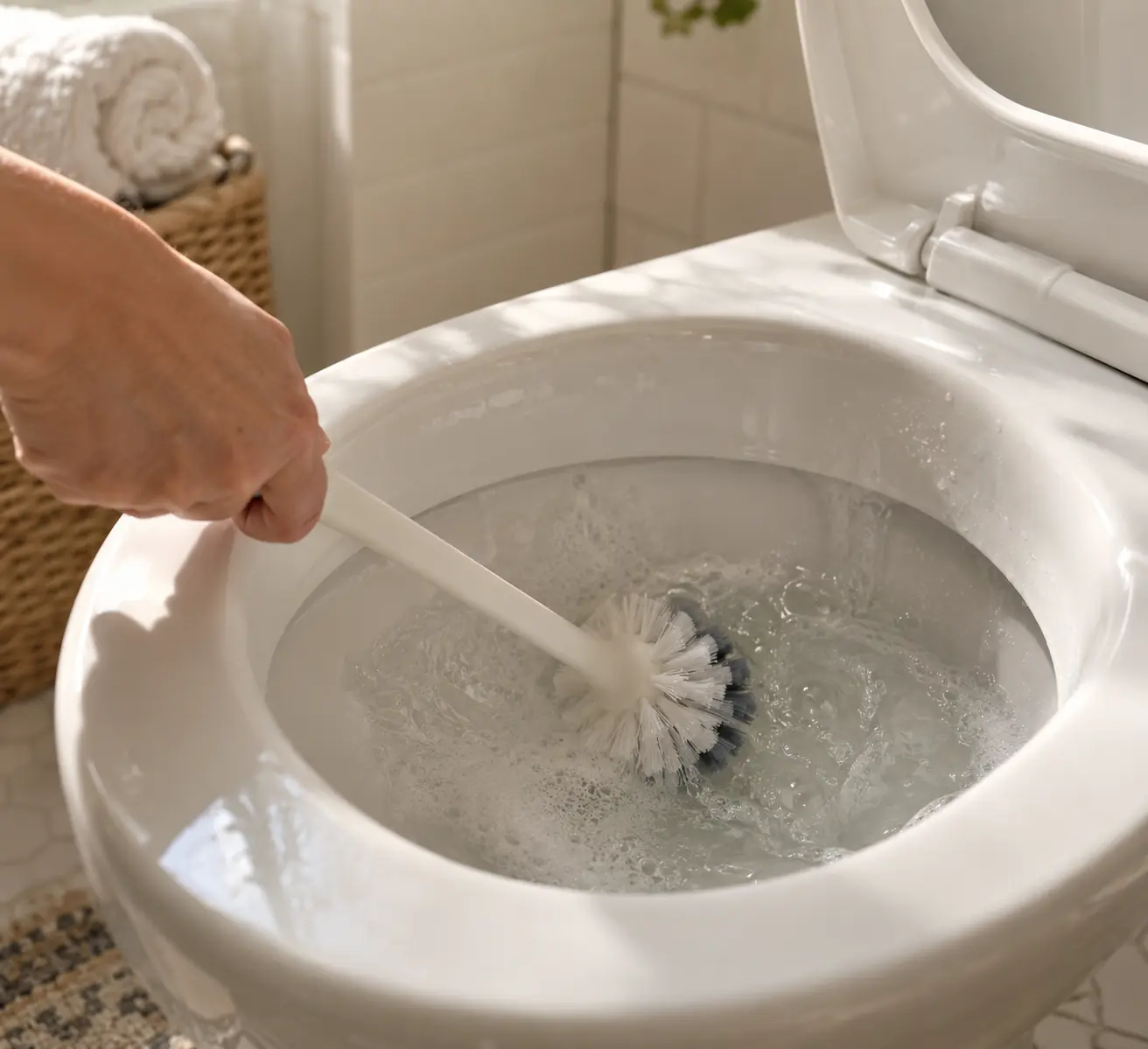
Identify the stain first
Using the wrong product wastes time and sometimes makes the stain worse. For example, bleach does very little on rust and can set it. Take two minutes to read the stain.
| Stain look | Likely cause | Where it appears | What works |
|---|---|---|---|
| White to tan or gray ring at the waterline, rough to touch | Hard water minerals (calcium, magnesium) | Waterline, under the rim, around the drain | Acid (citric acid, vinegar, descaler), pumice for stubborn rings |
| Orange, rust brown, or reddish streaks | Iron in water or rusty pipes | Below the waterline, down the bowl, near the drain | Rust remover (acid based), citric acid |
| Brown stains that are smooth and not rough | Iron, manganese, or tannins from water | Entire bowl, especially in homes with well water | Acid based rust remover, may need repeated treatment |
| Black or dark green spots or streaks | Mold or mildew | Under the rim, in the rim holes, around the seat hinges | Scrub with disinfecting cleaner, bleach-based cleaner used alone |
| Pink to orange slimy film | Bacteria (often Serratia marcescens) | Waterline and shower curtain areas | Scrub with a disinfectant, dry the area, repeat |
| Dark ring that returns quickly | Biofilm plus minerals | Waterline | Descale first, then disinfect |
| Black or gray metallic streaks | Marks from a metal object, ceramic abrasions | Rim and bowl sides | Gentle abrasive, pumice stone |
| Stain beneath a chip or crack in the glaze | Porcelain damage | Anywhere | Cannot be cleaned out. Repair or refinish |
A quick test: Run a fingernail across the stain. If it feels gritty or raised, it is minerals. If it feels smooth and the color goes deep, it is likely iron or tannin staining. If it looks fuzzy or wet, it is organic growth.
Safety first: bleach, acids, and ammonia
Toilet cleaning is where accidental chemical mixing most often happens, because people have several products under the sink and use them back to back.
- Never mix bleach with acidic cleaners. Many toilet bowl cleaners contain acid (often hydrochloric acid or similar). Others contain bleach. Combining a bleach-based product with an acidic one, or with vinegar, can release chlorine gas.
- Never mix bleach with ammonia. This includes cleaners that contain ammonia and also urine in the bowl. Rinse before switching products.
- Do not use two different toilet cleaners in the same session. Flush and rinse thoroughly between products. If you used an acid cleaner, wait until the bowl is fully flushed and rinsed, and ventilate before using anything bleach-based.
- Read the label and keep the product in its original container.
- Ventilate. Open a window or run the exhaust fan.
- Wear rubber gloves and eye protection when using acids or bleach. Splashes from a toilet brush can reach your face.
- Keep children and pets away from the bowl while products are working, and put the lid down.
- Do not pour anything into a toilet with a clog, which can cause splashing back.
For a fuller list of dangerous combinations, see cleaning products you should never mix.
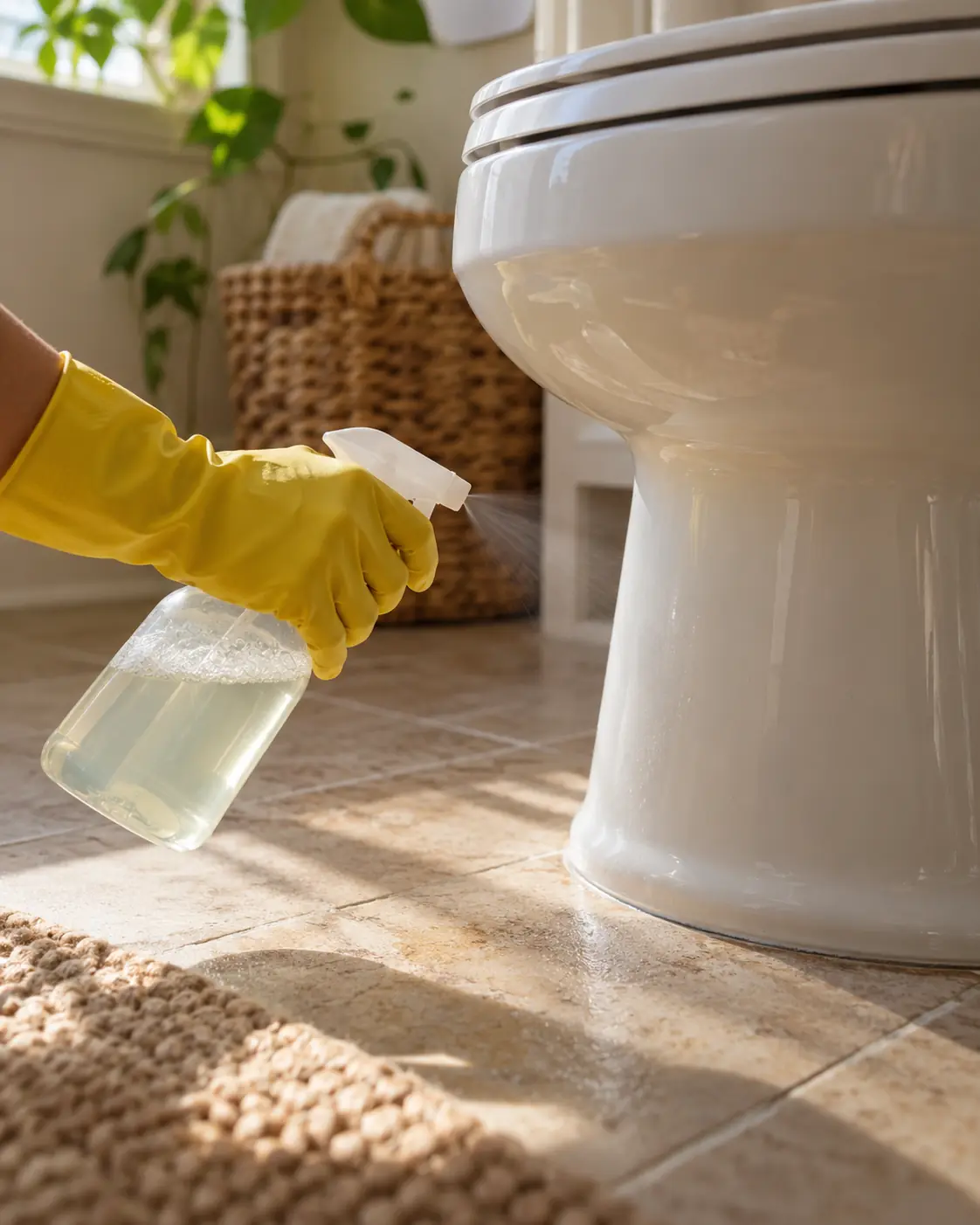
What you need
| Item | What it does | Notes |
|---|---|---|
| Rubber gloves | Protects hands | Dedicate a pair to bathroom use |
| Toilet brush (stiff bristles) | Scrubs the bowl | Replace when the bristles are bent or worn |
| Pumice stone or pumice scouring stick (optional) | Removes stubborn mineral rings | Wet it first. Use only on porcelain, never on plastic or fixtures |
| Citric acid powder | Dissolves mineral and rust stains | Gentler than hydrochloric acid products. Often sold in the canning aisle or cleaning aisle |
| White vinegar | Mild acid for light rings | Weaker than citric acid for heavy buildup |
| Toilet bowl descaler or rust remover | Stronger acid cleaner | Read the label for contact time and do not mix with other products |
| Disinfecting toilet bowl cleaner | Kills germs, removes organic growth | Check the active ingredient on the label |
| Baking soda | Mild abrasive, deodorizer | Helps with light surface staining |
| Old toothbrush or small brush | Cleans rim holes and hinges | Keep it for the bathroom only |
| Spray bottle | Applies cleaner to the rim and outside | Label it clearly |
| Microfiber cloth | Wipes exterior | Wash separately from kitchen cloths |
| Plastic scraper (optional) | Lifts heavy scale | Plastic only, not metal |
Do not use: Steel wool, abrasive scouring powder on glazed porcelain, or metal scrapers. These scratch the glaze, and a scratched surface collects stains faster.
Method by stain type
Hard water ring (mineral buildup)
This is the most common stain, and it is the reason vinegar is so popular. Minerals dissolve in acid, so the approach is to bring acid into contact with the stain for long enough.
- Lower the water level (2 minutes). Turn off the water supply valve behind the toilet if you want the bowl to stay dry, or flush and scoop out water with a cup. You can also use a toilet brush to push water past the trap. Lower water means the cleaner touches the stain directly instead of being diluted.
- Apply the acid (2 minutes). For citric acid, dissolve about a quarter to a half cup in a cup of warm water and pour it around the ring. For a descaler, follow the label. For vinegar, pour a cup or two onto the ring, or soak paper towels in vinegar and press them against the waterline.
- Let it sit (30 minutes to overnight). Light rings often lift in 30 minutes. Heavy rings need several hours or overnight. Keep the lid down.
- Scrub (3 minutes). Use the brush, working around the ring. If minerals remain, wet a pumice stone and rub gently with light pressure. The stone and the porcelain must both stay wet so the stone does not scratch.
- Flush and repeat if needed. Thick scale may need two or three rounds.
- Rinse the brush. Run it under water or swish it in the bowl as you flush.
Why this works: Mineral scale is calcium carbonate and similar compounds. Acid breaks it into soluble salts that rinse away. Scrubbing alone only works on the surface, while contact time dissolves the layer underneath.
Rust and iron stains
Orange or brown streaks that do not respond to scrubbing are usually iron. This is common in homes with older pipes or well water.
- Skip bleach. Chlorine bleach does not remove rust and can set it into the surface.
- Use an acid-based rust remover or citric acid solution. Citric acid works on light iron stains. Products labeled as rust removers for toilets often contain stronger acids. Follow the label exactly.
- Apply to the stain and let it sit for the time on the label, commonly 10 to 30 minutes. Citric acid can sit longer.
- Scrub with the brush, then flush.
- Repeat for heavy staining. Rust removal often takes more than one round.
If the water itself is carrying iron, the stain returns. In that case a whole-house filter or a water treatment professional is the real fix. The cleaning only buys time.
Black mold and mildew
Dark spots tend to appear under the rim, in the small holes that rinse the bowl, around the base, and on the seat hinges, where moisture stays.
- Ventilate and wear gloves.
- Apply a disinfecting cleaner under the rim, using an angled bottle or a brush. Use only one product. If the label says bleach based, do not follow with an acid.
- Let it sit for the label’s contact time, commonly 5 to 10 minutes.
- Scrub with a brush or old toothbrush, especially in the rim holes.
- Flush and rinse.
- Dry the areas around the base and hinges, since moisture is the cause. Leave the lid up for a while to let the bowl dry.
For general mold control in the bathroom, see how to prevent mold and mildew in your bathroom.
Pink or orange slime
A pink film on the waterline or the rim is bacterial growth that thrives on moisture and trace nutrients. It looks alarming but is not mineral staining.
- Scrub with a disinfecting cleaner and a brush.
- Dry the area where possible.
- Repeat weekly until it stops returning.
If it keeps coming back, the cause is usually low airflow and constant moisture. Open a window, run the fan, and keep the seat and lid dry.
Below the waterline
The ring at the waterline is easy to see. The stained porcelain below it, near the drain and in the trap, is harder to reach, and it is often where rust and heavy scale hide.
Two methods work:
- Lower the water. Use a cup or a small bowl to bail out the water until the stained area is exposed. Then apply the cleaner to the dry porcelain. This gives much better contact than pouring cleaner into a full bowl.
- Shut off the water and flush. Turn the shutoff valve behind the toilet, flush, and the bowl will refill only slightly. Apply the cleaner, wait, scrub, then turn the water back on and flush.
A toilet brush with an angled head reaches the curve of the bowl better than a straight brush.
Never put your hand into the trap or force a metal tool down the drain, which can scratch the porcelain.
Under the rim
Under the rim is where the water exits and where mold and mineral scale collect. It is the area most people miss.
- Use an angled brush or a small cleaning brush that reaches under the lip.
- Squirt cleaner under the rim with an angled-neck bottle, or soak a strip of paper towel in cleaner and tuck it under the rim.
- Clean the rinse holes. Use a toothbrush or a small pipe cleaner to clear mineral crust from the holes. Blocked holes reduce flushing power and let scale build up.
- Wipe the bottom of the rim with a cloth soaked in cleaner.
- Rinse by flushing.
If you can see rust-colored streaks coming from the holes, mineral scale has built up inside the channel. A descaler left under the rim for an hour usually clears it. Check the manual if your toilet is a rimless model, since the cleaning access differs.
The tank
The toilet tank is rarely cleaned, though it can hold mold, scale, and rust that discolor the water.
- Turn off the water supply and flush to empty the tank.
- Remove the lid and set it on a towel. Lids are heavy and break easily.
- Spray with a vinegar and water solution, or pour a small amount of citric acid solution, and let it sit for 20 to 30 minutes.
- Scrub with a brush the inner walls, taking care around the flapper, chain, and fill valve.
- Turn the water back on and flush two or three times to rinse.
Do not use bleach tablets in the tank. Many manufacturers warn that chlorine tablets can degrade rubber seals and flappers over time, leading to leaks. Check your toilet’s manual or the part manufacturer’s guidance.
If the water in the tank looks rusty or contaminated, there may be a larger problem in the plumbing or water supply.
Well water and rust
If your home is on well water, or if you live in an older building with iron pipes, orange and brown stains can reappear within days of cleaning. In a typical Orange County home on city water, this is less common, but older buildings and some plumbing can still cause it.
What helps:
- Test the water. A local water testing service can check iron and manganese levels.
- Install a filter or softener if recommended by a water specialist.
- Use a rust remover regularly in small amounts, not once in a long while.
- Fix leaks. A constantly running toilet or dripping tank creates a stripe of staining down the bowl at the point where water flows.
If your stains are persistent and the water is municipal, check with your water supplier. Pipe condition inside a building can contribute.
Product comparison by type
Product labels vary, and you should always follow the manufacturer’s instructions. This table describes types, not brands.
| Type | Active ingredient to look for | Best for | Avoid on or with | Notes |
|---|---|---|---|---|
| Citric acid solution | Citric acid | Mineral rings, light rust | Natural stone fixtures, mixing with bleach | Gentle, low odor, needs longer contact |
| Vinegar | Acetic acid (about 5 percent) | Light mineral rings | Natural stone, grout around the base, mixing with bleach | Weaker, needs soak time |
| Toilet bowl descaler / acid cleaner | Hydrochloric, phosphoric, sulfamic, or similar acids | Heavy scale, rust | Bleach, ammonia, metal fixtures, natural stone | Strong. Follow the label closely |
| Bleach-based toilet cleaner | Sodium hypochlorite | Disinfecting, mold, pink film | Acids, ammonia, rust (can set it) | Not a mineral remover |
| Non-chlorine disinfecting cleaner | Quaternary ammonium or hydrogen peroxide | Everyday cleaning | Mixing with other products | Check dwell time |
| Enzyme cleaner | Enzymes (check the label) | Organic films, odor | Hot water, which can deactivate enzymes | Works slowly, good for maintenance |
| Pumice stone | Natural volcanic stone | Stubborn mineral rings | Plastic, metal fixtures, dry use | Keep wet. Light pressure |
| Baking soda | Sodium bicarbonate | Light stains, deodorizing | None specific | Weak on mineral scale |
| Automatic bowl tablets | Surfactants, sometimes bleach | Maintenance between cleanings | Do not combine with other cleaners in the bowl or tank | Slows buildup but does not replace scrubbing |
On vinegar and baking soda together: The fizz looks effective, but the two neutralize each other, leaving mostly salty water. Use them in sequence (baking soda for scrubbing, vinegar for dissolving) rather than together, or just use one. For more on what these household items can and cannot do, see natural cleaning with vinegar and baking soda.
Using a pumice stone
A pumice stone can remove the most stubborn mineral ring when acids alone leave a trace. It is safe on porcelain if used correctly.
- Keep both wet. Dip the stone in the bowl water, and make sure the stain is wet too.
- Use light pressure and short strokes.
- Stop if you see a gray residue that looks like it is coming from the stone itself. A little is normal. Heavy gray streaking can mean you are pressing too hard.
- Rinse and check. If the stain is gone, stop. If it remains, repeat the acid step and try again.
- Do not use on plastic seats, colored fixtures with a delicate finish, or any surface the manufacturer warns about.
Pumice is softer than the porcelain glaze, so it removes the deposit and not the glaze. But dry pumice, heavy pressure, or an old stone with embedded grit can scratch. If a scratch happens, it will collect more stains. When in doubt, test on a small area under the rim.
Mistakes that make stains worse
- Mixing bleach with an acid or ammonia. Dangerous and not more effective.
- Using bleach on rust. It does not remove it and can darken it.
- Scrubbing a dry bowl with a rough tool. Scratches the glaze.
- Leaving cleaner in too long without checking the label. Some strong acids should not sit beyond the stated time, and some metals can pit.
- Using strong acid on a toilet with metal parts. Gold or brass-colored fixtures, chrome bolts, and some finishes can be damaged by acid.
- Relying on automatic bowl tablets alone. They slow stains but do not remove existing ones, and some products can damage the tank parts.
- Skipping the rim. A clean bowl with a mold-filled rim gets dirty again within days.
- Cleaning with a dirty brush. Rinse the brush, and consider replacing it if it is worn.
- Ignoring a running toilet. A slow leak keeps the same patch wet and stained.
Prevention: keep stains away
Once the toilet is clean, a few habits make it stay that way.
- Brush once a week, even if it looks clean. A quick pass at the waterline stops the ring from forming.
- Flush with the lid down, when possible. It keeps spray and aerosol out of the room and off nearby surfaces.
- Use an acidic cleaner once a month in hard water areas, in a gentle form like citric acid. Regular small doses prevent the thick ring.
- Fix leaks and running water promptly.
- Ventilate. Run the bathroom fan during and after showers.
- Do not let the toilet sit unused for weeks. If a bathroom is rarely used (a guest bathroom, for example), flush it weekly so water does not stagnate and form a ring.
- Rinse the brush and keep the holder dry.
- Wipe the outside, including the base, seat, hinges, and handle, weekly with a bathroom cleaner.
Schedule
| Task | How often |
|---|---|
| Quick brush of the bowl | Weekly or more |
| Wipe seat, lid, handle, and base | Weekly |
| Clean under the rim | Weekly to every two weeks |
| Descale (citric acid or similar) | Monthly in hard water areas, every 2 to 3 months otherwise |
| Check and clean the tank | Every 6 to 12 months |
| Replace the toilet brush | Every 6 to 12 months, or sooner |
| Check for leaks (dye test) | Every few months |
For the rest of the bathroom, our bathroom cleaning routine that works puts these tasks in order so the toilet is last and nothing gets re-contaminated.
Why stains keep returning in Orange County
Much of Orange County gets water with a fairly high mineral content, and many homes do not have softeners. That means rings can come back within a couple of weeks, even after a good cleaning. To see how hard your water is, check your local water provider’s annual water quality report, which lists hardness.
A few things influence how fast the ring forms:
- Water hardness. The harder the water, the faster minerals build up.
- Low flow toilets. Efficient flush volumes leave a bit more water sitting at the waterline.
- Infrequent use. A rarely used toilet develops a ring more quickly, as water sits and evaporates.
- Older porcelain. Aged glaze is rougher, so deposits grip more easily.
If the stain returns fast, a water softener or a whole-house filter is the long-term solution, and the cleaning schedule above manages it in the meantime. If you rent, ask about the plumbing and the water supply before investing in a treatment system. For tips on the whole-home hard water problem, see our guide on removing hard water stains.
Skip this step: If your bathrooms have years of mineral buildup, rust rings, and grout that has changed color, a deep cleaning visit is a quick way to reset them. Our crews bring the products and tools and handle the toilet, shower, tile, and fixtures in one visit.
When stains will not come out
Some stains cannot be removed with cleaning alone.
- Stains under a glaze chip or crack. The porcelain is exposed and porous. It will stain again quickly. Options include refinishing kits, professional refinishing, or replacing the toilet.
- Etched porcelain. Strong acids used repeatedly, or abrasives, can dull the glaze. A dull, rough surface gets dirty fast.
- Heavy, years-old scale. It may need professional descaling or many repeated treatments over weeks.
- Stains from the water supply. If iron or manganese is in the water, the stain returns until the water is treated.
If you have tried the steps above two or three times without improvement, the fix is probably not cleaning. Check for a crack, a failed glaze, or a water problem.
Frequently asked questions
What removes brown stains in a toilet?
Brown stains are usually iron, manganese, or tannins. An acid-based cleaner works best: citric acid or a toilet bowl rust remover, left on the stain for the label time and then scrubbed. Do not use chlorine bleach on rust, since it does not remove it and may darken it.
Does vinegar and baking soda clean toilet stains?
They help with light stains, but not as a mixture. The fizz is mostly for show because the two cancel each other out. Use vinegar to dissolve mineral rings and baking soda as a gentle scrub. For heavy rings, citric acid or a descaler works faster.
Can you use a pumice stone in a toilet?
Yes, on porcelain, if both the stone and the bowl are wet and you use light pressure. Do not use it on plastic parts, painted or colored fixtures, or finishes the manufacturer warns against. It can scratch if used dry or with heavy force.
Why does my toilet get a ring?
The ring forms at the waterline where minerals from hard water are left behind as the water sits and evaporates, often combined with bacteria and soap or skin film. Rarely used toilets and low flush models often develop rings faster.
How often should you clean a toilet?
Brush the bowl and wipe the outside weekly. Clean under the rim at the same time or every other week. Descale monthly in hard water areas. Clean the tank once or twice a year.
Can I leave toilet cleaner in the bowl overnight?
Citric acid and vinegar can sit overnight on most porcelain. Stronger acid or bleach cleaners should only stay for the time on the label. Never leave a product in the bowl if someone could use the toilet unaware, and keep pets and children away.
Is it safe to use bleach and a toilet bowl cleaner together?
No. Many toilet cleaners contain acid, and mixing them with bleach can create toxic gas. Use one product at a time, flush and rinse in between, and ventilate.
Do toilet bowl tablets work?
They reduce buildup between cleanings and can freshen the bowl, but they do not remove existing stains. Some tablets are chlorine based and can damage tank parts if placed in the tank, so check the label and your toilet manual.
How do I get rid of black spots under the rim?
Treat them as mold. Apply a disinfecting cleaner under the rim, let it sit for the label time, scrub with a small brush, and flush. Then improve ventilation and keep the area dry. Do not use an acid and a bleach cleaner back to back.
Why does my toilet stain return right after cleaning?
The cause is probably still present: hard water, iron in the supply, a slow leak, or a damaged glaze. Cleaning removes the stain but not the source. Fix the cause and the stains slow down.
When to call a professional
DIY works for most toilet stains. The trade-off is time and care: acids need contact time, rims and traps need careful reaching, and mixing products by mistake is a real hazard. A professional crew brings products suited to each stain and handles the whole bathroom in one visit.
Call a professional if:
- Several bathrooms have heavy scale, rust, or mold at once.
- You are preparing for a move or a rental inspection and want the bathrooms to look new. Our move-out cleaning covers the toilets, tubs, and tile, and the security deposit guide for California explains what landlords usually look for.
- The stains persist after repeated DIY attempts, which can indicate a glaze or water problem that a plumber or refinisher should look at.
For ongoing upkeep, a recurring cleaning keeps the bathroom on a schedule so rings never get thick.
For an estimate, use the instant quote on our pricing page. As a worked example, a two bedroom, two bathroom home is (60 + 25 x 2 + 35 x 2) = $180 on our formula, and a deep cleaning at the 1.5 multiplier is $180 x 1.5 = $270. A weekly recurring clean takes 20 percent off the $180, which is $144 per visit. New customers get $39 off the first clean.