Care Habits
How to Clean a Washing Machine (Front and Top Load), Step by Step
To clean a washing machine, scrub the door gasket and detergent drawer by hand, empty the drain filter, then run one hot, empty cycle with a washer-safe cleaner such as citric acid or oxygen bleach powder. Wipe the drum and leave the door open to dry. Most machines take about an hour of mostly hands-off time, and the smell usually goes away after the first proper cleaning.
The part most guides skip is the hand work. A cleaning cycle only rinses what the water can reach. The gasket folds, the drawer cavity and the filter hold the buildup that causes the smell, and those need a cloth, a brush and a few minutes of your attention.
Quick answer
- Time: 20 minutes of hands-on work plus one 60 to 90 minute hot cycle.
- Difficulty: Easy. The filter step is the only slightly fiddly part.
- Cost of supplies: Low. Most of it is already under your sink.
- What you need: Microfiber cloths, an old toothbrush, a small bucket, a washer-safe cleaner, and a towel for the filter.
- How often: Every 1 to 3 months, depending on how much laundry you run (schedule below).
- Skip this if: The machine is under warranty and the manual forbids a specific cleaner. Check the manual first.
Why washing machines get dirty
A washer is a warm, wet, closed box with soap in it. That is also a good description of the place where mildew likes to grow. Three things build up over time.
Detergent and softener residue. Soap that does not fully rinse out coats the drum, the drawer and the hoses. Too much detergent is the most common cause. High-efficiency machines use little water, so extra soap has nowhere to go.
Biofilm. This is the slick, slightly slimy layer that forms when bacteria and mold feed on soap residue and body oils washed out of clothes. You feel it more than you see it. It is usually behind the odor.
Minerals. Hard water leaves scale on the heating element, the drum and the spray holes. Scale does not smell by itself, but it traps soap and gives biofilm something to hold on to.
Lint, pet hair, coins, hair ties and small socks also collect in the pump filter on many machines, which slows draining and leaves standing water that goes sour.
Safety first
- Never mix cleaners. Do not run chlorine bleach and vinegar in the same cycle or on back-to-back cycles without a full rinse in between. Bleach with acids releases chlorine gas, and bleach with ammonia releases chloramine. Our guide on cleaning products you should never mix has the full list.
- Unplug the machine before you open the drain filter or reach behind the drawer.
- Ventilate. Open a window or run the laundry room fan during the hot cycle.
- Wear gloves. Hot water, citric acid and bleach all irritate skin.
- Check the manual. Brands differ on which cleaners are allowed, especially for the rubber gasket and for machines with a self-clean or tub-clean program.
- Keep kids and pets out of the room while the cleaner is in the drum.
What you need
| Item | What it does | Notes |
|---|---|---|
| Microfiber cloths (2 or 3) | Wipe the gasket, drum and door | Keep them for laundry cleaning only |
| Old toothbrush or small soft brush | Reaches gasket folds and drawer slots | A bottle brush works for the drawer cavity |
| Small bucket and shallow baking dish | Catches water from the drain filter | Have a towel ready too |
| Citric acid powder | Dissolves scale and soap film | Dissolve in hot water before adding |
| Oxygen bleach powder (sodium percarbonate) | Lifts biofilm and mildew without chlorine | Good for the gasket and drum |
| Distilled white vinegar | Mild descaler and rinse aid | Gentler than citric acid, slower on heavy scale |
| Washer cleaner tablets | Pre-measured one-cycle cleaners | Read the label for the active ingredient |
| Dish soap | Cuts grease on the drawer and gasket | A few drops in warm water is enough |
Do not use: steel wool or abrasive pads on the drum, undiluted bleach poured on the gasket, or any cleaner your manual warns against. Skip fabric softener in the cleaning cycle.
Front load, top load and HE: what changes
The steps are the same everywhere. The trouble spots are not.
| Type | Main trouble spot | Extra step | Watch out for |
|---|---|---|---|
| Front load | Rubber door gasket and the drawer | Pull the gasket folds back and wipe the whole ring | Mildew in the lower fold where water pools |
| Top load (agitator) | Under the agitator cap, tub rim, dispenser cups | Wipe the underside of the lid and the tub rim | Gunk that builds above the water line |
| Top load HE (no agitator) | Underside of the wash plate, lid area | Fill, soak and wipe the rim | Low water use means more residue |
| Combination washer-dryer | Condenser, gasket, lint filter | Clean the lint filter every cycle | Follow the maker’s cleaning program |
If your machine has a built-in “tub clean” or “self clean” program, use it for the hot cycle in step 6. It is designed to run longer and hotter than a normal cycle.
Step-by-step: clean the washing machine
Plan about 20 minutes of work before the cleaning cycle starts.
1. Empty the machine and unplug it (2 minutes)
Check the drum for stray socks and tissues. Leave the door or lid open so you can see everything. Unplug the machine if you are going to open the filter.
2. Clean the detergent drawer or dispensers (5 minutes)
Pull the drawer out by pressing the release tab, usually marked on the plastic. Soak it in a sink of hot water with a few drops of dish soap for ten minutes, then scrub the compartments and the little siphon cap with the toothbrush.
Look into the empty slot where the drawer sits. Mold often grows in the cavity at the back. Wipe it with a cloth wrapped around a spoon handle or a bottle brush dipped in the soapy water. Rinse the drawer, dry it and slide it back in.
On a top loader, remove the bleach and softener cups if they lift out, and wash them the same way.
Why this works: the dispenser sits at the start of the water path. Residue there rinses into every load.
3. Scrub the door gasket (5 to 8 minutes, front loaders)
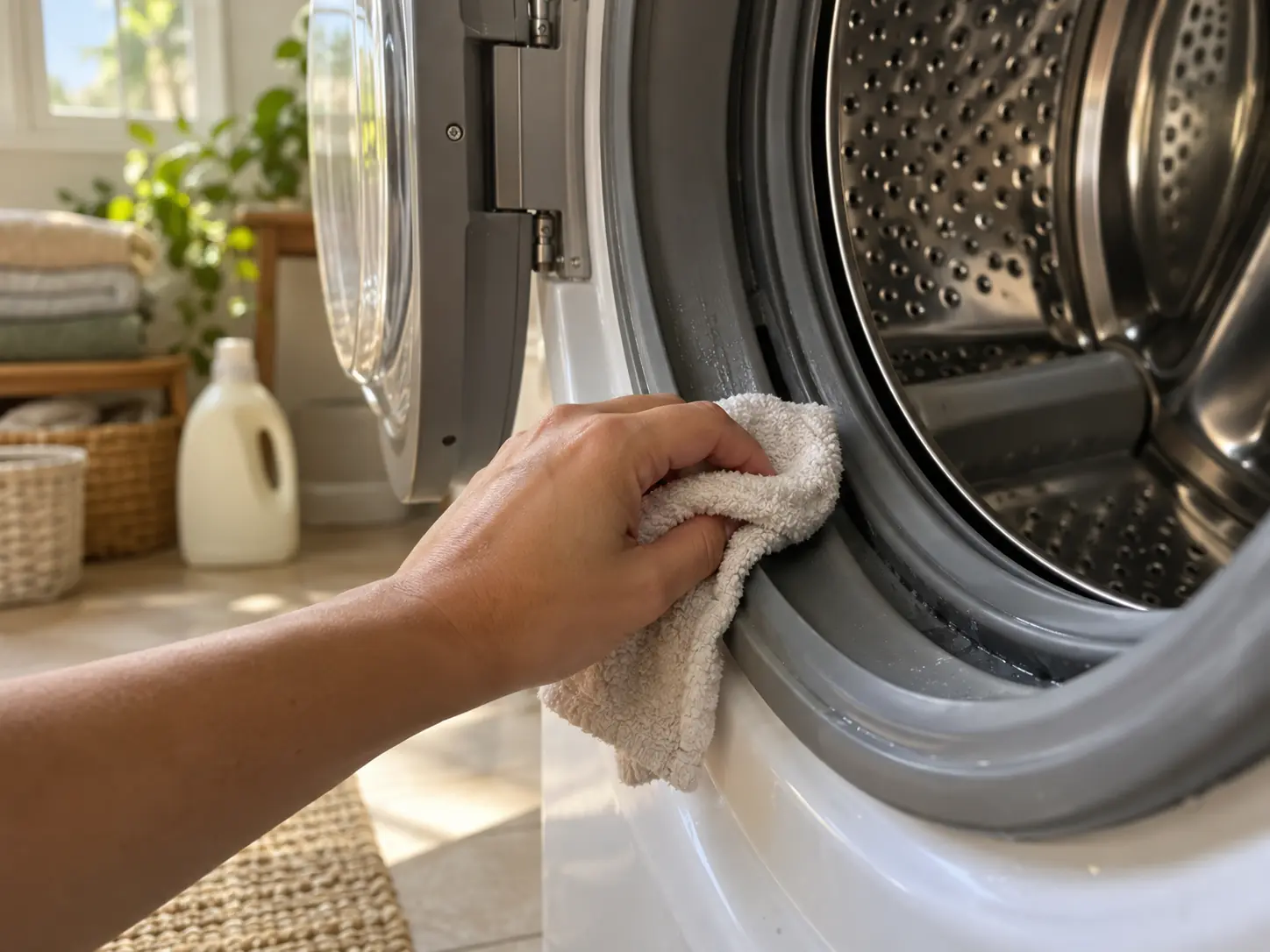
Pull back the rubber ring and look all the way around, especially at the bottom. You will often find hair, lint, a stray earring back and black or pink spotting. Spray the ring with a mix of warm water and a little dish soap, then wipe the folds with a cloth and the toothbrush.
For mildew that does not lift, make a paste of oxygen bleach powder and warm water, spread it on the spots, and leave it for 15 to 20 minutes. Scrub again, then rinse with a damp cloth. Take your time with the lower fold, because water sits there between loads.
If the black spots are stubborn and the rubber is crumbling or torn, the gasket may need replacing. Cleaning cannot repair damaged rubber.
4. Check and empty the drain filter (5 minutes)
Many front loaders have a small access panel at the bottom front. Slide the baking dish under it, then open the panel. Some machines have a small hose with a plug for draining first. Drain the water into the dish or bucket, then unscrew the filter slowly.
Pull out whatever has collected, rinse the filter under the tap and clear the opening with your finger or a cloth. Put the filter back and tighten it fully. A loose filter leaks during the next cycle.
Top loaders usually have no accessible filter, but some have a lint screen inside the agitator or along the tub wall. Check the manual and clean it if yours has one.
Why this works: a clogged filter holds water that never drains. That water is a common source of a sewer or sour smell.
5. Wipe the drum and the tub rim (3 minutes)
Wipe the inside of the drum, the door glass and the lip of the tub. On a top loader, wipe the underside of the lid and the ledge under the rim, where a ring of residue forms. Wipe the outside of the machine too, including the control panel and the top, with a damp cloth and a drop of dish soap.
6. Run a hot cleaning cycle (60 to 90 minutes, hands-off)
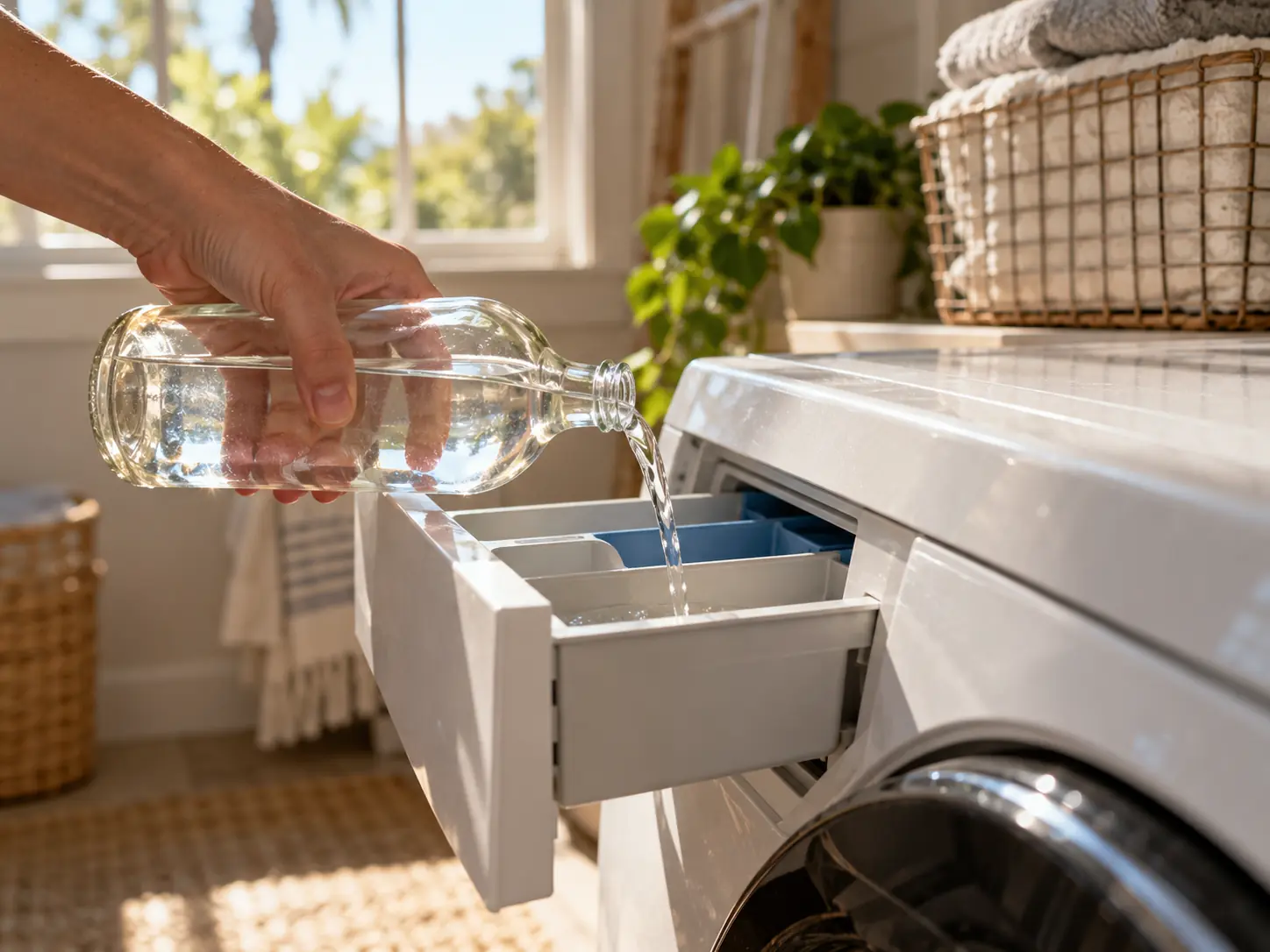
Choose one of the options in the next section. Use the hottest setting your manual allows, with the machine empty. If your machine has a tub clean program, use it. Add the cleaner where the instructions say, either in the drum or the drawer.
7. Rinse and dry (5 minutes)
When the cycle ends, run a short rinse cycle if you used a citric acid or vinegar solution, so no acid stays in the machine. Wipe the gasket and drum dry with a clean cloth. Leave the door or lid open for several hours. This final step does more to prevent the smell than any product.
Cleaning cycle options compared
Pick one. Do not combine them in a single cycle, and do not stack them back to back without a rinse in between.
| Option | Best for | Avoid when | Smell | Notes |
|---|---|---|---|---|
| Citric acid (1/4 cup dissolved in hot water, or as the label directs) | Hard water scale, soap film, general cleaning | The manual says no acids | Mild | Dissolve fully so it does not clog the drawer |
| White vinegar (about 2 cups) | Light buildup, quick refresh | Rubber seals in older machines, or if the maker discourages it | Sharp vinegar smell | Weaker than citric acid on scale; follow with a rinse |
| Oxygen bleach powder (sodium percarbonate) | Mildew, biofilm, odor | Colored or printed drum parts the label warns about | Low | Needs hot water to activate |
| Chlorine bleach (diluted, per label) | Heavy mildew when the maker allows it | Any time you have used vinegar or other acids recently | Strong | Run a full rinse cycle afterward, keep the room ventilated |
| Washer cleaner tablet | Convenience | You do not know the active ingredient | Varies | Check whether it is citric acid, oxygen bleach or chlorine |
| Baking soda (about 1/2 cup in the drum) | Mild odor, as a pre-soak | Heavy scale | None | Does not dissolve scale; helps deodorize |
On vinegar and baking soda together
The popular trick of adding baking soda and vinegar to the machine does not do much. They neutralize each other and leave mostly salty water. If you want both effects, run them in separate cycles with a rinse between. Our post on natural cleaning with vinegar and baking soda explains why they work better apart.
On chlorine bleach
Many washer manuals list a diluted chlorine bleach cycle as acceptable. Others discourage it because it can degrade rubber over time. Use it only if your manual says it is allowed, never in the same cycle as an acid or ammonia product, and not right after vinegar or citric acid. If you are unsure, oxygen bleach is the safer choice.
Mold in the door gasket: how to remove it
Mold in the gasket is the most common reason people search for this topic, so it gets its own plan.
- Put on gloves and open the door fully.
- Pull the rubber ring back so every fold is visible.
- Wipe away loose hair and lint with a dry cloth.
- Spread a thin paste of oxygen bleach powder and warm water on the spots.
- Leave it for 15 to 20 minutes.
- Scrub the folds with the toothbrush, working along the groove.
- Wipe with a clean damp cloth until no residue remains.
- Dry the ring and leave the door open.
If a spot is still visible after two rounds, it may have stained the rubber itself. A stain that does not smell and does not spread is cosmetic. A ring that smells or feels slimy needs another round. Rubber that has split should be replaced by a technician, since a leak behind the gasket can damage the floor.
Fixing a smelly washer
| Problem | Likely cause | Fix | When it will not work |
|---|---|---|---|
| Musty or mildew smell | Biofilm in gasket, drawer and drum | Steps 2, 3 and 6 with oxygen bleach | Damaged gasket that stays damp |
| Sewer or rotten egg smell | Drain filter or hose holding water, dry drain trap | Clean the filter; pour water into the standpipe | Plumbing vent problem; call a plumber |
| Sour smell on clean clothes | Too much detergent, cold-water-only washing | Reduce detergent, run a hot cycle monthly | Clothes were left wet in the drum |
| Slimy film in drawer | Liquid detergent and softener buildup | Soak and scrub the drawer | None, this one cleans up |
| White flakes or chalky streaks | Undissolved detergent or scale | Citric acid cycle; use less powder | Hard water may need a softening step |
| Water left in the drum | Clogged filter or drain hose | Clean the filter; check the hose for kinks | Pump failure needs a technician |
| Rust spots | Chipped drum finish, scratched metal items | Remove metal items; check for damage | A chipped drum cannot be repaired by cleaning |
How often to clean a washing machine
The common advice is monthly, which is more than most households need. A better schedule depends on how much you wash.
| Household | Full clean (gasket, drawer, filter, cycle) | Quick wipe (gasket and door) |
|---|---|---|
| 1 to 2 people, a few loads a week | Every 2 to 3 months | Weekly |
| Family of 3 to 5, daily loads | Every month or two | After heavy use weeks |
| Cloth diapers, pet bedding, gym clothes | Every month | After every few loads |
| Cold water washing only | Every month | Weekly |
| Hard water home | Every 1 to 2 months, with citric acid | Weekly |
Do the filter every 2 to 3 months regardless of the rest. Pocket debris and pet hair collect there faster than you would think.
Skip this step: The laundry room is only one part of the routine. If you would rather not do the wiping, the gasket and the machine exterior fit into a weekly visit. Our recurring cleaning crews handle the surfaces and floors, and you can get a price in about 30 seconds at our instant quote. As an example, a 2 bedroom, 2 bathroom home is (60 + 50 + 70) = $180 per visit, or $144 on a weekly plan after the 20% discount.
Prevent odor between washes
Cleaning gets rid of the smell. These habits keep it from coming back.
- Leave the door or lid open after the last load, until the drum is dry.
- Use the right amount of detergent. Half of what the bottle suggests is often enough for HE machines and lightly soiled clothes.
- Use HE detergent in HE machines. Regular detergent makes too many suds and leaves more residue.
- Cut back on fabric softener. It leaves a waxy film that holds odor.
- Unload promptly. Wet clothes left in the drum for hours are one of the quickest ways to create a smell.
- Wipe the gasket once a week with a dry cloth. It takes 20 seconds.
- Run a hot wash now and then, at least once a month, for towels, bedding or an empty cycle.
- Leave the drawer slightly open if you have a front loader, so the cavity can dry.
- Keep the filter clean. Empty it every two to three months.
Mistakes that damage a washer
- Mixing bleach and vinegar. This releases chlorine gas. Never do it, even in sequence without rinsing.
- Using too much cleaner. More citric acid or bleach does not clean better and can leave residue.
- Skipping the hand cleaning. A cycle alone will not remove the biofilm sitting in the gasket folds.
- Pouring undiluted bleach on the gasket. It can harden or discolor rubber.
- Using abrasive pads in the drum. Scratches trap residue and can rust.
- Closing the door after every load. It traps humidity and speeds up mildew.
- Overloading the machine. Clothes do not rinse well, and detergent stays behind.
- Ignoring a leak. A wet floor behind a front loader often points to a loose filter or a failing gasket, not to cleaning problems.
The Orange County angle
Much of Orange County has hard water. If you see white crust on faucets or cloudy glassware, your washer is probably collecting scale too. You can check your local water quality report from your water provider to see the hardness level in your area, and then decide whether to use citric acid more often.
Coastal homes in places like Newport Beach and Huntington Beach also deal with salt air and humidity, which can slow drying inside the laundry room. If your washer sits in a closet or garage, leaving the door open helps more than usual. Many condos and townhomes place the machine in a small closet with limited airflow, so a quick wipe and an open door matter even more.
Laundry rooms in older tract homes sometimes have a drain standpipe that sits close to the wall. If you notice a sewer smell, pour a cup of water into the standpipe to refill the trap before you assume the washer is the source.
When to call a professional
Call an appliance technician if:
- The machine leaks from the bottom or around the door after you have cleaned the filter and checked the gasket
- Water stays in the drum after the cycle ends
- The gasket is torn, cracked or crumbling
- You hear grinding or banging from the pump or the bearings
- The error code points to a drain, pump or sensor fault
- The smell persists after two thorough cleanings and good drying habits
A technician can replace the gasket, clear the pump and check the hoses. We do not repair appliances, and we would rather tell you that than guess.
What we do handle is the rest of the cleaning: the laundry room floors, counters and the outside of the machine, along with the bathrooms and kitchen. A deep cleaning visit covers the detail work a standard clean skips. If you are still setting up a routine, the weekly house cleaning checklist shows how the laundry room fits into the week, and how to clean a dishwasher uses the same filter-first approach. For more on keeping the kitchen and nearby spaces under control, see how to keep your kitchen clean between cleanings.
If you want a price for a visit, our instant quote takes about 30 seconds, and new customers get $39 off the first clean. We can send a crew to any of our 20 Orange County cities, including Irvine.
Frequently asked questions
How often should you clean a washing machine? Every one to three months for the full clean, depending on how much you wash. Wipe the gasket weekly and empty the drain filter every two to three months. Hard water, cold washes and heavy loads like pet bedding mean more frequent cleaning.
Can you use vinegar and baking soda in a washing machine? You can, but not together. They cancel each other out. Use baking soda as a pre-soak to help with odor, or vinegar for a light descale, in separate cycles with a rinse between. Citric acid or oxygen bleach usually does a better job.
Is it OK to clean a washer with bleach? Some manufacturers allow a diluted chlorine bleach cycle, and some discourage it. Check your manual. Never combine it with vinegar, citric acid or ammonia products. Oxygen bleach is a safer option for most households.
Why does my washing machine smell like mildew? Usually biofilm and mold in the gasket, the drawer or the drum, fed by detergent residue and trapped moisture. Cleaning the gasket and drawer by hand, running a hot cycle and leaving the door open fixes most cases.
How do you clean the rubber seal on a front loader? Pull back the ring, wipe away lint and hair, scrub the folds with warm soapy water and a toothbrush, treat stubborn mildew with an oxygen bleach paste for 15 to 20 minutes, then rinse and dry. Do the bottom fold most carefully.
Does a washer cleaner tablet really work? They can, mostly because they are pre-measured and convenient. Check the active ingredient on the label. Tablets do not replace scrubbing the gasket and drawer, and they will not clear a clogged filter.
Should I clean the washer if I only use cold water? Yes, and a bit more often. Cold water dissolves soap less well and gives biofilm an easier start. A hot cleaning cycle every month helps.
Can I run a cleaning cycle with clothes inside? No. Run it empty so the cleaner reaches every surface and does not stain or damage fabric.
Why is there water left in my washer after the cycle? Most often a clogged drain filter or a kinked drain hose. Clean the filter and check the hose. If the water stays, a pump fault needs a technician.
Can I use a dishwasher cleaner in my washing machine? Not unless the label says it is safe. The formulas differ, and some can leave residue or foam. Use a product made for washers or a simple citric acid cycle.