Care Habits
How to Remove Stains From Carpet: Coffee, Wine, Pet, Grease, and Mud
Most fresh carpet stains come out if you do three things in order: remove any solids, blot (never rub) with a clean white cloth, and treat with the mildest cleaner that fits the stain type. Cold water and a few drops of dish soap handle coffee, juice, mud and most food. Grease needs a degreasing step. Pet urine needs an enzyme cleaner. Heat, rubbing and the wrong product are what turn a removable stain into a permanent one.
This guide gives you the universal method, a stain-by-stain table, the reasons stains come back (wicking and rebound), what you should never use, and when a professional extraction is the better choice.
Quick answer
- What you need: White cloths or paper towels, a spoon or dull knife, cold water, clear dish soap, an enzyme cleaner (for pet and organic stains), oxygen bleach powder for some set stains, a fan, and gloves.
- Time: 5 minutes for a fresh spill, 20 to 40 minutes for a set stain, plus drying time (usually several hours).
- Cost of supplies: Low. Most items are already in the kitchen.
- Difficulty: Easy when fresh. Moderate when old. Some dyes (mustard, hair dye, ink on certain fibers) may never come all the way out.
- Skip the DIY if: The stain is large, the carpet is wool or silk, the stain is on stairs and edges where the backing could be soaked, or the spill soaked through to the pad (large pet accidents, flooding).
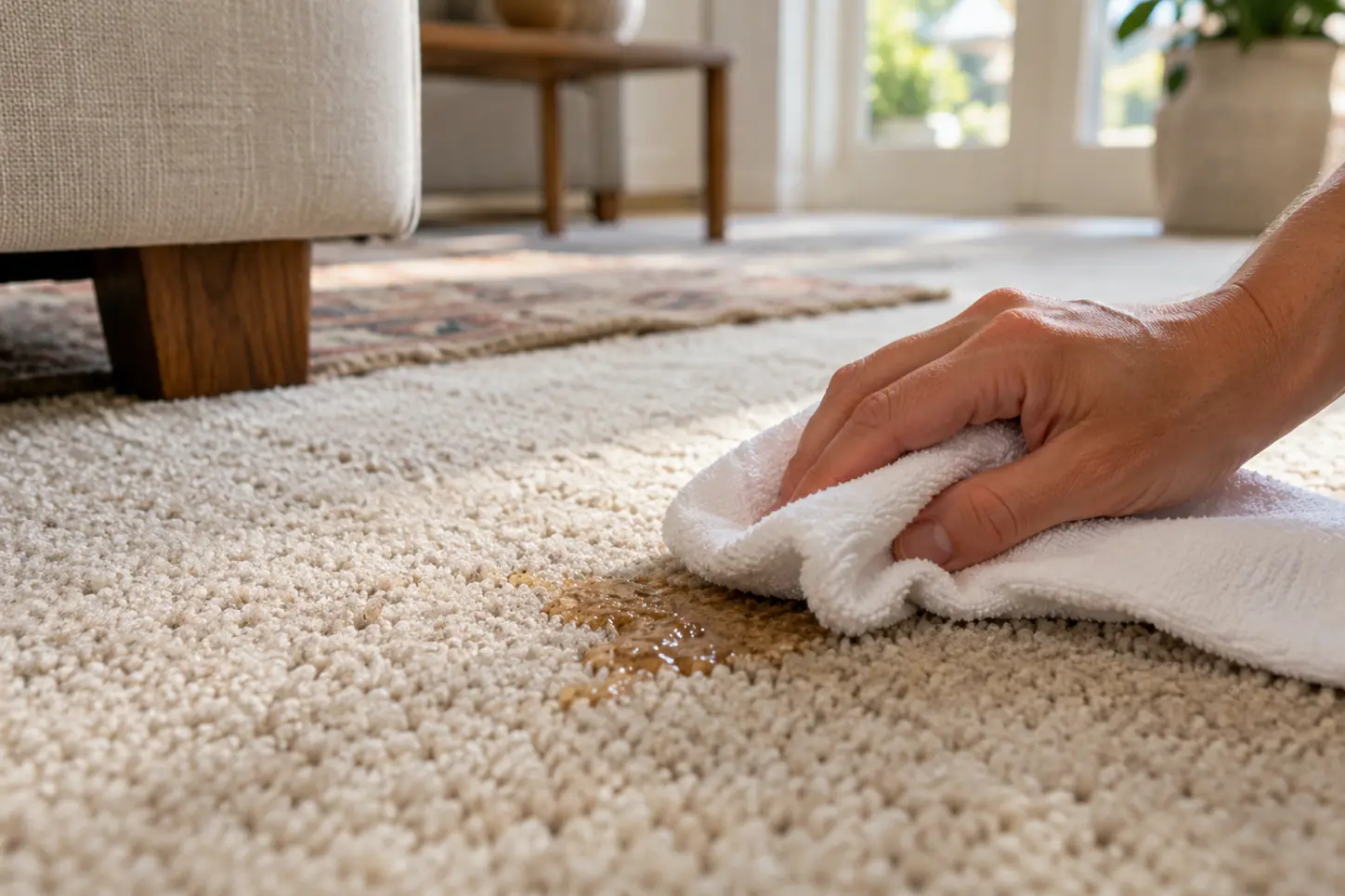
The first rule: blot, do not rub
Rubbing spreads a stain wider, pushes it deeper into the pad, and frays the fibers so the area looks fuzzy and darker afterward. Blotting lifts the liquid up instead.
How to blot properly:
- Press a clean, dry white cloth or a thick wad of paper towels straight down on the spill. Stand on it if the spill is large.
- Lift, move to a clean part of the cloth, and press again.
- Work from the outside edge of the stain toward the center so it does not spread.
- Keep going until the cloth comes up almost dry.
Use white cloths because colored towels can transfer dye onto wet carpet, which creates a second stain.
What you need
| Item | What it does | Notes |
|---|---|---|
| White cotton cloths or plain paper towels | Absorb the liquid | Avoid printed paper towels that can transfer ink |
| Spoon or dull butter knife | Lifts solids without grinding them in | Scoop from the edge toward the middle |
| Cold water in a spray bottle | Dilutes and flushes | Hot water can set protein and some dye stains |
| Clear liquid dish soap | Cuts grease and lifts many food stains | Use dye-free if possible; a few drops in a cup of water |
| White vinegar | Mild acid for some food and pet stains | Can affect some dyes and wool, test first |
| Enzyme cleaner (labeled for pet urine or organic stains) | Breaks down urine, vomit, blood, food proteins | Follow the label, keep it damp for the full dwell time |
| Oxygen bleach powder (sodium percarbonate) | Lifts colored organic stains | Test in a hidden spot first, avoid on wool and silk |
| Rubbing alcohol (isopropyl) | Used on some ink and dye stains | Test first and use sparingly |
| Dry-cleaning solvent made for carpet | Dissolves oil, wax, tar | Ventilate and follow the label |
| Plain white towel and a heavy book or weight | Draws moisture out of the carpet | Used in the final step |
| Fan | Speeds drying | Prevents musty odors |
Do not use: colored cloths, hard-bristle brushes, steam from a hot iron, bleach (chlorine) on carpet, or any product you have not tested on a hidden spot.
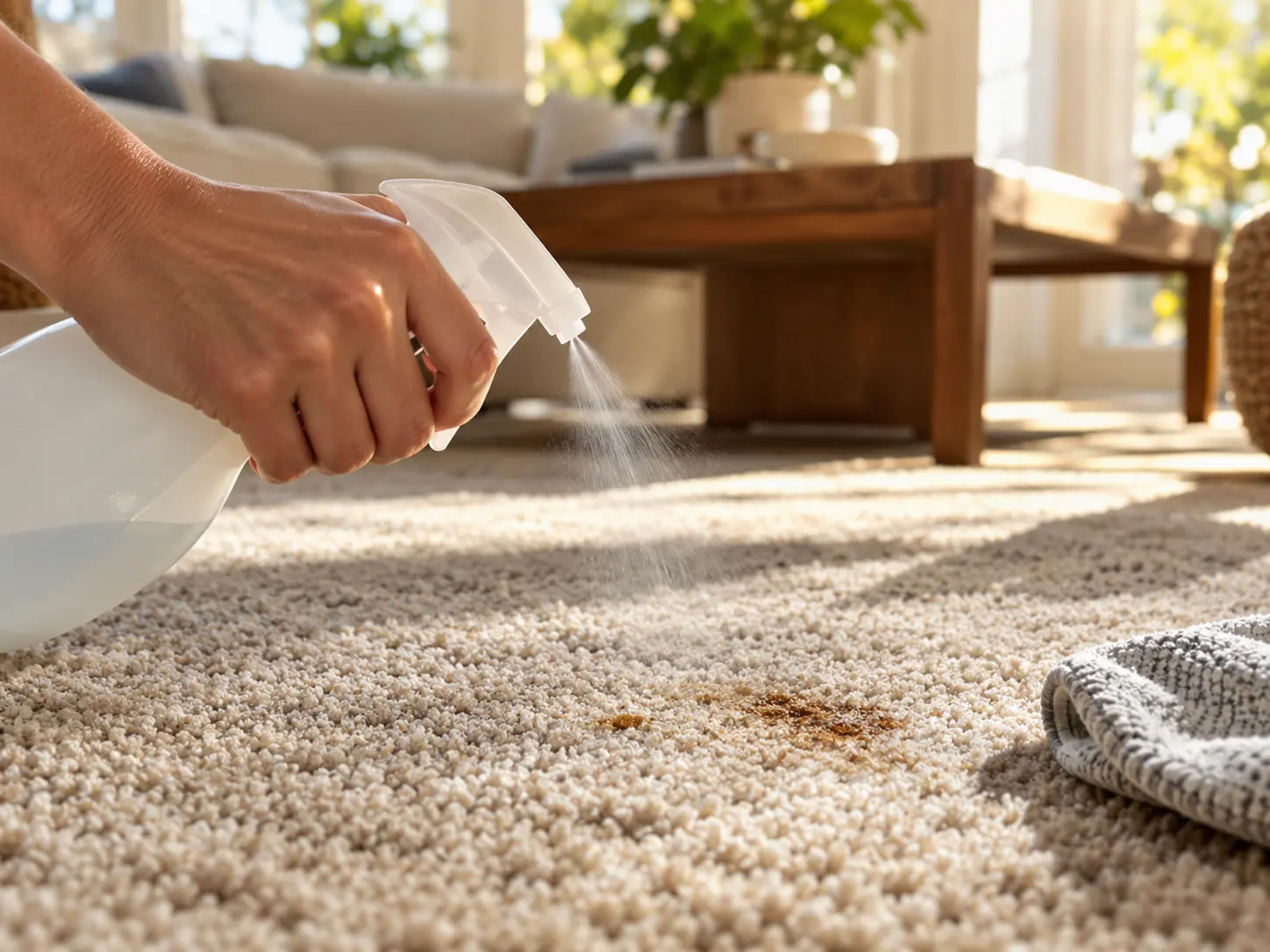
Safety first
- Test every product in a hidden spot (inside a closet, under a sofa). Wait for it to dry before judging. Carpet dyes vary.
- Never mix cleaning products. Do not combine bleach, ammonia, vinegar or oxygen cleaners. Use one product at a time and rinse between products. Our guide to products you should never mix lists the combinations to avoid.
- Ventilate when you use solvents or sprays, and keep pets and children out of the room until the carpet is dry.
- Read the carpet label or warranty. Some manufacturers specify products to avoid. If you have wool, silk or a natural fiber rug, check before using anything stronger than water and a bit of soap.
- Do not over-wet. Soaking the carpet pushes the stain into the backing and pad, where it can grow mold or odor.
- Know when to stop. If a stain does not move after two or three careful rounds, additional scrubbing will do more harm than good.
Why stains come back: wicking and rebound
Many people clean a stain, see it disappear, then watch it come back a day later. Two things cause this.
Wicking. When a spill sinks through the carpet fibers into the backing or pad, the stain and its residue move upward as the carpet dries, like a candle wick. The brownish spot reappears on the surface because the liquid underneath dries and pulls the dirt up with it. The fix is to remove the residue deeper down: blot with white towels, press a thick stack of towels with weight on top for several hours, and replace them when damp. Repeat until the towels come up clean.
Rebound (resoiling). Cleaning solution left in the carpet attracts new dirt as it dries. A spot that was clean when it was wet gets dingy within days. The fix is to rinse: after cleaning, blot with plain cold water several times to remove soap, then dry.
A third cause is that the stain was never fully removed. Color stains from pigments and dyes can stay in the fiber even if the surface looks better when wet.
The universal method for fresh stains
Use this for any stain unless the table below says otherwise. It takes about 10 to 15 minutes of work.
- Act fast (0 to 5 minutes). The first few minutes matter more than the product you use.
- Remove solids. Scoop up food, mud, or pet waste with a spoon, working inward from the edges. Do not press it into the fibers.
- Blot the liquid. Use clean white towels and keep pressing until they come up damp, not wet.
- Mix a mild solution. About a quarter teaspoon of clear dish soap in a cup of cool water. Too much soap leaves residue.
- Apply with a cloth, not a spray. Dab the solution on the cloth and press it onto the stain. Work from the outside in.
- Blot again. Rinse the cloth often. Keep going until no more color transfers to the cloth.
- Rinse. Dab with a cloth dampened in plain cold water several times to remove soap.
- Draw out moisture. Place a stack of white towels over the area, put a heavy book or weight on top, and leave for 4 to 8 hours or overnight.
- Dry and vacuum. Run a fan, wait until dry, then fluff the fibers and vacuum lightly.
Why this works: you are lifting the stain out of the fibers and then removing the cleaner. Both halves matter.
Stain-by-stain guide
Use the universal method first, then adjust. “Cold” means cold tap water, not ice.
| Stain | First move | Cleaner that fits | What to avoid | Notes |
|---|---|---|---|---|
| Coffee and tea | Blot, flush with cold water | Dish soap solution, then a vinegar and water rinse if a tan shadow stays | Hot water, rubbing | Milk and sugar add proteins and sticky residue, so rinse well |
| Red wine | Blot at once. Press salt or baking soda to absorb if the spill is large | Dish soap solution, then oxygen bleach if color remains and the carpet allows | Rubbing, hot water, chlorine bleach | Dyes in wine stain quickly, so speed matters |
| Soda and juice | Blot and flush | Dish soap solution | Leaving sugar behind | Sugar attracts dirt, so rinse until it no longer feels sticky |
| Pet urine (fresh) | Blot as much as possible, then flush with cool water and blot again | Enzyme cleaner kept damp for the full label time | Steam, hot water, ammonia-based cleaners | Ammonia smells like urine to pets and can invite repeat accidents. See removing pet odor |
| Pet urine (old) | Locate with a UV flashlight if available | Enzyme cleaner, repeated | Perfume sprays that mask the smell | Old urine soaks into the pad. Professional extraction may be needed |
| Vomit and food | Scoop solids, blot | Dish soap solution, then an enzyme cleaner | Hot water on protein | Enzyme cleaner handles odor |
| Blood | Blot with cold water | Cold water and dish soap, or hydrogen peroxide (3%) on light carpets only after a test | Hot water | Peroxide can lighten dyes, test first |
| Grease and cooking oil | Blot, then cover with cornstarch or baking soda for 15 minutes to absorb | Dish soap solution dabbed on, or a carpet dry solvent | Water alone, rubbing | See the grease section below |
| Mud and dirt | Let it dry fully, then vacuum | Dish soap solution on what remains | Wet scrubbing while soggy | Wet mud smears. Dry mud lifts |
| Ink (ballpoint) | Blot, do not spread | Dab with rubbing alcohol on a cloth, working from the outside in | Large amounts of alcohol | Test first, since it can lift dye |
| Marker and permanent ink | Blot | Rubbing alcohol, then dish soap solution | Rubbing, heat | Some inks never fully lift |
| Chocolate | Scrape solids, chill if melted | Cold dish soap solution, then enzyme cleaner for the protein | Hot water | Can leave a grease shadow, treat it like grease |
| Candle wax | Harden with ice in a bag, then lift | Place a paper towel over the wax and use a warm iron on low carefully, or a solvent | High heat on synthetics | Dye from colored wax may remain |
| Gum | Harden with ice, then chip off | A small amount of dry solvent on a cloth | Pulling when soft | Work gently so fibers do not pull |
| Nail polish | Blot gently | Acetone-based remover is risky on carpet; test in a hidden spot, or call a pro | Spreading | Acetone can dissolve some synthetic fibers and backings |
| Mustard, turmeric, curry | Scoop and blot | Dish soap solution, then oxygen bleach if the carpet allows | Delay | Pigments can stain permanently, a professional may help |
| Tracked-in oil or asphalt | Blot | Dry solvent made for carpet | Water-based scrubbing | Ventilate |
Coffee, tea and juice
These are the most common spills and the easiest to win.
- Blot until the cloth comes up almost dry.
- Flush with cold water from a spray bottle and blot again.
- Apply the dish soap solution with a cloth. Blot from the outside in.
- If a tan shadow remains, mix one part white vinegar with two parts water, dab on, wait a few minutes, and blot.
- Rinse with plain water, then weigh down a dry towel overnight.
Coffee contains tannins and color pigments, while milk adds protein. Cold water works on both. Hot water can set the protein.
Red wine
Time matters here.
- Blot, do not rub. A large spill may need several towels.
- Press salt or baking soda onto the wet area to help draw out the wine. Let it sit, then vacuum.
- Blot with a cool dish soap solution.
- If a pink stain remains, test an oxygen bleach solution (following the product label) on a hidden spot. If the carpet color holds, apply to the stain, wait the label time, and rinse well.
- Remember that hydrogen peroxide and some other lifting agents can lighten carpet dye. Test first and keep the contact time short.
A common claim is that white wine poured on red wine fixes the stain. Plain cool water does the same job without adding sugar.
Pet urine and accidents
Urine is more than a color stain. It carries odor-causing compounds that soak into fibers and pad.
- Blot as much as you can. Use paper towels and press hard with your foot.
- Flush with cool water, then blot again. Flushing dilutes the urine.
- Apply an enzyme cleaner labeled for pet urine. Use enough to reach the same depth as the urine, which often means more than you think. Follow the label for dwell time.
- Keep it damp for the label time. Enzymes work while wet, so covering the area with a damp towel and plastic can help.
- Blot dry, weigh down towels, and let it dry fully.
- Skip these: ammonia-based cleaners, steam, and hot water. Heat can set the protein, and ammonia can smell like urine to pets.
If the smell returns after humid days, urine may have reached the pad or subfloor. That needs deeper extraction or, in some cases, pad replacement. Read more in how to remove pet odor from carpet and furniture and keeping a clean home with pets.
Grease, oil and cooking stains
Grease repels water, so water alone only spreads it.
- Scrape and blot any excess.
- Absorb. Sprinkle cornstarch or baking soda on the spot and let it sit 15 to 30 minutes. Vacuum it up.
- Degrease. Apply a small amount of clear dish soap on a damp cloth and dab. Dish soap is made to cut grease.
- Blot and rinse with cold water. Repeat until no more shadow lifts.
- Use a dry-cleaning solvent made for carpet for stubborn spots, with good ventilation and a patch test.
Grease also acts like a magnet for dirt. A spot that looks gone can reappear as a dark patch a few weeks later because oil residue is still in the fibers. Rinse more than feels necessary.
Mud and dirt
Do not scrub wet mud. It pushes soil deeper.
- Let the mud dry completely.
- Break it up with a spoon and vacuum thoroughly.
- Dab any remaining stain with the dish soap solution, blot, and rinse.
Dry mud usually vacuums out. Many Orange County homes see fine dust and sandy grit tracked in, which wears carpet fibers the way sandpaper would. A good doormat and a shoes-off habit prevent more wear than any cleaner.
Ink, marker and dye
Ink stains are about solvents and speed.
- Blot, do not rub.
- Test rubbing alcohol on a hidden spot.
- Dab the alcohol onto a white cloth and blot the stain from the outside in. Switch to a clean section of cloth often.
- Rinse with dish soap solution, then plain water.
Dye transfer (a new red shirt or a colored toy) and permanent markers are harder. Some of these will not come out of nylon or polyester without professional products. Hair dye is notoriously difficult, so treat it fast and call a pro if it sets.
Set, old, or mystery stains
A stain that has been there for weeks is harder, but not always lost.
- Figure out what it is. Smell and location help. A ring near the kitchen is likely food, while a spot near a door is mud or salt.
- Start with the mildest method: dish soap solution, then an enzyme cleaner if it is organic.
- Try oxygen bleach (sodium percarbonate) for colored organic stains if the carpet allows. Test first.
- Do not stack random products. If one method fails, rinse the area well before trying another.
- Know the limit. Stains that have bleached or dyed the fiber are chemical changes, and cleaning cannot restore color.
When it is worth handing off: If a stain has soaked through to the pad, covers a large area, or has returned twice, a full extraction is more effective than spot work. Our upholstery and carpet cleaning is priced per item, and carpet is $70 per room in the instant quote. That is a quote tool figure, so check it for your situation.
Drying the carpet properly
Carpet that stays damp can develop odor and mildew within a day or two.
- Aim for dry within 24 hours. Use a fan and open a window or run the AC.
- Weigh a towel over the spot overnight to draw moisture from the pad.
- Do not walk on it with shoes, which can deposit new dirt on damp fibers.
- Do not put furniture back until the carpet is completely dry. Wood legs on wet carpet can leave stains.
- Fluff the fibers with a clean white cloth or a soft brush when dry. A spot that feels stiff may have soap residue, so rinse again.
Mistakes that make stains worse
- Rubbing or scrubbing. It spreads the stain and damages the carpet pile.
- Using hot water on protein stains. It cooks blood, milk, and pet accidents into the fibers.
- Using too much soap. Soap left behind is why a spot looks clean and then turns brown again.
- Over-wetting. Water that reaches the pad takes a long time to dry and can create odor.
- Skipping the patch test. Dye loss is permanent.
- Using colored towels. They can transfer dye.
- Mixing products. Dangerous fumes and fiber damage are possible. See what never to mix.
- Using steam on a fresh organic stain. Heat sets many stains. Steam cleaning is for later, after the stain is gone.
- Using chlorine bleach on carpet. It permanently removes color and can weaken fibers.
- Stacking more products on a failed attempt. Rinse first.
Which carpet do you have?
Fiber affects what is safe.
| Fiber | How it behaves | Cautions |
|---|---|---|
| Nylon | Durable, common in homes, takes stain treatments well | Acid dyes can stain with some pigments like wine and mustard |
| Polyester | Resists water stains, attracts oil | Grease stains can be stubborn |
| Olefin (polypropylene) | Resists water-based stains, common in outdoor and berber carpet | Oil-based stains cling, wicking is common in loops |
| Wool | Natural, soft, premium | Sensitive to alkaline cleaners, heat, and bleach. Use mild, pH-gentle methods and consider professional care |
| Triexta and similar blends | Stain resistant | Follow the manufacturer’s cleaning guidance |
| Silk and viscose | Delicate | Water can cause permanent marks. Call a professional |
If you do not know the fiber, check the carpet label, the original paperwork, or the underside of a loose edge. If you still cannot tell, use the gentlest method and test.
How to prevent stains
A little prevention saves effort later.
- Take shoes off at the door, and use doormats outside and inside.
- Vacuum regularly. Grit cuts fibers and holds dirt. See how often to clean carpet and rugs.
- Keep a stain kit (white cloths, spray bottle with cold water, small dish soap, enzyme cleaner) where you can reach it quickly.
- Treat spills immediately. Even a quick blot makes a big difference.
- Use rug pads and furniture coasters to prevent wear and dents.
- Consider a protectant. Stain protection can slow absorption, but it is not a force field. Our upholstery and carpet pricing lists stain protection as a $25 add-on in the quote tool, which applies to items like upholstery.
- Schedule periodic deep extraction. The right frequency depends on traffic, pets and children.
The Orange County angle
A few local conditions affect carpet care.
Fine dust and sandy grit. Santa Ana wind seasons and open windows bring dust indoors. Dry soil acts like abrasive on fibers, so vacuum entryways more often.
Hard water. If you rinse stains with tap water, minerals in hard water can leave a faint film. Using a small amount of distilled water for the final rinse on a light carpet is an option if you notice spots drying with a crust. This is a minor effect, not a requirement.
Slab homes and humidity. Many homes here are built on concrete slabs. Moisture in the pad dries more slowly in cool, humid coastal weather, so use fans and avoid over-wetting.
Rentals and HOAs. Landlords often check carpet condition at move out. Document stains early and read our guide on what landlords check at move-out. Condo and HOA rules may also limit what you can do on shared flooring.
When to call a professional
You can handle most fresh spills yourself. A professional makes more sense when:
- The stain is old, large, or has returned after cleaning.
- A pet accident has reached the pad.
- The carpet is wool, silk, or an expensive rug.
- You have tried two or three careful rounds and the stain is not changing.
- You need several rooms refreshed before a move or inspection.
Professionals have hot water extraction and stronger spotting products that are not safe for casual use. They can also tell you honestly when a stain is permanent. A stain that dyed the fiber cannot be washed out, and the best answer might be a patch, a rug placed over it, or replacement.
Our crews are insured, bonded and background-checked and use eco-friendly, pet-safe products. If you are not happy with an area, tell us within 24 hours and we re-clean it free. See our upholstery cleaning and deep cleaning services, or get exact pricing for your home in the instant quote.
Frequently asked questions
What is the best way to remove a stain from carpet? Act fast, scoop solids, blot with a clean white cloth, apply a mild dish soap solution, blot again, rinse with cold water, and dry. Use an enzyme cleaner for pet and organic stains and a degreasing step for grease.
Should I rub or blot a carpet stain? Blot. Rubbing spreads the stain and damages the fibers. Press down, lift, and move to a clean part of the cloth.
Does vinegar remove carpet stains? Diluted white vinegar helps with some food stains and light tan shadows. It is not a cure-all. Test it first, avoid using it on wool, and never mix it with bleach.
Does baking soda remove stains from carpet? It helps absorb liquids and oils and can reduce odors, but it does not lift dyes. Use it as an absorbent, then vacuum it up.
How do I get old stains out of carpet? Start with a mild dish soap solution, then an enzyme cleaner for organic stains, then oxygen bleach if the carpet allows. Rinse between methods. Some old stains are permanent.
How do I remove pet urine from carpet? Blot, flush with cool water, blot again, then saturate with an enzyme cleaner and keep it damp for the label time. Avoid steam, heat and ammonia.
Why does a carpet stain keep coming back? Usually wicking (residue in the pad moving up as it dries) or leftover soap that attracts new dirt. Rinse thoroughly and dry with towels and weight.
Can I use hydrogen peroxide on carpet? Some people use 3% hydrogen peroxide on blood and wine on light carpets, but it can lighten dyes. Test in a hidden spot first.
Is a steam cleaner good for stains? Steam and hot water extraction are great for general cleaning but can set some stains if used first. Treat the stain before the machine, and check your carpet and machine instructions.
When should I replace the carpet instead? If stains are widespread, odors persist after proper extraction, or the pad is damaged, cleaning may not be enough.