How to Keep Your House Clean Longer Between Professional Cleanings
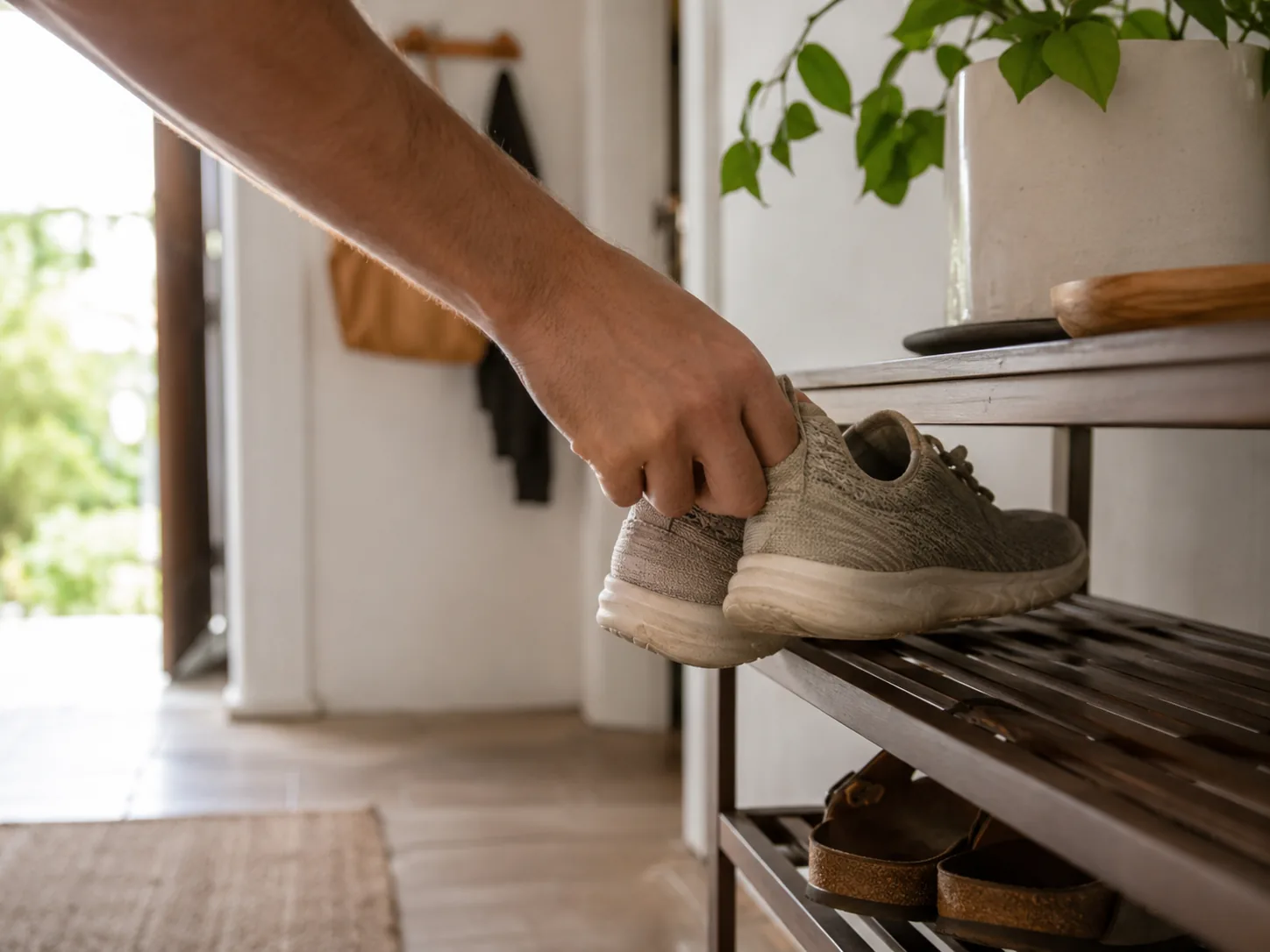
A house stays clean longer when a few systems run on their own, not when someone scrubs harder after the mess has already piled up. An entryway rule that keeps dirt out, a two-minute reset per room, and a maintenance schedule that matches your household do more for how a home looks day to day than any single cleaning session.
Build a system, not a habit you have to remember
A habit depends on remembering to do it. A system runs whether you remember or not, because the environment itself makes the tidy choice the easy choice. That difference is why some houses stay presentable and others spiral every few weeks into a weekend-long fix.
Three things turn scattered tidying into an actual system.
A fixed home for everything that repeats. Keys, mail, chargers, shoes, and school bags cause most repeat clutter because they do not have one assigned spot. Once each item has exactly one place it belongs, putting it away takes seconds. Without that, every item becomes a small decision, and small decisions are what get skipped when people are tired.
A rotation instead of a daily deep clean. Trying to attend to the whole house every day burns out fast. Instead, rotate attention by zone across the week so effort matches how quickly each area actually gets dirty.
| Zone | How often it needs a real look | Why |
|---|---|---|
| Entryway and kitchen | Daily | Highest foot traffic and the source of most incoming mess |
| Bathrooms | Every 2 to 3 days | Water spots and grime build fast but are quick to wipe down |
| Living and family rooms | 2 to 3 times a week | Moderate use, mostly surface clutter |
| Bedrooms | Once a week | Lower traffic, slower to visibly change |
| Guest rooms and rarely used spaces | Once every week or two | Low use means low buildup |
A short, fixed time window. Systems fail when they are open-ended, because an open-ended task expands to fill whatever time is available. Capping the daily reset at five to ten minutes and the weekly zone check at fifteen to twenty keeps the system sustainable instead of becoming its own chore.
Set a real entryway policy
Most household dirt enters through one door, and controlling what happens right there is the single highest-leverage system on this list.
Shoes off, every time, no exceptions for a quick trip inside. Shoe soles carry gravel, dirt, and whatever was on the driveway or sidewalk, and every one of those steps deposits a little onto the floor. A basket or low shoe rack right at the door removes the friction that makes people skip the rule. If there is nowhere obvious for shoes to go, they end up scattered by the couch instead.
A two-mat system at the entry itself. A coarse outdoor mat scrapes grit off the bottom of shoes before anyone crosses the threshold, and an indoor mat catches whatever the outdoor mat missed, plus any moisture. Shake out or vacuum both weekly, since a saturated mat stops doing its job and starts just holding dirt in place near the door instead of on the floor beyond it.
A landing zone for everything else that comes in. A hook at a height kids can actually reach for bags and jackets, and a shallow tray for mail and keys, stops the counter or the nearest chair from becoming the default catch-all. If your household comes in through the garage more than the front door, the same setup belongs there too, since an entry point with no system just moves the mess to a different door.
None of this needs to be elaborate. A cheap tray and a hook installed at the right spot solve most of what an entryway rule is trying to prevent.
Quick-reset routines by room
A full clean and a reset are different things. A reset does not scrub anything, it just returns a room to a baseline so nothing compounds before the next real cleaning session or your next scheduled visit.
Kitchen, two minutes after each meal. Wipe counters and the stovetop while they are still warm, since dried food and grease take real scrubbing once they set. Load the dishwasher immediately instead of stacking the sink, and take a full trash bag out rather than letting it overflow. For the fuller set of kitchen-specific habits, including sink care and stovetop grease, see our guide on keeping the kitchen clean between cleanings.
Bathroom, ninety seconds after use. A quick wipe of the sink and counter after brushing teeth or getting ready prevents toothpaste and water spots from becoming a job that needs real scrubbing. A squeegee run across the shower glass takes under a minute and keeps water spots from setting into the glass.
Living and family rooms, five minutes each evening. Pillows and blankets get put back in place, surfaces get cleared of cups and stray items, and anything that migrated there, toys, remotes, mail, gets returned to where it belongs. This is the room where a daily reset does the most visible work, since it accumulates small clutter faster than almost any other space.
Bedrooms, two minutes in the morning. Making the bed alone changes how the whole room reads. Clothes go into a hamper or back on a hanger instead of over a chair, and the nightstand gets cleared of whatever piled up the day before.
Entryway, ongoing throughout the day. This is less a scheduled task than the payoff of the entryway policy already being in place. Shoes land in the rack because there is a rack, and mail lands in the tray because there is a tray.
How your upkeep affects your cleaning frequency
Daily systems and a professional cleaning schedule work together, and how well your household keeps up with the first one affects which frequency actually makes sense for the second.
Recurring cleaning is priced from your home’s base rate, then a frequency discount is applied automatically: 10 percent off for monthly, 15 percent off for biweekly, and 20 percent off for weekly, compared to a one-time visit. For a 3-bedroom, 2-bathroom home, that works out to roughly $185 monthly, $174 biweekly, and $164 weekly per visit. The full pricing formula and every service’s cost is broken down in our guide to house cleaning cost in Orange County.
Here is where the systems above actually matter for that choice. A recurring visit covers dusting all surfaces, a floor vacuum and mop, a kitchen wipe-down, bathroom sanitizing, trash removal, and bed making, the deeper reset that daily habits cannot fully replace. If your entryway policy and room resets are solid, the gap between visits stays manageable even at a longer interval, which is why households with consistent systems in place often do fine on a biweekly or even monthly schedule. The crew handles the deeper work, and your daily five minutes only has to keep pace with normal life rather than catch up on weeks of buildup.
If your household skips the entryway rule half the time, has young kids, or has a lot of foot traffic and pets, the gap between visits fills in faster no matter the intention, and a shorter interval, weekly or biweekly, keeps the house from ever reaching the point where it looks neglected. That is a genuine trade-off between price and how consistently the home stays presentable, not a right or wrong answer.
If shoes have already been tracking grit along the baseboards for months before the two-mat system went in, that buildup will not disappear just because a policy starts today. Adding baseboards to your next visit is a $30 add-on that resets the starting point, so your new system maintains a clean baseline instead of fighting existing buildup. The same logic applies to pet hair: if a shedding pet works against your entryway rule, the $25 pet hair add-on on a recurring visit is a more realistic fix than expecting a mat to solve it alone.
What daily systems cannot reach
Even a well-run household with a strict entryway policy and a tight reset routine will not touch what builds up out of daily sight: dust inside vents, grime in grout lines, buildup behind and inside appliances, or the corners a quick wipe never reaches. That is not a failure of the system, it is simply outside what a few minutes a day can cover, and it is exactly the gap a scheduled professional visit closes.
Frequently asked questions
How long should the daily reset actually take? Five to ten minutes total across the highest-traffic areas: kitchen counters, the entryway, and clearing surfaces in the main living space. Longer than that and it stops being a quick reset and starts competing with the time you have for everything else.
Do I really need a strict no-shoes rule? It is the single change with the biggest effect on floor buildup between visits, since shoe soles are the main way outside dirt gets tracked in. A shoe rack or basket at the door makes the rule easy enough that people actually follow it.
What if my kids or roommates will not follow the entryway system? Make the correct choice the easiest one. A rack right at the door beats a closet down the hall, and a low hook a kid can reach beats one mounted for an adult. Systems that require extra steps get skipped no matter how often the rule gets repeated.
Which rooms need daily attention versus a weekly check? Kitchens and entryways see the most use and need daily attention. Bathrooms need a look every two to three days. Bedrooms and less-used rooms hold up fine weekly.
If I keep up with all of this, can I move to a cheaper cleaning frequency? Often, yes. Households with a consistent entryway rule and daily resets tend to do well on biweekly or monthly recurring cleaning, since the crew is maintaining a home that was never allowed to build up significant mess in between. If your schedule or habits are less consistent, a shorter interval keeps the gap from becoming visible.
What does a recurring cleaning visit actually include that my daily habits do not cover? Dusting all surfaces, a full floor vacuum and mop, a kitchen wipe-down, bathroom sanitizing, trash removal, and bed making. Daily resets keep things tidy in between, but they are not a substitute for that level of clean.
What is the actual difference between weekly, biweekly, and monthly discounts? Weekly saves 20 percent per visit, biweekly saves 15 percent, and monthly saves 10 percent, all compared to a one-time visit. The percentage is highest for weekly, but the annual total is also highest simply because there are more visits.
Is monthly cleaning enough if I am consistent with daily resets? For many households, yes. Monthly works best when daily and weekly systems are genuinely consistent, since four weeks is a long gap to leave to habits alone if the entryway rule or room resets slip even occasionally.
Do I need a deep clean before starting a maintenance system like this? Not strictly, but it helps. Starting your entryway rule and reset routine right after a thorough clean means your systems are maintaining a genuinely clean baseline from day one, instead of trying to keep pace with dirt and buildup that was already there.
Keep it simple, then keep it scheduled
The habits in this guide cost nothing and take less time than most people expect once the rack, the tray, and the hooks are in place. What they cannot do is replace the deeper reset a professional visit handles. Get an instant quote for recurring cleaning in your Orange County city and pick the frequency that matches how your household actually keeps up.
or call +1 (949) 330-0081.