How to Keep Your Kitchen Clean Between Professional Cleanings
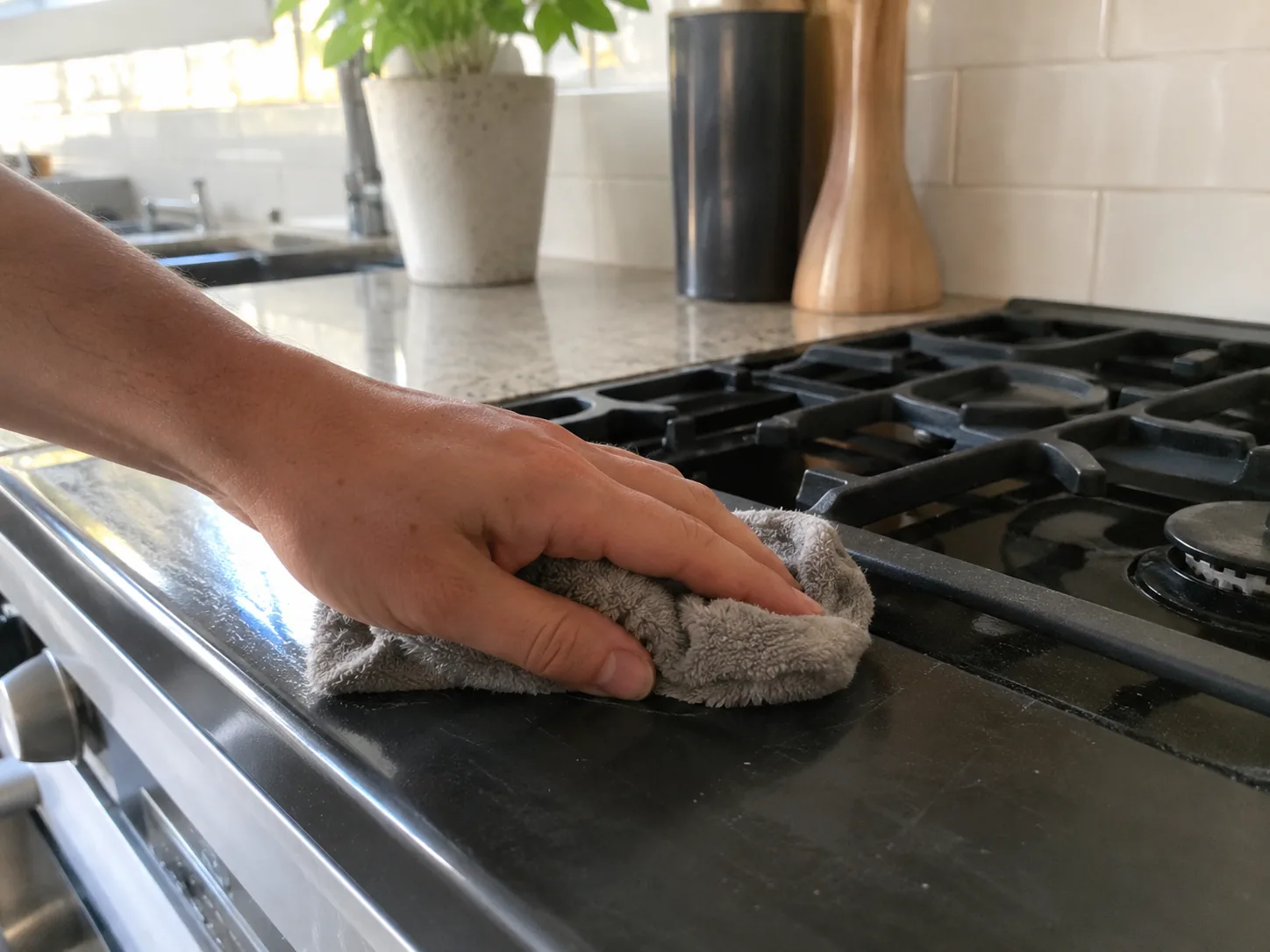
A clean-looking kitchen between visits comes down to three habits: wipe counters and the stovetop as soon as you’re done cooking, deal with dishes the same day instead of letting them stack, and take the trash out before it’s overflowing instead of after. Each one takes a minute or two. Skip them for a few days in a row and they turn into a bigger job than any of them needed to be.
The wipe-down window is shorter than you think
Sauce, oil, and food splatter start setting within minutes, not hours. Once a spill dries, wiping it up turns into scrubbing it off, especially on stone counters and around stovetop knobs and burner caps where drips run into small gaps. The fix isn’t a deeper clean later, it’s catching the mess while it’s still wet.
Right after you finish cooking, while the stovetop is still warm, run a cloth over the burners, knobs, and the counter space around them. A damp cloth with a little dish soap or an all-purpose spray handles almost everything at this stage. Wipe the table too if you ate there, crumbs and drink rings left overnight attract ants more than almost anything else in the kitchen. Gas stovetops need this more than electric ones, since grease and drips settle into the grates and burner caps and need a soak or scrub brush once they harden.
Dishes: load them, don’t stack them
A sink full of dirty dishes is the fastest way a clean kitchen starts to look neglected again, even if everything else is in order. The fix has to happen the same day: rinse and load plates, cups, and utensils right after eating, rather than setting them in the sink for later.
If something needs to soak, a pot with baked-on food or a pan you’re not ready to scrub, use one designated bowl or pot for it instead of filling the whole sink. That keeps the rest of the sink usable and keeps the kitchen from looking like a project is in progress. Wash it out that same evening or the next morning. A pot left soaking for days starts to smell, and residue that sits that long is harder to remove than it would have been on day one.
No dishwasher? Same principle, different timing: wash as you cook when you can, and handle what’s left within thirty minutes of eating rather than after it dries onto the plate.
Trash: rotate it before it’s full, not after
A trash can allowed to fill past the top is one of the fastest ways a kitchen starts to smell, even if every other surface is spotless. Take the bag out when it’s getting full, not when you have to press things down to close the lid. Waiting until the last moment is what leads to bags that tear on the way out and trash juice on the floor.
Keep a small stack of spare liners at the bottom of the can. Swapping a bag takes ten seconds when the next one is right there, and becomes something you put off when it isn’t. If the can has a solid bottom that collects residue, rinse it out with hot water every few weeks, that residue is a common source of a smell that lingers even with a fresh bag in place. If your city offers a separate organics or food-scrap bin, using it for meal prep waste keeps wet material out of the regular trash and stretches the time between rinses.
The two-minute reset before bed
Even on nights when cooking ran late, two minutes before bed makes a real difference the next morning: clear the counters, put away stray dishes or containers, wipe the main surfaces one more time, and run hot water down the drain to rinse away anything that went down during cleanup. Walking into a clear kitchen in the morning sets the tone for the day, and it means less has built up by the time your next scheduled cleaning comes around.
What these habits won’t reach
Daily wipe-downs, a steady dish routine, and a well-timed trash schedule keep the surface level of the kitchen looking good, but they don’t touch what builds up out of sight: grease film on cabinet fronts near the stove, buildup inside the oven or behind and underneath appliances, or grime in grout lines and range hood filters. That’s not a gap in the daily habits, it’s just outside what a few minutes a day can cover. A kitchen deep clean is built for exactly that layer, and it’s a lot easier to keep up with daily habits when they’re maintaining a kitchen that started from a genuinely clean baseline.
Frequently asked questions
How often should I actually wipe down the counters? After every meal that involves cooking, not just once a day. It takes under a minute each time and prevents the buildup that turns into a real scrubbing job by the weekend.
Is it okay to let dishes soak overnight? One pot or pan overnight is fine. A full sink of soaking dishes for multiple days is where the problem starts, since food residue hardens and starts to smell the longer it sits in standing water.
What if I don’t have a dishwasher? Wash as you go while cooking when you can, and handle what’s left within thirty minutes of eating. The timing matters more than the method, dishes left to dry onto the plate take noticeably longer to clean later.
How do I stop the kitchen trash from smelling between pickup days? Take the bag out before it’s full, rinse the can itself every few weeks if it collects residue at the bottom, and keep food scraps separated in an organics bin if your city offers one.
Do I need special products for daily wipe-downs, or is soap and water enough? Soap and water or a basic all-purpose spray handles nearly all daily wipe-downs. Save degreasers and specialty cleaners for the buildup a deep clean is meant to handle.
How long should the whole daily routine actually take? A few minutes spread across the day: about a minute after each meal for wipe-downs, loading the dishwasher as you go, and two minutes before bed for the final reset.
If I keep up with these habits, can I stretch out how often I schedule professional cleaning? Often, yes. Kitchens that get wiped down daily and never let dishes or trash pile up hold up well on a longer interval, since there’s less surface-level buildup to catch up on each visit. See daily habits that cut cleaning time for how this plays out across the rest of the house.
What’s the real difference between this and a deep clean? Daily habits manage what accumulates on visible surfaces. A deep clean reaches what those habits can’t: appliance interiors, behind and underneath units, cabinet fronts, and grease that’s had time to bond to a surface. They solve different problems.
If your kitchen has already fallen behind, or you’d rather hand off the daily upkeep entirely, recurring cleaning keeps your kitchen, and the rest of your home, on a consistent schedule with the same trusted local crew.
or call +1 (949) 330-0081.