How to Keep a Clean Home With Pets
Keeping a clean home with pets comes down to treating fur, litter, accidents, and muddy paws as their own categories instead of folding them into general tidying. A short daily routine covers the basics, a weekly pass resets the zones pets use most, and pet-safe products keep the system safe for the animals living in it. The buildup neither routine reaches, deep in carpet padding and upholstery foam, is what a professional clean every 6 to 12 months is for.
Entryways: muddy paws and tracked-in dirt
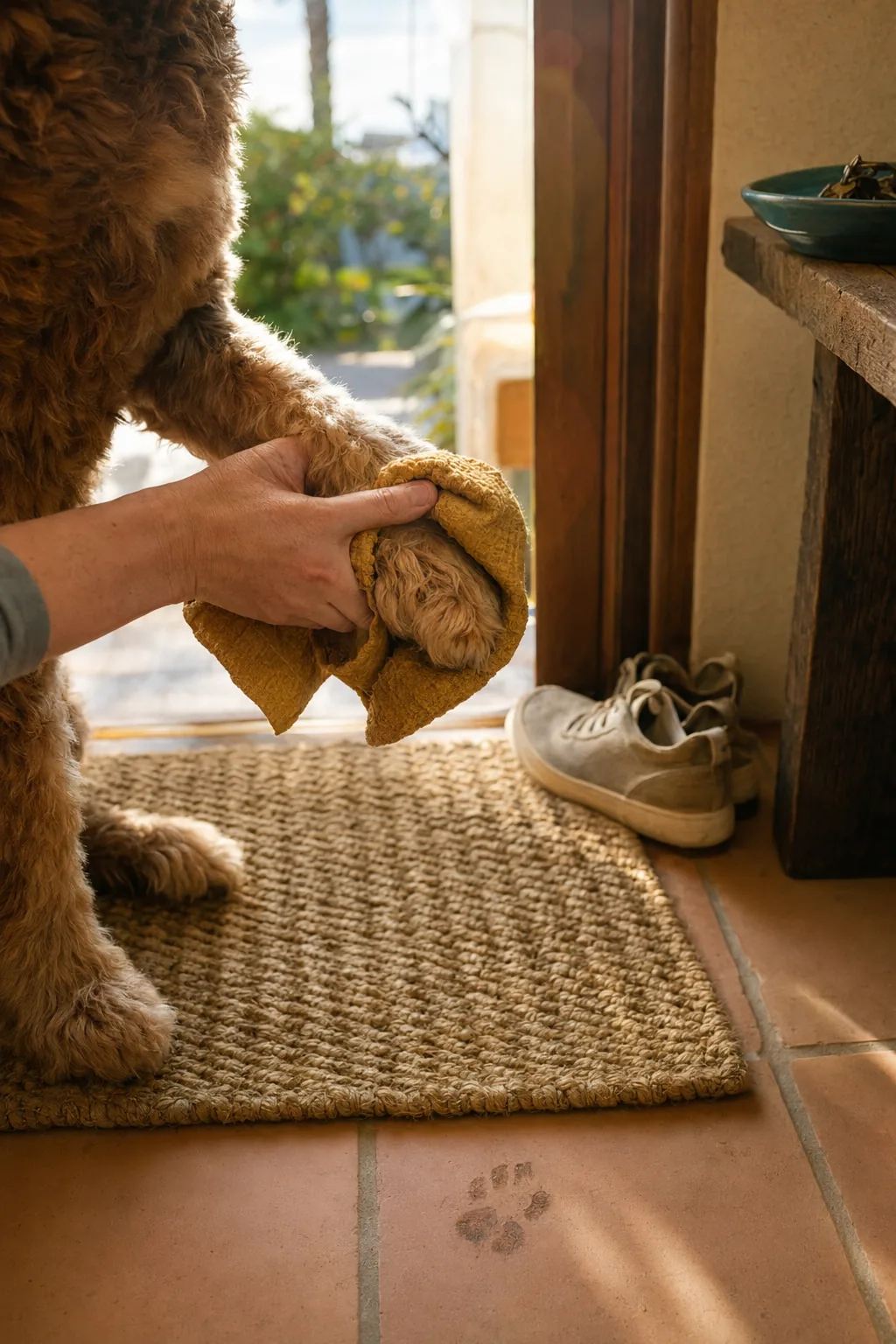
The entryway takes more abuse in a pet home than almost any other spot, since every walk and yard trip funnels through it. A towel or absorbent mat right at the door, wide enough for a dog to fully step onto, catches most of the mud and water before it reaches the rest of the floor. Wiping paws on the way in, even a quick pass with a damp towel on a hook by the door, stops tracked dirt from working into hallway carpet or grout lines a few steps further in.
Hard flooring near the entry needs a daily or every-other-day sweep or quick mop in wet weather, since dried mud grinds into finish and grout faster than fresh mud wipes off. An entry rug or carpet takes the heaviest hit in the house and is usually the first thing to look dull, so it is worth treating as its own problem rather than assuming general vacuuming will keep pace with it.
Living rooms and furniture: shedding and dander
Fur builds up faster than most people expect, especially with shedding breeds or more than one pet in the house. A daily or every-other-day vacuum pass on hard floors and rugs keeps loose fur from working into carpet fibers and upholstery, where it becomes far harder to remove later. Brushing pets outside or in a bathroom, rather than on the living room rug, cuts down on how much loose fur even makes it onto floors and furniture in the first place.
Furniture needs its own habit on top of floor vacuuming. A washable throw over the spot on the couch where a dog naps protects the fabric underneath and is easier to launder than the cushion itself, and a dedicated pet blanket on a favorite chair does the same for cats that climb. Lint rollers by the door save real vacuuming time: run one over cushions before guests arrive, and keep a second in the car if pets ride along. Regular nail trims cut down on snags in upholstery and the fine dust pets kick up running across a room.
Litter box zones
The litter box area needs its own zone, not general floor cleaning. Scooping happens daily, and a full dump-and-wash follows a set schedule: weekly for most single-cat households, more often with multiple cats or in a room that runs warm, since odor develops faster in heat. A washable mat under the box catches tracked litter before it spreads, and that mat needs its own regular shake-out or wash.
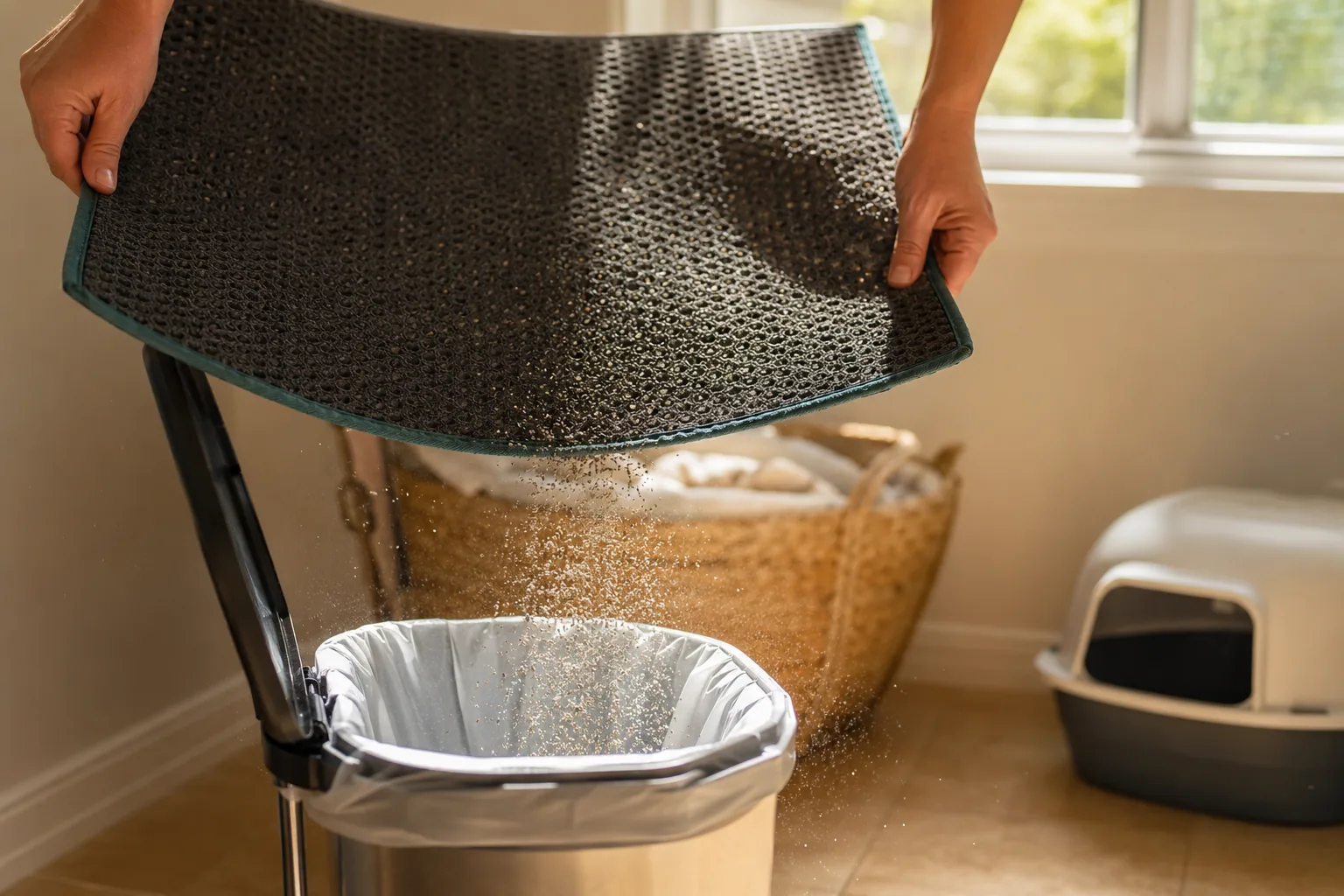
Location matters more than most people plan for. A box near an HVAC return pulls litter dust and odor straight into circulating air, so a corner with decent airflow but away from vents keeps smell from spreading room to room. Baking soda under the litter, changed along with it, cuts ambient odor between full cleanings without masking it.
Accidents on carpet and floors
Accidents on hard floors clean up in minutes with a pet-safe cleaner and a damp cloth, but carpet and rugs need a different approach or the spot resurfaces days later. Blotting up as much liquid as possible before applying any cleaner matters more than the cleaner itself, since rubbing pushes the accident deeper into the pad instead of lifting it out. Ammonia-based cleaners are worth avoiding for pet accidents specifically: ammonia is a byproduct of broken-down urine, so a cleaner built around it can read to a pet as an invitation to mark the same spot again.
A fresh accident on carpet can usually be managed with blotting, a pet-safe enzyme spray, and letting it dry fully before checking for any remaining smell. An accident that has already dried, or one nobody caught in time, is a different problem: the moisture has typically reached the padding underneath by then, and surface treatment alone will not fully clear it. That is where a spot moves from a daily-routine fix to something needing deeper attention, covered in removing pet odor from carpet and furniture.
Kitchens and feeding stations
Food and water bowls need a daily wash, not just a topper of fresh food or water on what is already there. Residue builds a film that attracts bacteria and pests faster than almost anywhere else pets spend time, and a quick daily wash with regular dish soap handles it. A washable placemat under the bowls catches spilled water and stray kibble, and wiping it down daily keeps crumbs from working into grout lines nearby.
Treat bags and loose kibble storage are worth a second look too. An open bag or poorly sealed container draws pests and leaves a fine dust of crumbs nearby, so sealing food properly and wiping the storage spot weekly keeps that corner from quietly becoming the dirtiest in the house.
Bedrooms, pet beds, and crates
Crates and pet beds hold onto dander, saliva, and odor even when they look clean on the surface. Washable bed covers or liners make this manageable: stripping and washing them the same day as sheets turns it into one laundry load instead of a chore that keeps getting pushed off. Liners that cannot go in a machine need more frequent wipe-downs and airing out to compensate.
If pets sleep on human beds, the sheets need washing more often than a pet-free household would default to, since fur and dander transfer directly onto the fabric every night. A washable throw over the section of the bed a pet favors takes that direct contact instead, and it is a much smaller item to wash on a tighter cycle.
A realistic weekly cleaning schedule for pet households
A schedule only works if it matches how a pet home actually gets dirty, not a generic checklist with a couple of pet items bolted on. This breakdown separates what needs daily attention from what can wait.
| Frequency | Tasks |
|---|---|
| Daily | Scoop litter box, wash food and water bowls, quick vacuum or sweep of entryway and main traffic paths, wipe muddy paws at the door |
| 2 to 3 times a week | Full vacuum of carpets and rugs, mop hard floors, lint-roll couch cushions and throw blankets |
| Weekly | Full litter box dump and wash, wash pet bed cover or liner alongside sheets, wipe down the litter mat and feeding placemat, vacuum under furniture in high-traffic rooms |
| Monthly | Deep vacuum under furniture and in corners, wash or air out crates and non-washable bed liners, check the HVAC filter (monthly with pets, not the standard 60 to 90 days) |
| Every 6 to 12 months | Professional carpet and upholstery extraction cleaning, sooner for a rug or sofa a pet uses daily |
The daily and 2-to-3-times-a-week columns actually prevent buildup. Skipping the weekly litter box wash, or letting vacuuming slide to once a week, is usually where a pet home’s cleaning system starts to break down.
Why pet-safe products matter
Standard cleaning products are formulated for humans standing upright, not for animals with their noses and paws on the floor all day. Residue from a harsh cleaner can end up on paws and fur, and from there in a pet’s mouth during grooming. This is part of why eco-friendly, non-toxic products get used on every Clover visit as a default, not an add-on someone has to request.
It matters beyond the cleaner itself. Some essential oils in DIY sprays or “natural” store-bought cleaners, tea tree and pine among them, are toxic to cats if licked off fur or paws, even in small amounts. Heavily fragranced sprays can also irritate a pet’s respiratory system before a person in the same room notices anything, since a dog or cat’s sense of smell is far more sensitive than a human’s. This does not mean avoiding cleaning products, just checking what is actually in a spray before using it anywhere a pet walks, sleeps, or grooms itself.
Managing odor and allergens
Odor and allergens in a pet home come from the same sources, fur, dander, saliva, and accidents, but need slightly different handling. Odor is often about what has soaked into a surface: urine, dander, and everyday pet oils a vacuum or wipe-down cannot reach once they pass the visible fibers into padding or backing underneath. A smell that keeps returning a day or two after airing out a room usually means the source is still sitting deeper in the material. Removing pet odor from carpet and furniture covers why enzyme treatment paired with deep extraction is what actually removes that kind of set-in odor, rather than masking it.
Allergens are more about volume than depth. Pet dander stays airborne longer than most household dust, settling into curtains, upholstery, and HVAC filters, not just the floor. A vacuum without sealed HEPA filtration can push fine dander back into the air through its exhaust while cleaning, undoing some of the benefit. Washing bedding, throws, and pet bed covers weekly in hot water handles the fabric side of allergen buildup, while a monthly HVAC filter check, rather than the standard 60 to 90 day cycle, keeps the system from recirculating what it should be trapping.
Protecting upholstery and carpet long term
Daily and weekly habits handle the surface layer, but fur, dander, oils, and the occasional accident eventually work into carpet padding and upholstery foam in ways vacuuming cannot reach. That is the gap upholstery and carpet cleaning closes: deep extraction cleaning for sofas, armchairs, dining chairs, area rugs, and carpeted rooms, priced per item rather than by home size, so a single overdue sofa or rug does not require booking a full-home service.
Pricing runs $35 per sofa seat, $45 per armchair, $18 per dining chair, $160 per area rug, and $70 per carpeted room, with leather pieces carrying a 50 percent surcharge for the conditioning step leather needs. Pet odor treatment is available at $40 per treated item for spots a wash and vacuum have not fully cleared, and stain protection runs $25 per item, useful on light-colored fabric or a piece pets use daily. For a full-home visit rather than a single piece, pet hair removal is a separate $25 add-on on deep cleaning and recurring cleaning appointments. Fabric sofas and armchairs generally hold up for 6 to 12 months between professional cleans in pet households, faster than the 12-to-18-month cycle that fits a pet-free home, and wall-to-wall carpet follows the same 6-to-12-month cycle, sooner in rooms a pet uses daily.
Frequently asked questions about cleaning a home with pets
How often should I vacuum a home with pets?
Daily or every other day on hard floors and rugs in high-traffic areas, with a fuller vacuum of all carpets and rugs 2 to 3 times a week. Shedding breeds or multiple pets push toward the more frequent end.
Do I need special products for a home with pets?
Standard cleaners are not formulated with an animal’s nose, paws, and grooming habits in mind. Residue can transfer to fur and end up ingested during grooming, and some ingredients, including certain essential oils, are directly toxic to cats. Eco-friendly, pet-safe products avoid that risk.
How often should the litter box be fully cleaned?
Scoop daily. A full dump-and-wash is weekly for most single-cat households, more often with multiple cats or a warm room where odor develops faster.
How do I stop muddy paws from ruining my floors?
A wide absorbent mat right at the door, plus a quick paw wipe on the way in, catches most of it before it spreads. Hard flooring near the entry still needs a daily or every-other-day sweep or mop in wet weather, since dried mud is harder to remove than fresh mud.
Can regular vacuuming get rid of pet odor?
Not fully. Vacuuming removes loose fur and surface dust, but odor from urine, dander, and pet oils soaks past the visible fibers into carpet padding or upholstery foam, where a vacuum cannot reach it. That level of odor needs enzyme treatment and deep extraction, covered in removing pet odor from carpet and furniture.
How often should carpet and upholstery be professionally cleaned in a pet home?
Every 6 to 12 months for carpet and fabric furniture, sooner for a rug or sofa a pet uses daily. That is faster than the 12-to-18-month cycle for a pet-free home.
Is pet hair removal available as an add-on to a regular house cleaning visit?
Yes, as a $25 add-on on deep cleaning and recurring cleaning visits, on top of the standard clean.
What is the difference between pet odor treatment and pet hair removal?
Pet hair removal is a $25 whole-visit add-on on a deep or recurring house cleaning appointment, aimed at fur. Pet odor treatment is a $40-per-item add-on specific to upholstery and carpet cleaning, aimed at odor settled into padding or foam. They solve different problems and can both apply if a home needs them.
Do pet-safe cleaning products work as well as standard ones?
Yes, for the surfaces and messes a typical pet home deals with day to day. The difference is in the formulation and residue left behind, not whether the surface gets clean.
How can I manage pet allergens if someone in the household is allergic?
Wash bedding, throws, and pet bed covers weekly in hot water, vacuum with a sealed HEPA machine so dander is not pushed back into the air, and check the HVAC filter monthly instead of the standard 60-to-90-day cycle. Professional upholstery and carpet cleaning on a 6-to-12-month cycle addresses dander already worked into fabric and padding.
What is the fastest way to catch up if my pet-cleaning routine has fallen behind?
Start with the litter box and any overdue laundry, since those two drive the most noticeable odor. From there, a recurring cleaning visit resets floors, surfaces, and bathrooms with pet-safe products, giving a clean baseline instead of trying to catch up on everything solo in one weekend.
Keep it consistent
A clean home with pets is less about one big effort and more about a routine that survives a busy week. The daily basics, litter, bowls, entryway, take a few minutes and prevent most of the buildup. When that system slips, or fur and dander have already worked past what a vacuum can reach, a recurring cleaning plan covers the floors, surfaces, and bathrooms on a set schedule with pet-safe products every time, so your own routine only has to keep up with the small daily stuff.
or call +1 (949) 330-0081.