Leather Furniture Care: Dos and Don'ts
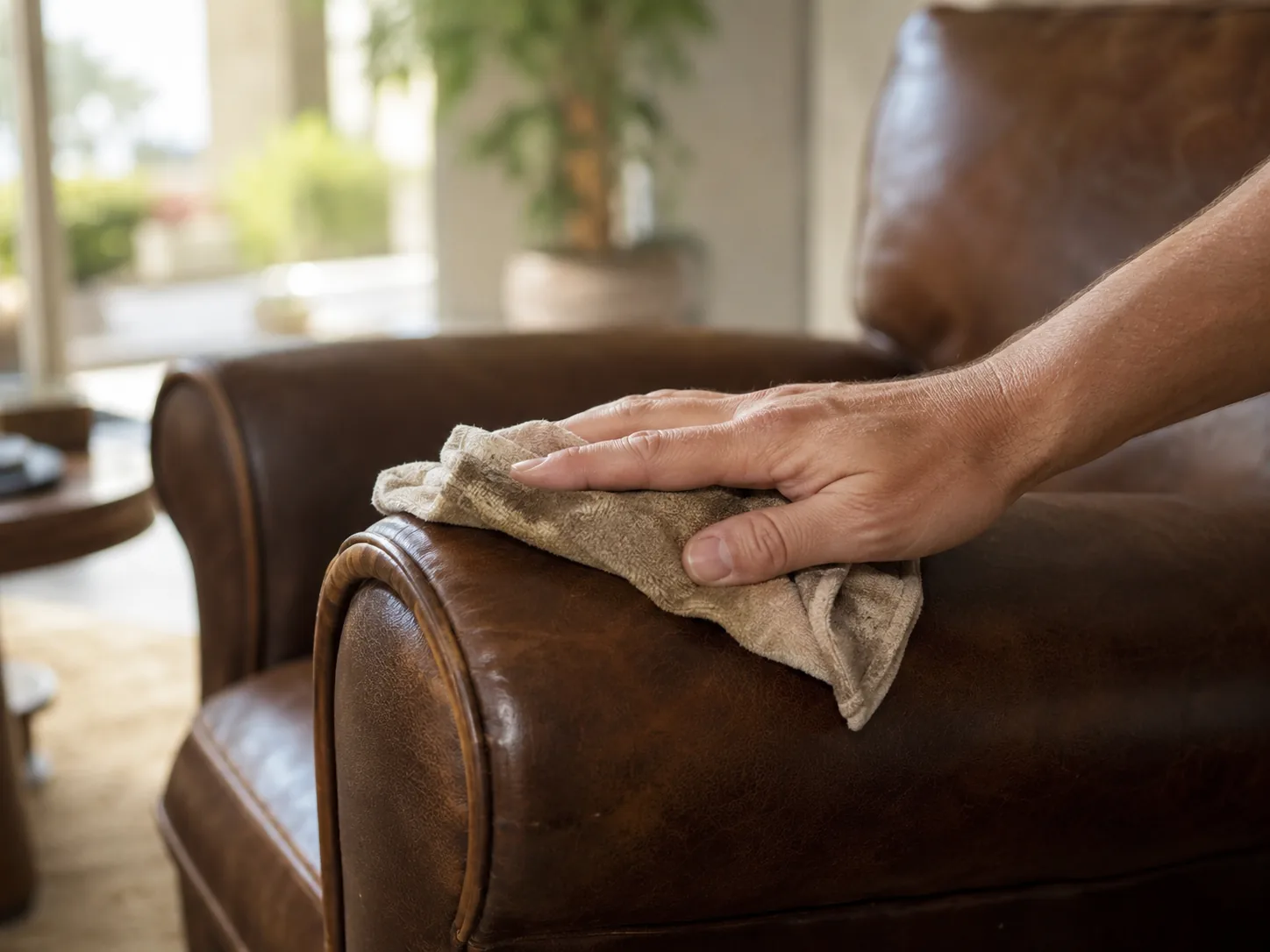
Leather needs conditioning every 6 to 12 months, protection from direct sun and heat vents, and spills wiped up immediately with a dry cloth, never soaked with water or scrubbed with household cleaners. Leather cleaning and conditioning is a real add-on within upholstery cleaning, priced with a 50 percent surcharge over the equivalent fabric item.
Leather is skin, not fabric
Leather care rules differ from fabric care because leather is literally treated animal hide. It has pores, it absorbs and releases moisture, and it dries out over time the same way skin does without lotion. A cotton or polyester-blend sofa can go years without any product applied and just needs regular vacuuming and an occasional deep clean. Leather can’t. Skip conditioning long enough and the surface stiffens, the finish cracks at stress points, and vacuuming doesn’t fix that, because the problem isn’t dirt on top, it’s moisture missing from inside the material.
This is also why leather and fabric pieces in the same home age so differently. A leather sofa that gets full sun through a west-facing window for three years looks noticeably worse than a fabric sofa in the same spot, because UV and heat don’t just fade leather, they pull moisture out of it faster than normal wear would.
How often to condition leather, and how to do it right
Condition leather every 6 to 12 months. Households in drier climates, or pieces near a heat vent, air return, or a lot of direct sun, do better on the 6-month end of that range. A piece in a shaded, humidity-controlled room can sometimes stretch closer to 12 months, but checking twice a year and conditioning when the leather starts to feel dry is a safer habit than guessing by the calendar.
The process:
- Wipe the piece down with a dry, soft cloth first to remove surface dust.
- Apply a small amount of leather conditioner to a clean cloth, not directly onto the leather. A little goes further than most people expect.
- Work it in with light, circular motions, focusing on arms and seat edges, since those areas dry out first.
- Let it absorb fully, typically 15 to 20 minutes, before sitting on the piece again or wiping off any excess.
Skip conditioning on a piece that’s already cracked or split in the finish. Conditioner sinks into damaged areas unevenly and can leave dark blotches there, which is one sign it’s time to call in a professional instead.
Sun and heat are the fastest way to age leather
Direct UV exposure breaks down the oils in leather’s finish and fades its color. Heat, whether from sunlight or a nearby vent or radiator, speeds up the same process by pulling moisture out faster than it would evaporate on its own. The two stack: a leather chair getting both direct afternoon sun and warm air from a floor vent ages considerably faster than one getting either alone.
In Orange County, this shows up faster than people expect. A leather sofa facing an unshaded west-facing window can show visible fading and the first signs of dryness within a year or two, given how many hours of direct sun most rooms get through the year here. A few habits limit the damage:
- Close blinds or curtains during peak sun hours, roughly late morning through mid-afternoon.
- Rotate cushions and, where possible, the piece itself periodically so fading and drying don’t concentrate on one side.
- Keep leather furniture at least a few feet from heat vents, radiators, and fireplaces, and never let a vent blow directly onto a leather surface.
- If a room has no practical way to block sun, consider a UV-filtering window film, which protects both leather and any fabric pieces in the same room.
What to do the moment something spills
Blot, don’t wipe, and don’t reach for water first. The sequence that actually protects the leather:
- Blot immediately with a clean, dry cloth, pressing straight down rather than wiping side to side, which spreads the liquid instead of lifting it.
- Keep blotting with a fresh section of the cloth until no more liquid transfers.
- Check the spot. For most everyday spills, coffee, water, a splash of wine caught quickly, that’s the entire fix. Let it air dry naturally.
- If a mark remains, use a cloth barely dampened with water, not soaked, and dab gently rather than scrub. Test on a hidden area first.
- Skip soap, all-purpose cleaners, and baby wipes unless a product is labeled specifically for leather.
Never point a hair dryer, heater, or direct sunlight at wet leather to speed up drying. Leather that loses moisture too fast dries unevenly and stiffens, sometimes cracking exactly where it was wet. Air drying away from any heat source is the only way to avoid trading a spill for a permanent stiff patch.
Leather products: what to use and what to avoid
| Do use | Avoid |
|---|---|
| Leather-specific conditioner | Ammonia-based household cleaners |
| A soft, clean, dry cloth | Baby wipes (many contain alcohol or ammonia) |
| A barely damp cloth for stubborn marks | All-purpose or dish soap |
| Products labeled for your leather’s finish type | Furniture polish or wax not made for leather |
| A small test patch on any new product | Direct heat or a hair dryer on wet leather |
Even products made specifically for leather aren’t universal. Finishes vary (aniline, semi-aniline, pigmented, and others), and a conditioner that works well on one piece can darken or streak another. Before using any new product somewhere visible, apply a small amount to a hidden spot and wait 24 hours to check for discoloration first. This matters most with older or unknown-finish furniture, like a hand-me-down piece where nobody knows what was used on it last.
Small cracks and dry patches don’t fix themselves
A dry, stiff patch or a hairline crack at a seat edge doesn’t heal itself under normal use, and it typically gets worse the longer it’s ignored, since that section keeps flexing every time someone sits down. Catching it early, while it’s still just dryness and not an actual split in the finish, is the difference between fixing it with conditioner and needing an actual repair. Left alone, a minor dry patch can turn into a crack that runs across the whole cushion within a matter of months on a piece that gets daily use.
Check the highest-contact areas, arms, the front edge of the seat cushion, and anywhere hands rest most, every time you condition. Those are the spots that show wear first on almost every leather piece, regardless of quality or price.
When DIY care stops being enough
Regular conditioning and careful spill handling cover normal wear, but they don’t reverse deep staining, significant fading, or cracking that’s already set in. Trying to fix advanced damage with more conditioner or a stronger cleaner usually makes it worse, since a harsh product on already-compromised leather can strip what’s left of the finish and make the problem permanent.
Signs it’s worth calling a professional rather than continuing DIY treatment:
- Cracking that’s visible and continues past the surface, not just a dry patch
- Noticeable color loss or uneven fading across a large section of the piece
- Stiffness that conditioning hasn’t improved after a couple of applications
- A piece that’s gone years without any conditioning and feels dry throughout, not just at the usual wear points
- Discoloration or streaking left behind by a past DIY product
A professional treatment can also reset conditioning on furniture that’s had none in years, which is common with older or inherited leather pieces where the care history is unknown.
Leather cleaning and restoration pricing
Leather cleaning and conditioning is priced within upholstery cleaning as a 50 percent surcharge over the same item’s standard fabric price, since leather needs different products and a conditioning step a fabric clean doesn’t include. The surcharge scales with the piece the same way the base price does:
| Item | Fabric price | Leather price (+50%) |
|---|---|---|
| Sofa seat | $35 | $52.50 |
| Armchair | $45 | $67.50 |
| Dining chair | $18 | $27 |
A leather 3-seat sofa, for example, comes to 3 seats at $52.50 each, or $157.50 total, compared to $105 for the same sofa in fabric. That difference reflects real added scope: the standard leather price includes conditioning as part of the clean, so a professional visit resets both surface grime and the material’s moisture at once.
Restoration is a different scope of work. For pieces with existing cracking, significant fading, or deep-set damage, a crew assesses the piece on site and quotes restoration separately, since the work varies too much by condition for a flat per-item rate. Mention any of the signs listed above when you request a quote so the crew can look at the piece directly. Stain protection is also available as an add-on for $25 per item, and new customers get $39 off their first booking. For the full pricing breakdown across every upholstery item, see how much upholstery cleaning costs.
Frequently asked questions about leather furniture care
How often should leather furniture be conditioned?
Every 6 to 12 months. Pieces near direct sun, a heat vent, or in a drier climate do better closer to every 6 months, while shaded, climate-controlled pieces can sometimes stretch toward 12.
Can I use baby wipes on leather?
No. Many baby wipes contain alcohol or ammonia, which strip leather’s natural oils the same way harsh household cleaners do. Stick to products labeled specifically for leather.
What do I do if I spill red wine or coffee on a leather sofa?
Blot immediately with a dry cloth, pressing rather than wiping, until no more liquid transfers. If a mark remains, use a barely damp cloth on a hidden area first before touching the visible stain.
Is it okay to use a hair dryer to dry wet leather faster?
No. Direct heat causes leather to dry unevenly and can lead to stiffening or cracking. Let it air dry naturally away from any heat source.
Why does my leather sofa feel dry and stiff even though I vacuum it regularly?
Vacuuming removes surface dust but does nothing for internal moisture. Dryness and stiffness are signs it’s overdue for conditioning, not a cleanliness issue.
How much does leather cleaning cost compared to fabric?
Leather carries a 50 percent surcharge over the equivalent fabric price. A fabric sofa seat is $35 and the leather version is $52.50; a fabric armchair is $45 and leather is $67.50.
Does the leather cleaning price include conditioning?
Yes. Standard leather cleaning includes conditioning as part of the service, which fabric items don’t require.
What’s the difference between leather cleaning and leather restoration?
Cleaning and conditioning is the standard, flat-priced service for routine care. Restoration addresses existing cracking, significant fading, or deep-set damage, and it’s quoted separately after a crew assesses the piece.
Can a small crack in leather be fixed at home?
A minor dry patch caught early can often be improved with conditioning. An actual crack in the finish is past what conditioning alone fixes and is worth having assessed for restoration.
Can leather and fabric pieces be cleaned in the same visit?
Yes. A crew brings the right products for each material, so a leather sofa and a fabric area rug can both be handled in one appointment.
If your leather furniture is overdue for conditioning or already showing dryness, fading, or a crack that’s starting to spread, get an instant quote for leather cleaning and conditioning. If you also have fabric furniture to maintain between professional cleans, these habits keep a sofa looking new longer.
or call +1 (949) 330-0081.