Vinegar, Baking Soda, and Other Natural Cleaners That Actually Work
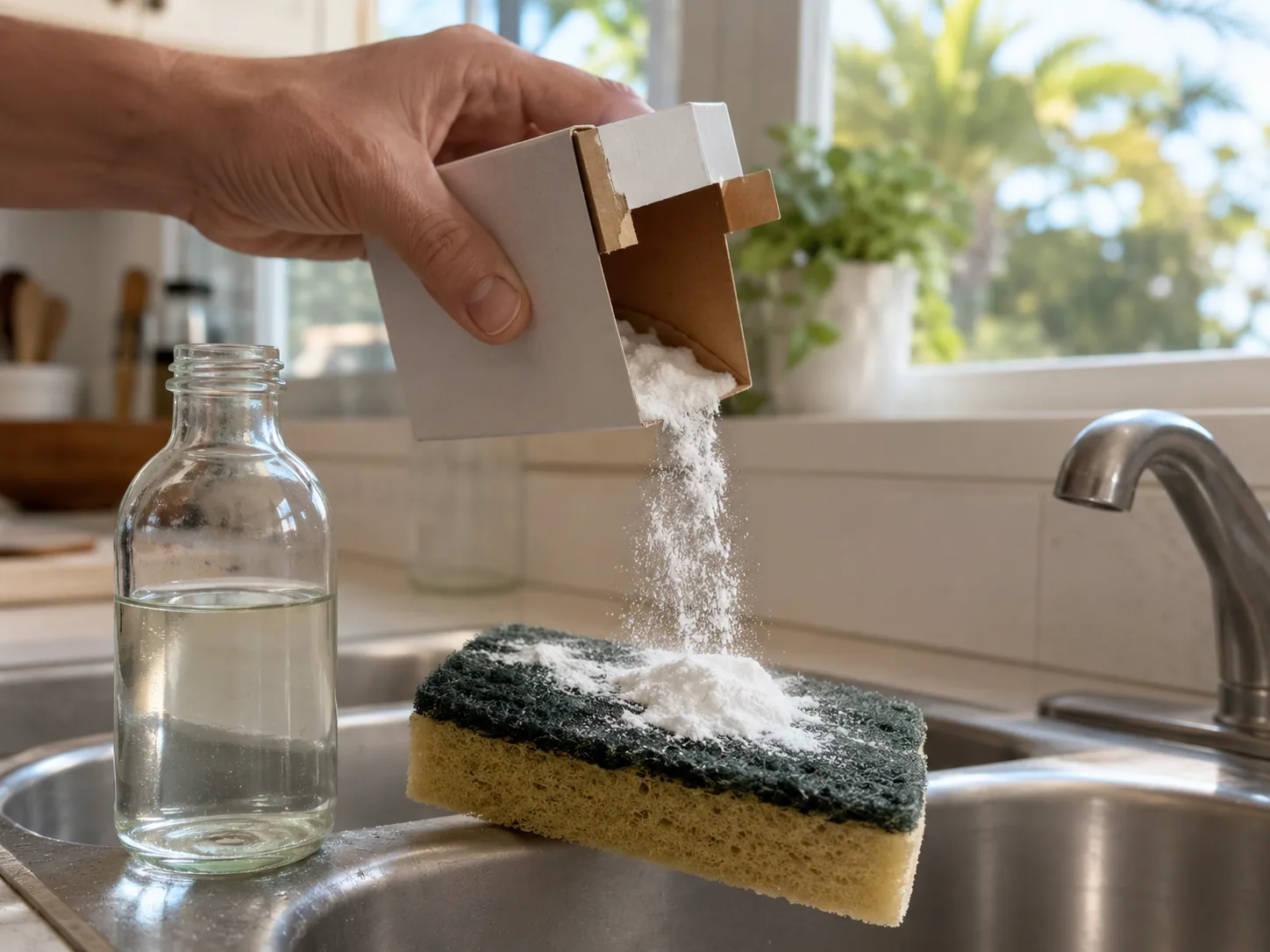
Vinegar and baking soda genuinely work, but only on specific kinds of dirt, and the reason matters more than the recipe. Vinegar is an acid that dissolves mineral buildup and breaks down grease; baking soda is a mild abrasive that scrubs and absorbs odor. Understanding which soil each one actually targets is what separates a natural cleaning routine that works from one that just moves grime around.
The chemistry: why these two ingredients work at all
Most “natural cleaning doesn’t work” complaints trace back to using the wrong tool for the dirt. Household grime falls into a few broad categories, and vinegar and baking soda are each built for different ones.
Vinegar is an acid, and acids dissolve alkaline deposits. White vinegar is a solution of acetic acid, typically diluted to around 5 percent concentration. Hard water stains, soap scum, and the chalky film on a showerhead or coffee maker are almost entirely mineral deposits, mostly calcium and magnesium carbonate left behind as water evaporates. These minerals are alkaline, and vinegar’s acid reacts with them in a straightforward acid-base reaction, breaking the mineral bonds and letting them dissolve or lift away, the same basic chemistry as descaling a kettle. It’s also why vinegar does close to nothing against grease on its own: fats and oils aren’t mineral deposits, so there’s no acid-base reaction to exploit. It isn’t a true degreaser the way dish soap is.
Baking soda is a mild abrasive and a base, not an acid. Sodium bicarbonate is hard enough to physically scrub loose baked-on food, soap film, and grime when made into a paste, but soft enough that it won’t scratch most sealed surfaces. It’s also mildly alkaline, which is why it neutralizes acidic odors: many household smells, like sour trash or old food, are acidic compounds, and baking soda’s alkalinity reacts with them directly rather than just masking the smell with fragrance. That combination, physical abrasion plus odor neutralization, is why it handles baked-on pots, grout lines, and a smelly fridge, but does little against mineral scale or grease, since it’s neither acidic nor a true surfactant.
Why the combo undersells both of them. Mixed together, vinegar and baking soda neutralize each other in an acid-base reaction, producing carbon dioxide (the fizz), water, and sodium acetate. That fizzing looks like cleaning power, but it’s actually the two ingredients canceling each other out before either does its job. The acid that would have dissolved mineral scale is spent reacting with the base instead of the buildup on your faucet. Used separately, in sequence, each ingredient does the job it’s actually suited for.
Use-case table: what to reach for, by room and surface
| Room / Surface | Problem | What works | Method |
|---|---|---|---|
| Kitchen faucet, sink | Hard water spots, mineral film | Vinegar | Spray undiluted or 1:1 with water, let sit 5 to 10 min, wipe |
| Coffee maker | Mineral scale in the reservoir | Vinegar | Run a brew cycle of half vinegar, half water, then two cycles of plain water |
| Pots, pans, baked-on food | Carbonized grease and food residue | Baking soda | Paste with water, let sit 15+ min, scrub |
| Oven interior | Baked-on grease | Baking soda | Thick paste overnight, scrape and wipe in the morning |
| Grout lines | Soap film, ground-in dirt | Baking soda paste, then vinegar rinse on ceramic/porcelain only | Scrub paste in, rinse; skip vinegar rinse on natural stone tile |
| Shower glass, tile (ceramic/porcelain) | Soap scum, hard water spots | Vinegar | 1:1 spray, wipe or squeegee |
| Trash can, fridge interior | Lingering odor | Baking soda | Open box or loose sprinkle, wipe down with a damp baking soda paste |
| Carpet | General odor before vacuuming | Baking soda | Sprinkle, let sit 15 to 20 min, vacuum thoroughly |
| Glass and mirrors | Streaks, fingerprints | Vinegar | 1:1 with water, microfiber cloth |
| Stainless steel appliances | Water spots, light smudging | Vinegar | Light spray, wipe with the grain, dry buff |
| Toilet bowl (routine, not post-illness) | Rim buildup, mild staining | Baking soda paste with a toilet brush | Not a substitute for disinfecting after illness |
| Natural stone (marble, granite, travertine) | Any soil | Neither vinegar nor baking soda paste directly | Use a pH-neutral stone cleaner instead |
Surfaces to never use vinegar on
This is the section that actually prevents damage, worth reading closely if you keep a spray bottle of diluted vinegar under the sink.
Natural stone: marble, granite, travertine, limestone. These stones are largely calcium carbonate, chemically similar to the hard water deposits vinegar is so good at dissolving. That’s exactly the problem: vinegar’s acid doesn’t distinguish between mineral buildup sitting on the stone and the stone itself, so it etches the surface, leaving a dull, cloudy patch where the polish used to be. Etching isn’t a stain that scrubs off later, it’s a change to the stone’s finish, permanent short of professional re-polishing. The damage is cumulative and doesn’t require a spill, a quick wipe-down with an all-purpose vinegar spray is enough over repeated use.
Hardwood floors. Most hardwood floors have a polyurethane or wax finish sealing the surface, and vinegar’s acidity breaks that finish down gradually with repeated exposure, leaving the floor dull rather than damaged in one visible event. Because the effect builds slowly, people often use diluted vinegar on hardwood for months before the dulling becomes obvious, by which point it usually needs refinishing to fix. A pH-neutral hardwood cleaner is the safer standing choice.
Cast iron cookware. Cast iron’s seasoning, the polymerized oil layer that gives it a non-stick surface and prevents rust, is vulnerable to acid the same way mineral deposits are. A pan wiped with vinegar can go from well-seasoned to bare metal in a single aggressive cleaning, and bare cast iron rusts fast if it isn’t dried and re-oiled immediately. If a cast iron pan needs real descaling, that’s rare enough it’s better solved by re-seasoning after, not by reaching for vinegar to begin with.
Waxed or unsealed wood furniture. Same logic as hardwood floors: vinegar can strip wax finishes, leaving a hazy film or bare patches. Test any natural cleaner on an inconspicuous spot first, or skip vinegar on finished wood entirely and use a wood-specific polish.
The shortcut worth remembering: if a surface is porous stone or has any wax, oil, or polyurethane seal protecting it, vinegar is the wrong tool. Its cleaning mechanism is dissolving things chemically similar to what it touches, and sealed or stone surfaces react badly to that.
Citrus and castile soap
Lemon juice behaves similarly to vinegar since it’s also acidic, mostly citric acid, and cuts grease and neutralizes odors with a milder scent. It carries the same natural-stone and hardwood-finish warnings, for the same reason. Castile soap, a plant-oil-based soap with no synthetic detergents, works differently: it’s a true surfactant, meaning it lifts grease and oil away in water rather than reacting chemically with the surface. Diluted with water, it’s a solid all-purpose option for kitchen counters and cabinet fronts, where grease, not mineral buildup, is the main problem.
Where natural cleaners genuinely fall short
This matters more than any recipe above: vinegar and baking soda are not registered disinfectants. They lift grime and reduce some surface bacteria through scrubbing and mild acidity, but neither is proven to reliably kill viruses like norovirus or influenza the way an EPA-registered disinfectant is. After illness in the household, on a cutting board that touched raw meat, or on a toilet after someone’s been sick, a natural cleaner alone isn’t enough, even if the surface looks and smells clean afterward. Hydrogen peroxide is the exception among natural-leaning options: at the right concentration and contact time, it’s an actual EPA-registered disinfectant.
One mixing safety point worth flagging directly: never combine vinegar with bleach. The reaction releases chlorine gas, dangerous to inhale even briefly in an enclosed bathroom. If you use both in the same space, rinse and dry fully between them, on a different day if possible. See cleaning products you should never mix for the complete list of dangerous combinations.
The honest limit of DIY natural cleaning: build-up versus maintenance
Vinegar and baking soda are maintenance tools, excellent at keeping soil from accumulating and handling everyday grime that hasn’t had months to set in. Where they hit a real limit is build-up: soil, grease, or mineral scale left long enough to bond into the surface or work into porous grout.
A few concrete examples of where the DIY approach stops working:
- Grout that’s gone years without sealing or a real scrub. Baking soda lifts surface grime, but grout that’s absorbed grease and mildew for years often needs a stronger treatment and possibly resealing to actually come clean, not just look temporarily better.
- Oven interiors with heavy, carbonized buildup. Baking soda paste handles routine baked-on spots, but grease layered on for a year or more usually needs a stronger degreaser and more scrubbing time than a home routine realistically allows.
- Hard water scale that’s built up for years on fixtures. Vinegar handles routine spotting well; heavy, longstanding mineral crust sometimes needs a stronger descaling product or, in bad cases, fixture replacement.
- Grease film on cabinet fronts and range hoods left unaddressed for months. What starts as a thin, wipeable layer turns sticky and visible, and by that point a quick spray-and-wipe just smears it rather than lifting it.
None of this means natural cleaning doesn’t work. It means it’s the right tool for staying ahead of buildup, not for reversing months or years of it after the fact. A stovetop that gets a weekly baking soda scrub rarely needs an aggressive degreaser later, because the grime never gets the chance to bond to the surface in the first place.
That’s also the practical case for pairing a DIY routine with an occasional professional deep clean rather than treating them as competing options. A deep cleaning visit reaches the build-up that accumulates in grout lines, inside ovens, and along baseboards even in a well-maintained home, the kind of buildup that natural spot-cleaning alone doesn’t reverse once it’s set in. For more on what a deep clean actually covers versus everyday upkeep, see the full breakdown in how to clean grout and tile at home, which goes through the same natural-stone etching risk in more detail room by room.
Storage and shelf life
Vinegar keeps indefinitely at room temperature and doesn’t need refrigeration. Baking soda loses potency once it’s absorbed enough odor or moisture from the air, so an open box kept under the sink for cleaning duty is worth replacing every few months, separate from any box kept in the fridge purely for odor absorption. Diluted vinegar spray bottles are fine to keep mixed and ready for weeks or months. Citrus sprays made with real lemon juice are the exception: make those fresh every week or two, since the natural oils break down faster than plain vinegar does.
Frequently Asked Questions
Is vinegar a disinfectant? No. It reduces some surface bacteria through acidity and scrubbing, but it isn’t proven to reliably kill viruses like norovirus or flu the way an EPA-registered disinfectant is. Use a real disinfectant after illness or on surfaces that touched raw meat.
Can I use vinegar and baking soda together for a stronger clean? Not usefully. Mixed, they neutralize each other into carbon dioxide, water, and sodium acetate, the fizz is the reaction using up both ingredients’ cleaning power. Use baking soda to scrub first, then a plain vinegar rinse afterward if needed, not combined in one container.
What concentration of vinegar should I use for cleaning? Standard white distilled vinegar at around 5 percent acetic acid. Mix it 1:1 with water for general spraying, or use it undiluted for heavier mineral buildup like a hard-water-stained showerhead.
Why does vinegar ruin marble and granite? Marble, granite, travertine, and limestone are calcium-based stones, chemically similar to the mineral deposits vinegar dissolves. The acid etches the stone’s polished surface itself, not just the grime on top, leaving a permanent dull spot that can’t be scrubbed away.
Is it safe to use vinegar on hardwood floors? Not for regular use. Most hardwood has a polyurethane or wax finish that vinegar’s acidity breaks down gradually, dulling the seal over months rather than damaging it in one obvious event. Use a pH-neutral hardwood floor cleaner instead.
Will vinegar strip the seasoning off my cast iron pan? Yes, with repeated or heavy use. Seasoning is a polymerized oil layer, and vinegar’s acid breaks it down the same way it dissolves mineral scale. Avoid vinegar on cast iron; re-season with oil if the surface looks dull or patchy.
How long should I let baking soda paste sit before scrubbing? At least 10 to 15 minutes for routine grime like grout lines or a stovetop. For heavy baked-on buildup in an oven, an overnight sit gives it more time to loosen the residue before scraping.
Does baking soda actually remove odors or just mask them? It genuinely neutralizes some odors. Many household smells, sour trash and some food odors, are acidic compounds, and baking soda’s alkalinity reacts with them directly, unlike a fragranced spray that just covers the smell.
Can I use vinegar on stainless steel appliances? Yes, that’s one of its better everyday uses. A light vinegar-and-water spray, wiped with the grain and buffed dry, cuts water spots and light smudging well.
Is castile soap the same as regular liquid soap? No. Castile soap is made from plant oils with no synthetic detergents, and it’s a true surfactant, meaning it lifts grease off a surface rather than relying on acidity. It’s a better fit than vinegar for grease-heavy spots like cabinet fronts.
When should I stop trying to DIY it and call a professional? When buildup is old enough that it’s bonded to the surface rather than sitting on top of it, grout that’s gone years without a real scrub, an oven with carbonized grease layers, or fixtures with heavy longstanding mineral crust. At that point a professional deep clean uses stronger, surface-appropriate products and more time to actually reach it.
The bottom line
Vinegar and baking soda are worth keeping in the house, used separately and matched to the right kind of soil, not combined for a fizzy show. Know the surfaces where vinegar is off-limits, natural stone, hardwood finishes, and cast iron seasoning chief among them, and treat both ingredients as maintenance tools rather than a fix for buildup that’s had months to set in.
If your home has reached the point where routine natural cleaning isn’t keeping up, whether that’s grout, an oven, or grease film that’s been building for a while, a deep cleaning visit resets the surfaces DIY scrubbing can’t reach anymore, using eco-friendly products the rest of the time so you’re not choosing between effective and safe.
or call +1 (949) 330-0081.