Checklists
Post-Construction Cleaning Checklist for Orange County Remodels
Post-construction cleaning happens in stages, and the order is the whole secret. First the crew removes debris and heavy dust (the rough clean), then the trades finish their work, and only then does the final clean bring every surface, fixture and floor to move-in condition. Cleaning in the wrong order means dust settles on freshly wiped counters, so the same room gets cleaned two or three times. This checklist explains each stage, shows what belongs in which pass, and gives professional prices for one to four bedroom homes using our post-construction formula.
Remodels in Orange County come in all sizes: a single kitchen update in Tustin, a bathroom gut in Costa Mesa, a full addition in Mission Viejo, a new build in Irvine. The dust is the same in all of them. Drywall, sawdust, tile cutting slurry and paint overspray are fine, and they get into places a normal house cleaning never reaches. If you want the price side first, our post-construction cleaning cost guide covers it, and this article focuses on what is actually cleaned and when.
Quick answer
- Three stages: rough clean (debris and heavy dust), final clean (every surface and fixture), and a touch-up after punch-list repairs.
- Do not final-clean early: wait until painting, flooring, trim, fixtures and electrical are finished, or dust will undo your work.
- Post-construction prices (formula x 1.8): $216 for 1 bed / 1 bath, $324 for 2 bed / 2 bath, $369 for 3 bed / 2 bath, $432 for 3 bed / 3 bath.
- Add-ons that matter after a remodel: windows $40, baseboards $30, inside cabinets $35.
- Biggest hidden dust: HVAC vents, inside cabinets, window tracks, ceiling fans and the tops of door frames.
- Booking: no minimum, card charged after the clean, free re-clean if something is missed (tell us within 24 hours).
Why construction dust is different
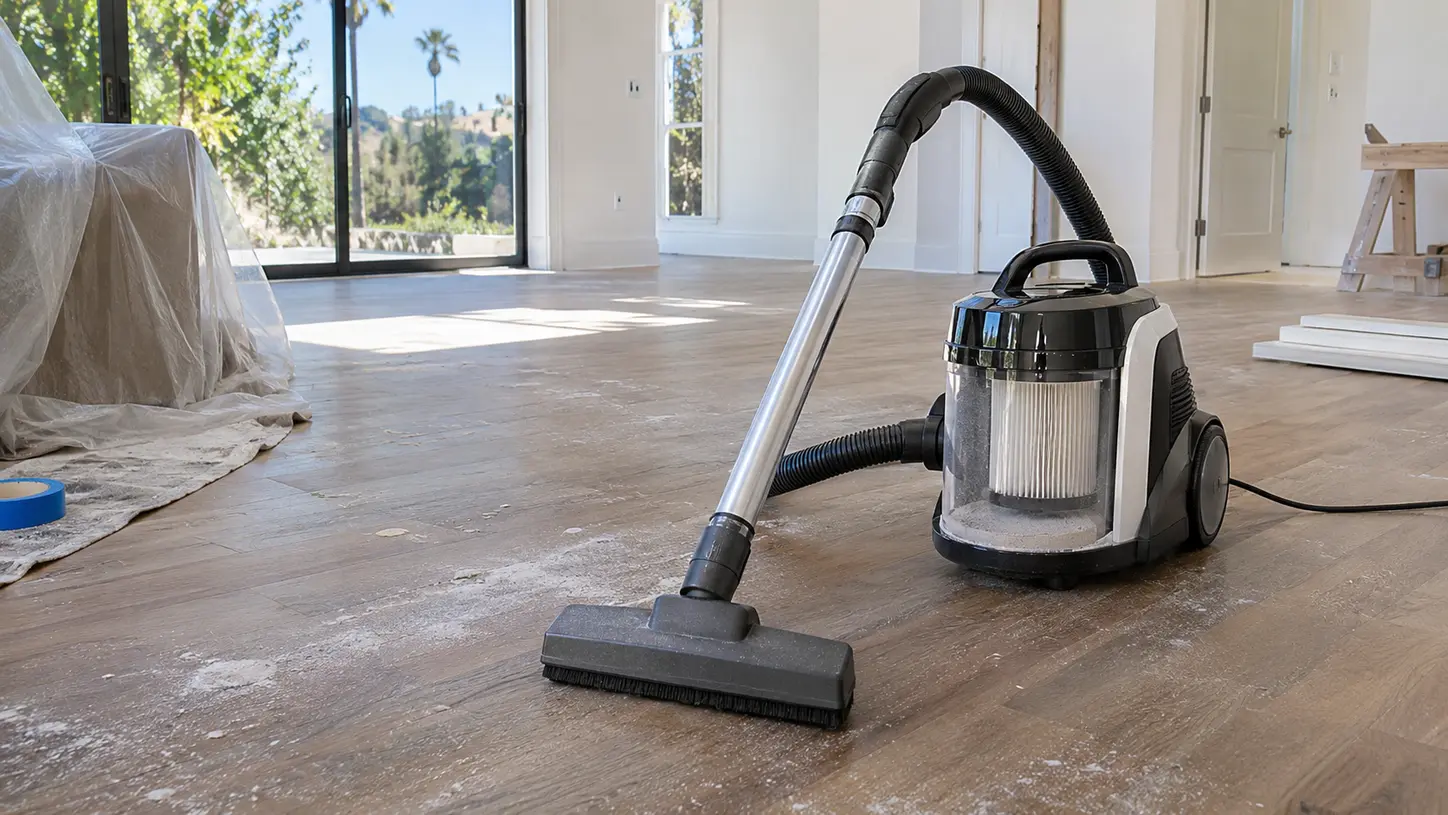
Everyday house dust is mostly skin cells, fibers and soil tracked in from outside. Construction dust is mineral: drywall compound, cement board, plaster, sawdust and fine tile particles. It is very fine, it travels through the air, and it clings to every surface, including the inside of cabinets and the grooves of window tracks.
This matters for three reasons.
- It scratches. Dry-wiping a dusty counter or window drags tiny abrasive particles across the surface. Vacuum first with a soft brush, then wipe with a damp cloth.
- It spreads. Wiping or sweeping without capturing the dust moves it to the next room. A vacuum with a good filter and damp microfiber cloths hold it, brooms and dry dusters push it around.
- It returns. Until the HVAC system, vents and ducts are addressed, dust keeps coming back into the room after you clean.
Orange County homes also run dusty on their own, as our article on why Orange County homes get dusty fast explains, so a remodeled house needs a thorough finish before you move furniture back in. For ongoing control afterwards, read how to reduce dust in your home.
The three stages at a glance
| Stage | When | Who usually does it | Goal |
|---|---|---|---|
| 1. Rough clean | During or right after demolition and framing | Contractor or a crew | Remove debris and bulk dust so the trades can work safely |
| 2. Final clean | After paint, flooring, fixtures and trim are done | Professional cleaners | Make every surface move-in ready |
| 3. Touch-up | After punch-list repairs and final inspection | Cleaners or you | Remove new dust and fingerprints |
Some contractors include a rough clean in their bid, which is a broom-and-trash pass at the end of each phase. A final clean is often not included, or is described as “broom clean,” which is quite different from move-in ready. Ask your contractor in writing what their cleanup covers. Our article on what to expect from post-construction cleanup goes through how the job is usually divided.
Stage 1: Rough clean checklist
The rough clean is about removing material, not polishing. It is usually done by the construction crew, but if you manage the project yourself, here is what belongs in it.
- Remove all debris: drywall scraps, packaging, tape, caulk tubes, cut-offs.
- Remove protective plastic and floor covering that is no longer needed, and bag it.
- Sweep or vacuum floors, including subfloors, with a vacuum rated for fine dust, not a household shop broom.
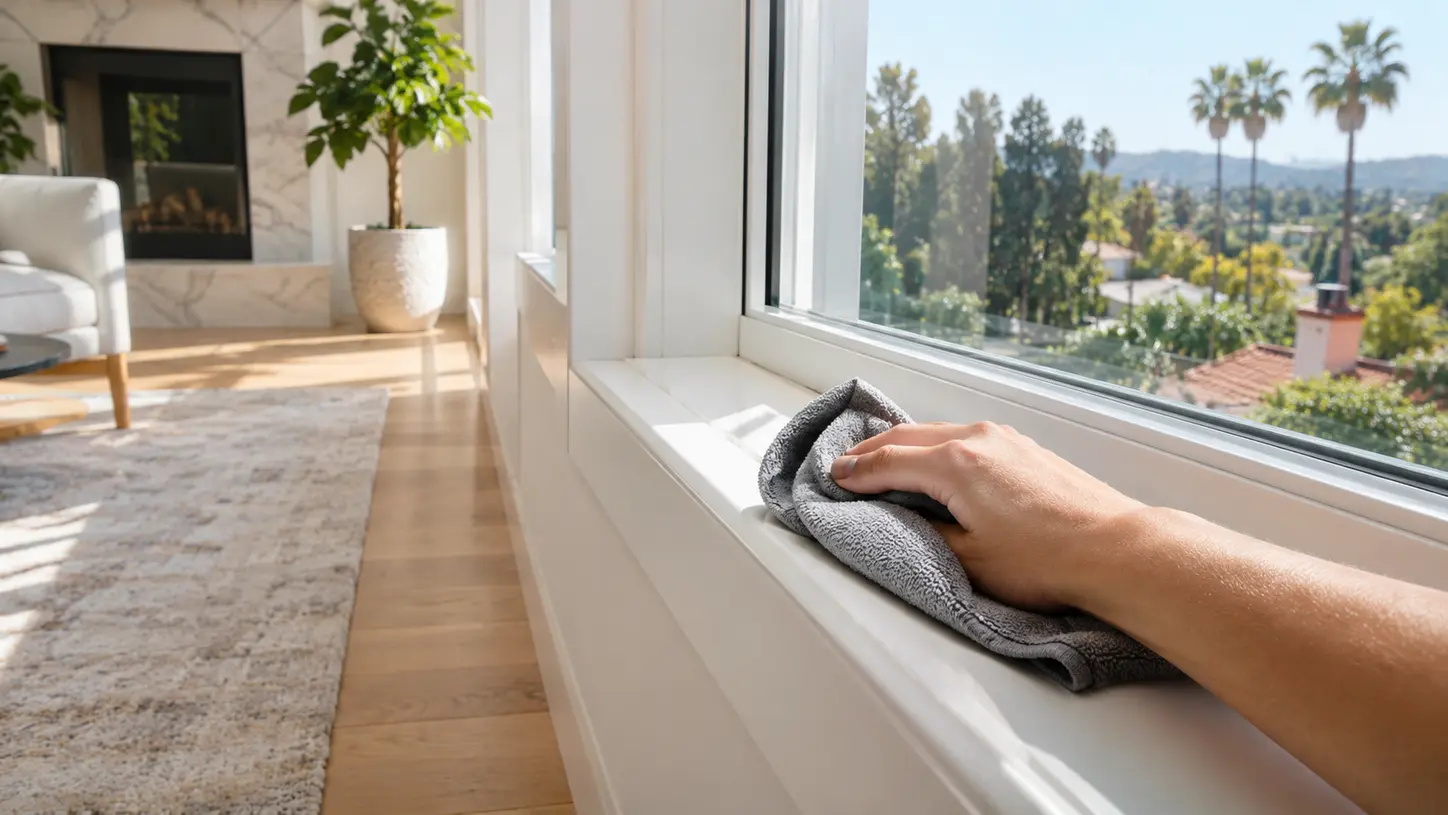
- Remove loose dust from top surfaces: window sills, ledges, studs where exposed.
- Clear the work area of tools, buckets and leftover materials.
- Clean paint drips and wet spills as soon as they occur, before they dry.
- Remove or protect HVAC vent covers during the dustiest work, then clean them.
- Take out the trash and haul the dumpster contents as scheduled.
What not to do at this stage: do not wash windows, polish fixtures or mop finished floors. The work is not over, and you will do all of it again.
Stage 2: Final clean checklist
The final clean is the heart of the job. It happens after every trade is done. Work from the top of the room to the bottom, and from the back of the home to the front door. A professional crew usually follows the same pattern for the whole house.
Ceilings, walls and high surfaces
- Dust ceiling fans, light fixtures, vents and the tops of door frames.
- Wipe walls where dust or fingerprints show. Take care on fresh paint, which can be soft for several days, and test a small area first.
- Clean air return grilles and supply vents. Check the filter: if the HVAC system ran during construction, it is probably full. Replacing it is a job for you or your HVAC contractor.
- Wipe light switches, outlet covers and thermostat faces.
- Dust and wipe the tops of cabinets and shelves.
Windows and doors
- Remove stickers, tape and manufacturer labels. Use a razor scraper on glass with care.
- Clean glass inside, and outside where reachable. See our streak-free window guide for a method that avoids haze.
- Vacuum and wipe window tracks and sills, which hold the most dust.
- Clean door frames, hinges, handles and thresholds.
- Wipe blinds and shutters. The blinds and ceiling fan guide has a quick method.
Kitchen
- Vacuum inside every drawer and cabinet before wiping, then wipe shelves and fronts. Our kitchen cabinet guide helps once the home is lived in.
- Clean the inside of new appliances, remove the packaging and tape, and polish the exteriors. See the stainless steel appliance guide.
- Wipe countertops with a product that suits the material. Fresh stone and quartz can show grout haze or adhesive residue, so check the granite and quartz care guide before using anything strong.
- Clean the sink, faucet, backsplash and any new tile grout lines.
- Wipe the range hood and vent.
- The kitchen deep clean checklist can be used as a second pass once you start cooking.
Bathrooms
- Remove stickers and protective film from tubs, shower doors, mirrors and fixtures.
- Scrub tile and clean grout haze. Mild acid cleaners can damage some stone and grout, so test first and follow the tile maker’s guidance.
- Clean glass, shower doors and tracks. See the shower glass guide.
- Polish faucets, drains and toilets.
- Wipe the vanity inside and out and the mirror.
- See our grout and tile guide for new and old grout.
Floors and baseboards
- Vacuum thoroughly, edge to edge, before any wet cleaning.
- Wipe baseboards and trim. New paint and caulk are tender, so use a damp cloth, not a scrubber. The baseboards and walls guide covers how to protect fresh paint.
- Mop floors according to type. See the guides for hardwood, laminate and vinyl and tile.
- Remove adhesive, tape residue and paint specks with products that do not harm the finish.
- Do not drag furniture or heavy bins across new floors.
Closets, storage and garage
- Vacuum shelves, rods and floors.
- Wipe door tracks and hardware.
- Sweep the garage and remove leftover materials if it was part of the project.
What belongs in which pass
| Task | Rough | Final | Touch-up |
|---|---|---|---|
| Remove debris and packaging | Yes | Check | No |
| Vacuum floors | Yes | Yes | Yes |
| Wash windows | No | Yes | Spot only |
| Wipe cabinets inside | No | Yes | No |
| Clean light fixtures | No | Yes | Spot only |
| Polish fixtures and appliances | No | Yes | Spot only |
| Mop floors | No | Yes | Spot only |
| Remove stickers and film | No | Yes | Spot only |
| Wipe baseboards | No | Yes | Spot only |
Stage 3: Touch-up after the punch list
After the final inspection, contractors return for small fixes: paint touch-ups, a loose door, a caulk line. Each one adds a little dust. A short touch-up pass means:
- Vacuum the areas that were worked on.
- Wipe fingerprints from switches, doors and new paint.
- Wipe the counters and glass once more.
- Take out the last of the trash.
If you book a professional final clean, schedule it after the punch list is done, not before. That keeps the touch-up small. If a few new marks appear after our visit, tell us within 24 hours and we will re-clean anything that was missed.
How long the job takes and what makes it longer
The time depends on the size of the home and on how much dust and residue the project left behind. A single remodeled bathroom is a short job. A whole-house renovation, a new addition or a build that has sat dusty for weeks takes more time and more crew members. Our guide to how long house cleaning takes explains how crews estimate time.
Things that increase the work:
- Unsealed drywall dust that has settled into every crevice.
- Paint overspray on glass or tile.
- Stone sealing residue, tile haze or mortar on floors.
- Large amounts of tape and labels.
- HVAC that ran without proper filters.
- A long gap between demolition and the final clean.
- Many windows, large amounts of tile or a lot of trim.
What a professional post-construction clean costs
Our post-construction cleaning service uses the same published formula as every other service: $60 base, plus $25 per bedroom, plus $35 per bathroom, multiplied by 1.8 for post-construction.
| Home size | Base formula | Post-construction price (x 1.8) |
|---|---|---|
| 1 bed / 1 bath | 60 + 25 + 35 = $120 | $216 |
| 2 bed / 1 bath | 60 + 50 + 35 = $145 | $261 |
| 2 bed / 2 bath | 60 + 50 + 70 = $180 | $324 |
| 3 bed / 2 bath | 60 + 75 + 70 = $205 | $369 |
| 3 bed / 3 bath | 60 + 75 + 105 = $240 | $432 |
| 4 bed / 3 bath | 60 + 100 + 105 = $265 | $477 |
Add-ons are priced individually: windows $40, baseboards $30, inside cabinets $35, oven $35, fridge $35. A three bedroom, two bathroom home that adds windows, baseboards and cabinets would be $369 + $40 + $30 + $35 = $474.
The price comes from the number of bedrooms and bathrooms you enter, so if your project is unusual, such as a very large addition or a home that has sat unfinished for a long time, tell us about it when you book so we can plan the right crew for the day. The pricing page gives you an instant total, and the cost guide explains the number in more depth.
Preparing your home for the final clean
A little preparation helps the crew work faster and protects your belongings.
- Make sure all trades are finished and have left.
- Remove tools, leftover materials, paint cans and equipment.
- Clear a path to every room and to the water supply.
- Turn on the water and electricity, since crews need both.
- Move valuables out of the way or label rooms that should not be entered.
- Tell us about fragile or unsealed surfaces such as fresh stone, new paint or recently installed wood.
- Leave access instructions. You do not need to be home.
Our checklist on how to prepare for cleaners has more tips that apply to every kind of job.
Do it yourself or hire professionals?
Doing it yourself is realistic after a small project, such as a painted room or a replaced faucet. It becomes much harder after a kitchen or bathroom remodel, a flooring change or a larger renovation, because you need the right tools: a vacuum with a fine filter, ladders, microfiber cloths in volume and the experience to avoid scratching new surfaces.
| Factor | Do it yourself | Professional crew |
|---|---|---|
| Tools | Household vacuum often clogs | Equipment for fine dust |
| Time | Many hours or several days | One scheduled visit |
| Risk | Scratching new surfaces | Trained on surfaces, free re-clean for missed items |
| Cost | Supplies and your time | Clear formula price |
| Safety | Ladders and dust exposure | Insured, bonded, background-checked crews |
Dust safety is worth taking seriously. Wear a mask when you sweep or vacuum heavy dust, and if the work involved older materials, ask your contractor or a qualified specialist about safe handling. This guide is general advice, not a safety or permit statement, and local rules vary, so check with your city and contractor.
After the final clean: keeping the dust away
New surfaces stay cleaner longer if you take a few steps in the first weeks:
- Replace the HVAC filter after construction ends, and again after a month.
- Wipe surfaces with a damp microfiber cloth weekly, not a dry duster.
- Keep doors and windows shut if construction continues next door.
- Put mats at every entrance.
- Vacuum slowly and use a sealed-filter vacuum.
- Book a deep cleaning about a month later, since some dust keeps releasing from vents and fabrics.
If you are also selling or moving in, the deep clean before selling your home and move-in cleaning checklist articles pair well with a post-construction clean. People with allergies should also read the household allergens cleaning guide.
Local notes for Orange County projects
Orange County projects often involve tight timelines: a tenant moving in, a listing going live, a family returning from a stay elsewhere. Condo and HOA buildings may have rules about when work can happen and where trash and equipment go, so ask your building manager before you schedule. We serve homeowners in Irvine, Tustin, Costa Mesa, Mission Viejo and across the county. Building and permit rules differ by city, so check with your contractor and local building department for anything legal or required.
Frequently asked questions
When should I book the final clean?
After all trades are finished, including painters, flooring installers and electricians. If you book too early, dust from remaining work will settle on the clean surfaces and you will need a second visit. Booking once the punch list is nearly done works best.
Is a rough clean the same as a final clean?
No. A rough clean removes debris and bulk dust so work can continue. A final clean is the detailed pass that makes the home ready to live in, including windows, cabinets, fixtures and floors.
How much does post-construction cleaning cost?
Our price is based on bedrooms and bathrooms. The formula is $60 plus $25 per bedroom plus $35 per bathroom, multiplied by 1.8. A two bedroom, two bathroom home comes to $324, and a three bedroom, two bathroom home comes to $369. Add-ons such as windows ($40) and baseboards ($30) are extra.
Do you remove construction debris and haul trash?
Post-construction cleaning is cleaning work, not demolition or hauling. Bulk materials, drywall scraps and dumpster-sized waste should be removed by your contractor first. Tell us about anything unusual when you book.
Will you clean paint, adhesive or grout haze?
We remove light paint specks, tape residue and normal film from surfaces where it can be done safely. Hardened overspray, thick adhesive or stone sealing issues may need a specialist, and we will tell you if something cannot be removed without risking the surface.
Do I need to be home?
No. Many clients leave a door code or a key with their contractor. If you want to do a walkthrough at the end, we are happy to arrange a time.
What if I find missed spots after you leave?
Tell us within 24 hours and we come back and fix it for free. Dust that appears because trades return to work afterwards is a separate matter, but it is quick to deal with during a touch-up.
What are your cleaning products like?
We use eco-friendly, pet-safe products, with extra care on new surfaces. Our crews are insured, bonded and background-checked, which matters in a home that is full of new materials and valuables.
Ready for a move-in-ready home?
Use the instant quote on our pricing page to see your post-construction total in under a minute. You can pick a date, there is no minimum booking, and your card is charged after the clean. New customers can ask about the $39 first-visit offer. You can also compare services in our deep cleaning vs regular cleaning guide or read the deep cleaning checklist for the lived-in home that follows.