Removing Pet Odor From Carpet and Furniture
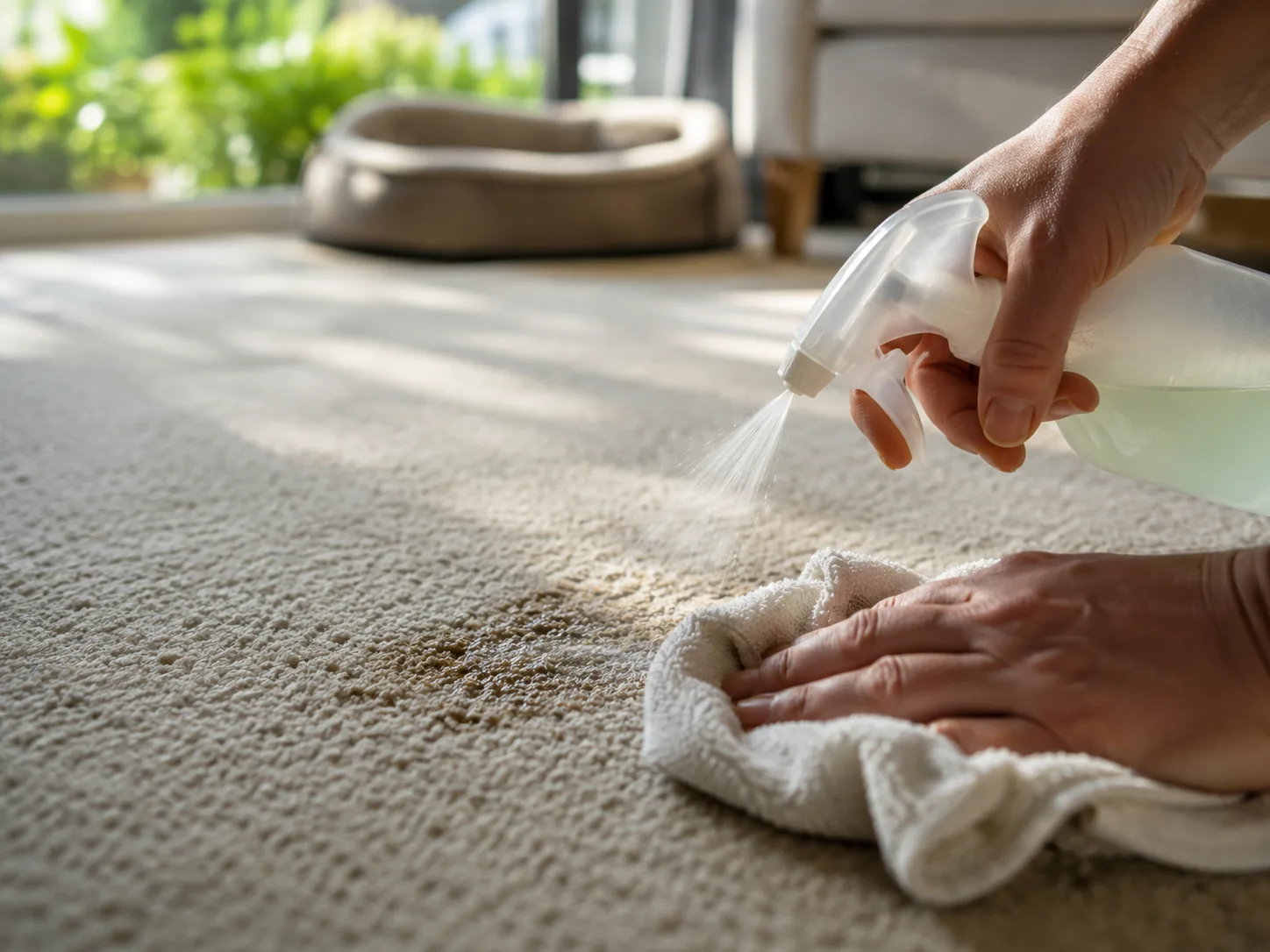
Pet odor that keeps coming back after you have already cleaned the spot almost always means the source soaked past the surface fibers into the padding, backing, or foam underneath, not that you missed a spot on top. Vacuuming, wiping, and spraying only reach what is sitting on the visible fibers, so none of it touches odor that has already worked its way down. Getting it out for good means reaching that deeper layer, which is exactly where DIY methods hit a real ceiling and where a professional pet odor treatment starts to earn its cost.
What actually causes pet odor to set in
Fresh urine is mostly water and dissolves in water, which is why a fast cleanup with the right product can lift it completely. The problem is what happens if it is not caught fast. As urine dries, it leaves behind uric acid salts that crystallize and bond to fibers, padding, and backing. Those crystals are not water soluble, so a plain water rinse, a steam mop, or a general spray that is not built to break them down chemically will not remove them, only move the moisture around. Humidity and heat reactivate the crystals and release the smell again, which is why a rug or sofa cushion can seem fine for weeks and then start smelling the moment a warm, humid day rolls through.
Urine is the most common cause, but not the only one. Dander and everyday skin oils build up on any surface a pet lies on regularly, and saliva from grooming or chewing works into fabric the same way. None smell as strong as urine alone, but they compound in the exact spots a pet returns to again and again, usually a favorite cushion, a rug by a window, or a corner of carpet near a bed. A single incident is rarely what creates a persistent odor problem; layering fresh material over material that was never fully removed is what does it.
Padding and backing matter because they act as a reservoir. Carpet backing, the foam pad underneath a rug, and the foam core inside a sofa cushion all absorb liquid and hold onto it far longer than the fabric on top, and surface treatment cannot touch a reservoir that keeps feeding odor back up. Leather has no padding layer, but it is vulnerable another way: urine’s acidity can permanently stain and degrade leather’s finish at the seams, where liquid pools with nowhere else to go. If a leather piece has taken a pet accident, treating it fast matters even more than with fabric, and leather furniture care covers what to do and avoid on leather specifically.
What DIY can actually handle, and where it stops
DIY works reliably in one scenario: a fresh accident, caught within a few hours, treated with an actual enzyme cleaner rather than a general-purpose spray. Enzymes break the proteins in urine and dander down chemically instead of masking them, the only mechanism that gets ahead of a fresh spot before it crystallizes. The process that works: blot up as much liquid as possible with a dry cloth, pressing rather than rubbing, saturate the spot with enzyme product deep enough to reach as far as the liquid traveled, then let it sit for the dwell time the product specifies before blotting again. Rushing the dwell time is the most common reason a DIY enzyme treatment underperforms.
Where DIY reliably stops working is anything past that fresh window. A spot that already dried, sat for days or weeks before anyone caught it, or has been sprayed with fragrance and baking soda repeatedly without ever being extracted, has crystallized material sitting in the padding that a surface product cannot reach. Baking soda genuinely absorbs light, fresh surface odor, but does nothing for a smell coming from inside the padding, and scented sprays have the same limit: fragrance on top of a smell that is still chemically intact underneath, which is why it reliably returns once the fragrance fades.
A few habits actively make the problem worse. Rubbing or scrubbing pushes liquid deeper into the padding and can fray or spread the stain wider. Ammonia-based cleaners are worth avoiding specifically for pet odor: ammonia is a byproduct of broken-down urine, so a cleaner built around it can read to a pet as a scent marker rather than a sign the spot is clean, sometimes leading to the same area getting reused. Over-saturating a spot without proper extraction afterward is its own risk, since damp padding under carpet or a cushion is exactly the environment mold and mildew develop in. Rental carpet extractors sit in a middle zone: useful for maintenance between deeper cleans, but most run lower water temperature and meaningfully weaker suction than professional equipment, so used without an enzyme pretreatment first, a rental machine on an already set-in spot mostly adds water to a smell that is still chemically intact.
Checking how far the spot actually spreads before treating anything
Odor location does not always match where a stain is visible on top, and treating only the visible edge is a common reason a DIY attempt looks successful at first and then fails. A white cloth pressed firmly into a suspected area for 10 to 15 seconds, then checked for staining or smell transfer, shows whether the spot is still active below the surface even if the top looks dry. A blacklight in a fully darkened room goes further: dried urine fluoresces under UV light well beyond what is visible under normal lighting, often revealing that a stain that looked like a six-inch spot actually spread wider as it soaked outward. Marking that real boundary with painter’s tape before treating means the treatment covers the full affected area, not just the part stained on top.
When the $40 professional pet odor add-on is worth it
Pet odor treatment is a real add-on under upholstery and carpet cleaning, priced at $40 per treated item on top of the base cleaning price. It is not a separate visit or a flat whole-home fee, so a single affected item does not require booking the rest of the home.
| Item with pet odor treatment | Base price | Plus odor add-on | Total |
|---|---|---|---|
| One sofa seat | $35 | $40 | $75 |
| Armchair | $45 | $40 | $85 |
| Dining chair | $18 | $40 | $58 |
| Area rug | $160 | $40 | $200 |
| Carpeted room | $70 | $40 | $110 |
| Leather armchair (50% surcharge) | $67.50 | $40 | $107.50 |
If a sofa has three seats and only one has ever been a pet’s regular spot, only that seat needs the $75 total, not the whole $105 sofa plus three separate add-ons, since the treatment is billed against the specific piece it is applied to.
The add-on is worth it in a few clear situations: a smell that keeps returning after airing the room out or vacuuming, even after an enzyme spray was tried correctly; a spot that was already dry by the time it was found, since drying gives it time to crystallize past what blotting and a spray can lift; multiple layered accidents in the same spot, common with a pet that keeps returning to one corner; and anything on a rug pad, carpet backing, or the foam core of a cushion, none reachable without pulling the piece apart.
Where DIY is genuinely enough is the flip side: a fresh accident caught within hours, treated promptly with a real enzyme product and proper dwell time, on a piece without a history of repeated accidents in that spot. There is no reason to book a professional visit for every accident a pet has. The add-on earns its cost on spots that have already outlived what surface treatment can fix, usually obvious once you have cleaned it once or twice and the smell has come back anyway.
What the professional side adds beyond a store-bought spray is the deep extraction paired with it: hotter water and stronger suction than a rental unit, which matters because enzyme treatment alone leaves broken-down material sitting in the fibers if nothing pulls it back out, and extraction without enzyme treatment just wets and dries a spot that is still chemically intact. That combination is why the add-on comes with a full cleaning of the item rather than as a standalone spray-on service.
For the rest of a pet-focused cleaning routine, from litter zones to entryways to how often carpet needs attention, keeping a clean home with pets covers the habits that keep odor from reaching this point. For the full pricing breakdown across every upholstery and carpet item, see how much upholstery cleaning costs.
Frequently asked questions about removing pet odor
How do I know if pet odor has soaked into the padding and not just the surface?
If the smell returns a day or two after airing the room out or cleaning the visible spot, the source is below the surface. A white cloth pressed firmly into the area for 10 to 15 seconds, or a blacklight check in a dark room, confirms the boundary even when the top layer looks clean.
Can baking soda actually get rid of pet odor?
It helps with light, fresh surface odor, but it does not reach odor that has already soaked into padding or backing. Sprinkling more on an old spot usually just adds a temporary layer of freshness over a smell that is still chemically present underneath.
Is a rental carpet cleaner worth it for pet odor?
It helps with maintenance between deeper cleans, but most rental units run lower water temperature and weaker suction than professional equipment. Used on an already set-in spot without an enzyme pretreatment first, it often pushes hot water through a smell that is still chemically intact.
Should I use an ammonia-based cleaner on a pet accident?
No. Ammonia is a byproduct of broken-down urine, so a cleaner built around it can read to a pet as a scent cue rather than a sign the area is clean, which sometimes leads to the same spot being used again.
How much does professional pet odor treatment cost?
It is a $40 add-on per treated item on top of the base cleaning price: $75 total for a sofa seat, $200 for an area rug, or $110 for a carpeted room, for example. It is billed per item, not as a flat whole-home fee.
Do I need to treat the whole sofa or just the affected seat?
Just the affected seat. Pet odor treatment is priced and applied per seat, chair, rug, or room, so if only one cushion on a three-seat sofa has ever been a pet’s regular spot, only that seat needs it.
Does pet odor treatment work on leather?
Yes, and leather is worth treating quickly since urine’s acidity can stain and degrade the finish at the seams if it sits too long. Leather items carry the standard 50 percent leather surcharge, with the $40 odor add-on applied the same way as fabric.
Can pet odor treatment be added to an existing cleaning visit?
Yes. It is booked as part of an upholstery and carpet cleaning visit rather than a separate appointment, so it can be added alongside any sofa, rug, or carpet room already being cleaned, or bundled with a house cleaning visit the same day.
Get the actual spot treated
If a spot keeps smelling after you have tried cleaning it yourself, that is the sign it needs deep extraction and enzyme treatment together, not another round of spray. Request an instant quote for upholstery and carpet cleaning, list the pieces and rooms affected, and add pet odor treatment to exactly what needs it. New customers get $39 off their first booking.
or call +1 (949) 330-0081.