Checklists
Weekly House Cleaning Checklist (Room by Room, With Time Estimates)
A weekly house cleaning checklist covers the kitchen, bathrooms, bedrooms, living areas and floors, and typically takes about 2 to 3 hours for a 2 to 3 bedroom home if one person does it all in one session. Split across the week in 20 to 30 minute blocks, it feels much lighter. The list below gives you the tasks, a realistic time for each room and a plan that adjusts for pets, kids and allergies.
A weekly clean is maintenance, not a reset. It keeps the visible and high-touch surfaces under control so the deeper tasks (inside the oven, baseboards, vents) can wait for a monthly or seasonal pass. If your home is far behind, start with our deep cleaning checklist and then switch to this one.
Quick answer
- Time: About 2 to 3 hours for a 2 to 3 bedroom home (one person, one session). Less with two people, or when daily resets are in place.
- Difficulty: Easy.
- Cost of supplies: Low. An all-purpose cleaner, a glass cleaner, a toilet bowl cleaner, microfiber cloths, a mop and a vacuum.
- How often: Weekly for the list below, with a 10 to 15 minute daily reset.
- Skip this if: Your home is very dirty or has not been cleaned in months. Start with a deep clean first.
The weekly routine at a glance
Pick one of two styles. Some people prefer a single block (a Saturday morning). Others like a short task each day.
Option A: One session (about 2.5 hours)
- Declutter and gather laundry (10 minutes)
- Dust high to low in all rooms (20 minutes)
- Kitchen (35 minutes)
- Bathrooms (35 minutes)
- Bedrooms (20 minutes)
- Vacuum and mop floors (30 minutes)
- Empty trash and reset (10 minutes)
Option B: Spread across the week
| Day | Focus | Time |
|---|---|---|
| Monday | Kitchen: counters, stovetop, sink, microwave, floor | 30 minutes |
| Tuesday | Bathrooms: toilet, sink, shower, mirror, floor | 30 minutes |
| Wednesday | Bedrooms: bedding, surfaces, floors | 25 minutes |
| Thursday | Living areas and entry: dust, surfaces, floors | 25 minutes |
| Friday | Floors and trash: vacuum, mop, empty bins | 25 minutes |
| Saturday | Catch-up or one monthly task | 20 minutes |
| Sunday | Rest, or a quick reset | 0 to 10 minutes |
This is a starting point. Shift days to match when laundry, groceries and guests land in your week. The order matters less than doing the same tasks on a rhythm you can keep.
Time estimate per room
These are typical times for one person working steadily in an average, reasonably tidy home. Messy rooms, larger rooms and rooms with pets take longer.
| Room | Time | Notes |
|---|---|---|
| Kitchen | 30 to 40 minutes | Longest room because of food and grease |
| Each bathroom | 15 to 20 minutes | Toilets and showers take the most time |
| Master bedroom | 15 to 20 minutes | Includes changing sheets if due |
| Other bedroom | 10 to 15 minutes | Less if it is a guest room |
| Living room | 15 to 20 minutes | More with a large sofa or lots of electronics |
| Dining area | 5 to 10 minutes | Table, chairs, floor |
| Entry and hallways | 5 to 10 minutes | Mat, floor, door handles |
| Floors (whole home) | 20 to 40 minutes | Vacuum and mop; depends on square footage |
| Trash and recycling | 5 to 10 minutes | All rooms |
Total for a 3 bedroom, 2 bathroom home: about 2 to 3 hours, plus laundry running in the background.
A professional crew works faster because of practice and having more than one person. Our own page on how long house cleaning takes goes into times by home size.
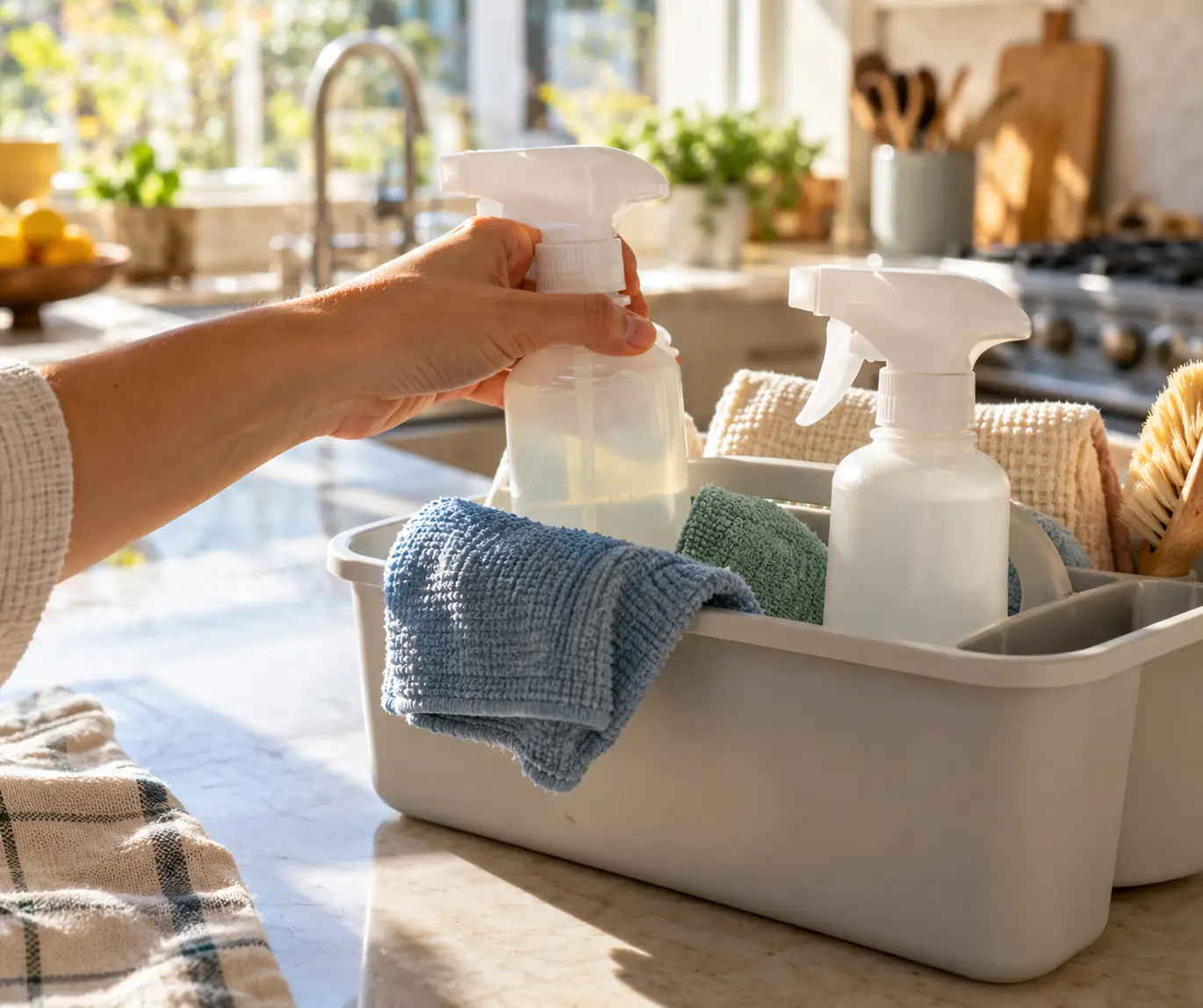
Supplies for the weekly routine
| Item | Use |
|---|---|
| All-purpose cleaner | Counters, tables, appliance fronts, sinks |
| Glass cleaner or a vinegar and water mix | Mirrors, glass, shower doors |
| Toilet bowl cleaner | Toilets only |
| Bathroom cleaner (no bleach with ammonia) | Tubs, sinks, shower walls |
| Microfiber cloths (6 to 10) | Dusting, wiping, polishing |
| Dish soap | Greasy spots, stovetop |
| Sponge or non-scratch scrubber | Sinks, stovetop, tub |
| Duster with extendable handle | Fans, shelves, corners |
| Vacuum | Floors, rugs, upholstery |
| Mop and pad | Hard floors |
| Trash bags | Every bin |
| Caddy or bucket | Carry supplies from room to room |
Never mix cleaners, especially bleach with ammonia or acids. See what not to mix. If you prefer gentler products, our eco-friendly cleaning products guide covers what to look for.
Work high to low, dry to wet
Two rules save time.
- Top to bottom. Dust shelves, fans and tops of furniture first. Dust falls, so floors come last.
- Dry before wet. Dust and vacuum before you use damp cloths and mops, so you do not turn dust into streaks.
Also, apply cleaner first, then do something else while it sits. Spray the toilet and shower, then wipe the mirror, then come back to scrub. That dwell time does the work for you.
Kitchen weekly checklist (30 to 40 minutes)
- Clear counters and put things away
- Wipe counters with all-purpose cleaner
- Wipe the backsplash behind the stove and sink
- Clean the stovetop and burners (remove grates if they are greasy)
- Wipe the front of the oven, dishwasher and refrigerator
- Wipe cabinet handles and the light switch
- Clean the sink and faucet; run the garbage disposal with a little cold water if you have one
- Microwave: steam a bowl of water for 2 to 3 minutes, then wipe inside
- Check the refrigerator for expired food; wipe any spills on shelves
- Empty the trash and wipe the lid
- Sweep and mop the floor
Do the sink last in the kitchen, since you will rinse your cloths there. For stainless steel, wipe with the grain. Our guide on cleaning stainless steel appliances explains the best method and what leaves streaks, and the kitchen deep clean checklist covers the monthly tasks.
Bathroom weekly checklist (15 to 20 minutes each)
- Spray the toilet bowl cleaner under the rim and let it sit
- Spray the shower, tub and sink with bathroom cleaner
- Wipe the mirror
- Wipe the sink, faucet and counter
- Wipe the toilet seat, lid, tank and base (top to bottom), then scrub the bowl
- Rinse or wipe the shower walls, tub and fixtures
- Squeegee the glass or wipe the doors
- Replace the hand towel
- Empty the trash
- Sweep and mop the floor, including around the toilet base
Use separate cloths for the toilet and for the rest of the bathroom. Wash them hot after use. A squeegee on shower glass takes 30 seconds and prevents most soap scum. For recurring mildew or hard water, see our post on bathroom cleaning routines that work and how to prevent mold and mildew.
Bedroom weekly checklist (10 to 20 minutes each)
- Strip and wash sheets (see the laundry schedule below)
- Remake the bed with clean sheets
- Dust nightstands, dresser tops and lamps
- Wipe the headboard and any mirrors
- Pick up clothes and clutter
- Empty any trash
- Vacuum the floor, including under the bed if you can reach
- Check for dust on vents and fan blades (do monthly if clean)
Bedding is the biggest weekly task. If you share a bed, have pets on the bed or sweat at night, wash weekly. Otherwise every one to two weeks is common.
Living areas weekly checklist (15 to 25 minutes)
- Put away items that do not belong
- Dust surfaces: shelves, TV stand, window sills, picture frames, lamp shades
- Wipe screens with a dry microfiber cloth (no spray)
- Fluff and straighten cushions and throws
- Vacuum the sofa seams and under cushions
- Wipe light switches, remote controls and door handles
- Wipe coffee table and side tables
- Vacuum rugs and carpet
- Mop hard floors
Remote controls, light switches and door handles are touched all day. They take a minute and are worth doing weekly.
Entry, hallways and stairs (5 to 10 minutes)
- Shake out or vacuum doormats
- Sweep the entry
- Wipe the front door handle and glass
- Vacuum hallway runners and stairs
- Tidy the shoe area
Grit that enters here ends up in every room, so a clean entry makes the rest of the list easier.
Floors (20 to 40 minutes)
- Vacuum carpets and rugs. Go slowly. Two passes in different directions pick up more.
- Vacuum or sweep hard floors, including edges and corners.
- Mop with a pH-neutral cleaner suitable for your floor type. For wood, use a barely damp mop. Our hardwood floor guide explains which products to use and to avoid.
- Let floors dry before you walk on them, and mop from the farthest corner toward the exit.
Laundry and linens schedule
| Item | Frequency | Notes |
|---|---|---|
| Bed sheets and pillowcases | Weekly | Every 1 to 2 weeks if only one person sleeps there and no pets |
| Bath towels | Every 3 to 4 uses | Hang them to dry fully between uses |
| Kitchen towels and dishcloths | Every 2 to 3 days | Change when damp or smelly |
| Bath mats | Every 1 to 2 weeks | Wash with towels |
| Duvet or comforter | Every 1 to 3 months | Use a cover if you can |
| Pillows | Every 3 to 6 months | Follow the label |
| Throw blankets | Monthly | If used daily |
| Washing machine | Every 1 to 3 months | See how to clean a washing machine |
These intervals are typical suggestions, not rules. Allergies, pets, sweat and humidity change them.
15-minute daily resets that make the weekly list shorter
A weekly clean takes less time when the daily tasks keep things from piling up. These five habits cut the weekly list by about a third for many people.
- Dishes done or in the dishwasher before bed. An empty sink in the morning makes the kitchen feel half-clean.
- Wipe counters and the stovetop after cooking. Wiping a splash takes ten seconds. Scrubbing it a week later takes five minutes.
- Quick bathroom wipe. A cloth over the sink and counter after brushing teeth.
- Pick up and put away. A basket for items that belong in other rooms.
- Make the bed. A small win, and it makes the bedroom look finished.
Our post on daily habits that cut cleaning time goes deeper. Pair it with keeping the kitchen clean between cleanings for the biggest payoff.
Adjust the list for your household
Pets
- Vacuum twice a week, especially near pet beds and doors.
- Wash pet bedding weekly.
- Wipe paw prints and nose smudges on windows and doors.
- Brush the pet outdoors if possible.
See keeping a clean home with pets for more. If odor is an issue, removing pet odor from carpet and furniture covers the options.
Kids
- Add a quick wipe of the table and high chair after meals.
- Disinfect toys that go in mouths, per product labels. Many toys can be washed with soap and water.
- Plan a 10-minute toy sweep at the end of the day.
- Schedule age-appropriate chores. Even small children can put toys away.
Allergies and asthma
- Use a vacuum with a sealed system or HEPA filter.
- Damp dust instead of dry dusting, so dust is captured rather than moved.
- Wash bedding in hot water if the fabric allows it.
- Keep windows closed during high pollen or poor air quality days.
Our guide to reducing household allergens covers this in more detail.
One person or shared chores
If more than one person lives in the home, assign tasks by room or by task type, not by a vague “everyone helps.”
| Plan | How it works | Works best when |
|---|---|---|
| By room | Each person owns a room or two and does its full list | Roommates, or kids who can handle a room |
| By task | One person vacuums everywhere, another does bathrooms | Couples with different strengths |
| By rotation | Tasks rotate weekly | Roommates who want fairness |
| Team blitz | Everyone cleans for 45 minutes at once | Families who prefer to get it done fast |
Write the plan on a list on the fridge, or in a shared note on your phones. Clear ownership removes most of the arguments.
Monthly add-ons
Rotate one of these into the weekly routine each week, so nothing builds up.
| Week | Add-on task |
|---|---|
| Week 1 | Wipe baseboards in the main living area; clean the inside of the microwave |
| Week 2 | Vacuum vents and dust ceiling fans; wash trash cans |
| Week 3 | Clean the refrigerator shelves; wipe cabinet fronts |
| Week 4 | Wash windows and mirrors; clean the washing machine gasket |
Quarterly tasks include flipping mattresses, vacuuming under furniture, cleaning the oven and washing curtains. Our how often to clean carpet and rugs and how often to clean windows posts give schedules for those areas.
Weekly cleaning mistakes that waste time
Most people do not need to clean harder. They need to stop repeating a few habits that make the job longer.
- Cleaning in a random order. Walking from room to room with no plan means redoing surfaces. Work one room at a time, top to bottom, and finish floors last.
- Wiping before dusting. A damp cloth over a dusty shelf pushes dust into a paste. Dry dust first, then wipe.
- Using one cloth for everything. A cloth that touched the toilet should never touch the kitchen counter. Color-code your microfiber cloths: one color for bathrooms, another for the kitchen, a third for dusting.
- Spraying and wiping right away. Most cleaners need a minute or two on the surface. Spray the whole bathroom first, then go back and wipe.
- Using too much product. Extra cleaner leaves a film that attracts dirt. A light mist is usually enough.
- Skipping the sponge and cloth wash. A dirty sponge spreads bacteria. Toss it in the dishwasher on a hot cycle, or replace it every couple of weeks. Wash cloths hot after each weekly clean.
- Mopping a floor that has not been vacuumed. Hair and crumbs turn into mud. Vacuum first, always.
- Doing everything in one marathon. If you dread the list, the list will not happen. Shorter blocks with a clear stopping point are easier to repeat each week.
- Ignoring the vacuum itself. A full bag, a clogged filter or tangled brush roll cuts suction. Empty the canister and cut hair off the roller every few weeks.
A sample week for a busy household
Here is how the list can look for a family of four in a 3 bedroom, 2 bathroom home, with both adults working and two children at school.
| Day | What gets done | Who | Time |
|---|---|---|---|
| Monday evening | Kitchen wipe-down, trash and recycling out | Adult 1 | 20 minutes |
| Tuesday evening | Bathrooms: toilet, sink, mirror, shower | Adult 2 | 30 minutes |
| Wednesday evening | Bedrooms: sheets in the washer, dust surfaces | Adult 1 and kids | 25 minutes |
| Thursday evening | Living room and entry: dust, tidy, vacuum sofa | Adult 2 | 20 minutes |
| Friday evening | Light reset only, take it easy | Everyone | 10 minutes |
| Saturday morning | Vacuum and mop all floors, finish laundry | Everyone, 45 minutes | 45 minutes |
| Sunday | Plan meals, check supplies, optional monthly task | Adult 1 | 15 minutes |
That adds up to about 2 hours 45 minutes across the week, in blocks that fit around work and school. The Saturday floor block is the biggest, and splitting it between two people brings it closer to 25 minutes each.
If a week goes sideways, do not try to catch up on everything. Do the bathrooms and floors first, because those show dirt fastest, and let dusting slide until the next week.
Printable weekly checklist
Copy this into a note or print it.
Every week
- Declutter and collect laundry
- Dust all rooms, high to low
- Kitchen: counters, stovetop, appliance fronts, sink, microwave, floor
- Bathrooms: toilet, sink, mirror, shower or tub, floor
- Bedrooms: change sheets, dust, floors
- Living areas: dust, wipe surfaces, vacuum sofa
- Entry: mat, floor, door handles
- Vacuum all carpets and rugs
- Mop all hard floors
- Empty all trash cans
Every month
- Baseboards
- Fans and vents
- Refrigerator shelves
- Cabinet fronts
- Windows and mirrors
- Washing machine gasket
Every season
- Oven
- Mattress and pillows
- Under furniture
- Curtains and blinds
- Shower grout and tile
When a recurring cleaner makes sense
You can follow this list yourself and keep a home in good shape. Many people hit the same walls though: not enough hours, a weekly list that slips to every other week, or tasks nobody wants to do.
When it is worth handing off: A recurring cleaning plan covers the kitchen, bathrooms, bedrooms, living areas and floors on a set schedule. For a 3 bedroom, 2 bathroom home, the base price is (60 + 75 + 70) = $205 per visit. Weekly service takes 20% off, so $164. Biweekly takes 15% off, so $174.25. Monthly takes 10% off, so $184.50. New customers get $39 off the first clean. You can enter your own home size on our instant quote.
A recurring plan does not replace the daily resets. Dishes and laundry still need you. What it does is take the weekly floors, bathrooms and dusting off your list. If you are comparing schedules, weekly vs biweekly vs monthly cleaning explains which one fits, and is hiring a house cleaner worth it goes through the math of time and money.
If a cleaner is not for you, a one-time deep cleaning can reset the hard-to-reach areas, so your weekly routine starts from a clean base. We serve all of Orange County, including Irvine.
The Orange County angle
Dry months and Santa Ana wind days bring fine dust inside through gaps in windows and doors. Plan on dusting more often in fall, and keep window tracks clean. Coastal homes get salt air and humidity that can leave a sticky film on windows and metal fixtures, so wipe those more regularly. Hard water is common here, so bathrooms may need extra wiping to prevent mineral spots. Check your local water quality report if you want to know how hard your water is.
If you live in a condo or HOA community, check any shared-area rules for balconies, patios and shared laundry rooms. Those areas often have separate cleaning expectations.
Frequently asked questions
How many hours a week should you spend cleaning? For a typical 2 to 3 bedroom home, about 2 to 3 hours a week of deeper cleaning plus 10 to 15 minutes a day of tidying. Larger homes, pets and children add time. Two people sharing the list can finish in half the time.
What should I clean every week? Kitchen counters and appliance fronts, bathrooms (toilet, sink, shower), floors (vacuum and mop), dusting, bed sheets and the trash. Monthly tasks include baseboards, vents and refrigerator shelves.
What is the best day to clean different rooms? There is no single best day. A common pattern is bathrooms and kitchen early in the week and floors last, so they stay clean through the weekend. Pick a rhythm that fits your laundry and grocery days.
How long does it take to clean a house weekly? Typically 2 to 3 hours for a 2 to 3 bedroom home if done in one session, or four to five 20 to 30 minute blocks across the week. Daily resets reduce the weekly time.
What chores should be done daily vs weekly? Daily: dishes, wiping counters and stovetop, a quick bathroom wipe, making beds, picking up clutter. Weekly: bathrooms, floors, dusting, sheets, trash and refrigerator checks.
Should I clean the whole house in one day? Only if it suits your schedule. Splitting the list across the week is gentler and easier to maintain. If you do everything in one go, start with dusting and finish with floors.
Is it better to clean in the morning or evening? Morning cleaning is common because you have more energy and windows can be open. Evening cleaning can work too, especially for kitchen and floors. The best time is the one you will stick with.
How do I keep up when I work full time? Do the daily resets, then use one weekend block of about two hours. Keep the checklist short and focused on the essentials. Some people add a recurring cleaner every other week for the heavy parts.
Do I need to clean every room every week? Rooms that are used heavily (kitchen, bathrooms, main living area, bedrooms) need weekly attention. Guest rooms and little-used spaces can be dusted and vacuumed every two weeks.
What is the difference between this and a deep cleaning checklist? A weekly list maintains visible surfaces. A deep clean covers inside appliances, baseboards, grout, vents and behind furniture. See our deep cleaning vs regular cleaning post for the full comparison.