What to Clean Before You Unpack in a New Home
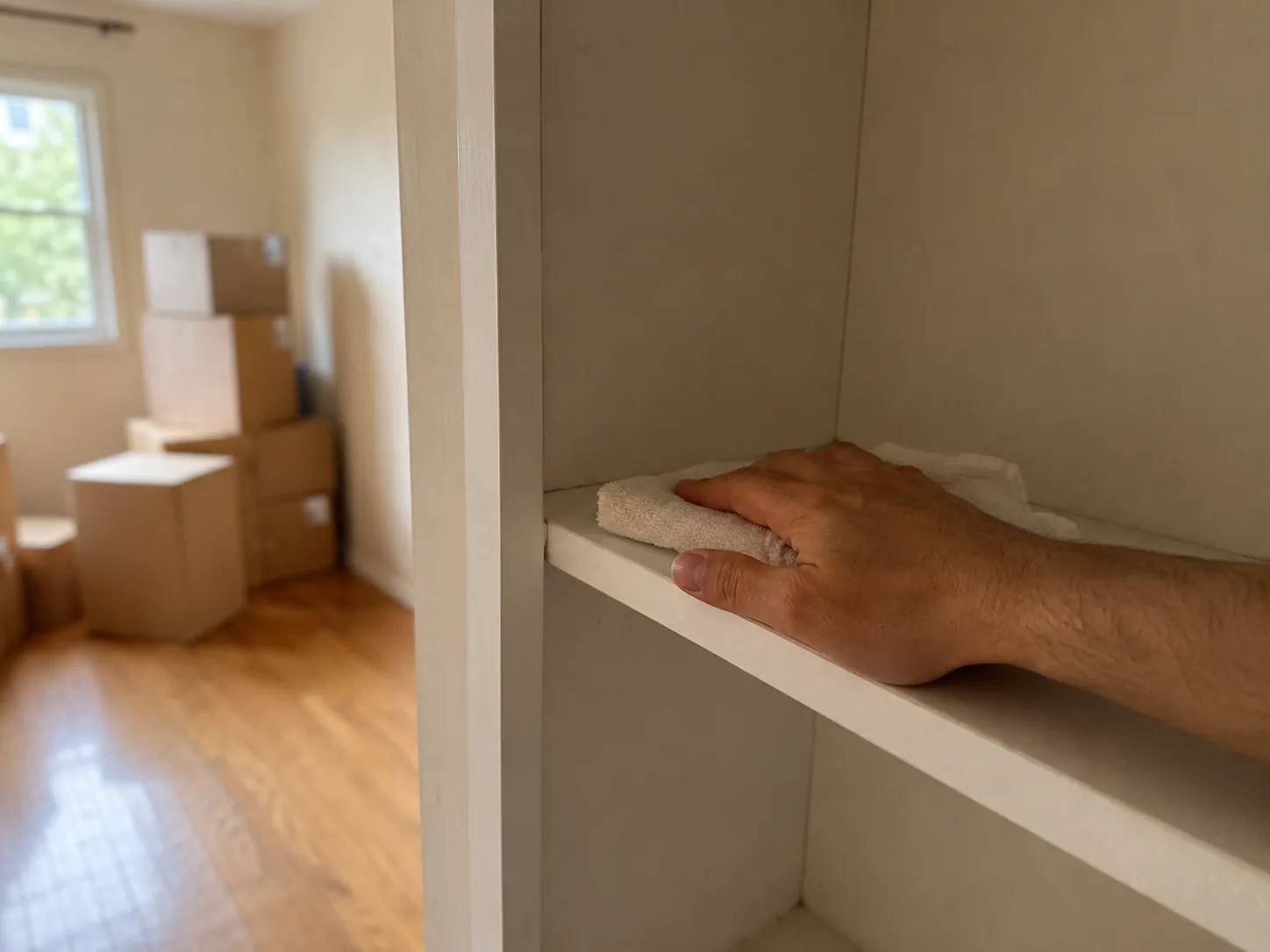
Clean an empty home in this order: closets, drawers, and cabinet interiors first, then kitchen and bathroom fixed surfaces, then everything else above floor level, and vacuum or mop last of all. Boxes and furniture come in only once nothing is left to clean, since doing any of this out of order means redoing it or losing access to it for good.
Why the sequence matters more than the checklist
Every previous tenant or owner left something behind, even in a unit that looks spotless on a walkthrough. Dust settles inside closed cabinets during months of vacancy. Bathroom grout holds soap film from someone else’s showers. None of that shows up in listing photos, and none of it gets fixed once your dishes and clothes are sitting on top of it.
Order matters more than the list of what to clean because of two things: gravity and access. Wiping a top shelf or a vent cover releases dust that settles onto whatever is below it, which is why floors have to come last no matter how tempting it is to start there. And an empty home is the only point in the entire move where every cabinet door swings fully open and every drawer pulls out all the way. Once boxes go in behind them, that access is gone for years, not weeks.
The right order for an empty home
1. Closets, drawers, and cabinet interiors, before anything else
These are the spaces you’re about to fill directly with belongings, so they need to be clean before a single item goes in, not after. Open every cabinet door all the way, not just a crack, since a door left half open hides the back corner where dust and old shelf liner residue collect most. Pull drawers out fully rather than reaching into them from the front. Closet shelves and floors need the same pass, top shelf down, including the door track on any sliding closet door, which traps debris a regular vacuum head never reaches.
This step gets skipped more than any other because it’s invisible once it’s done. Nobody sees a wiped-down cabinet shelf. But it’s the one step that actually protects your dishes and folded clothes from someone else’s dust for as long as you own that closet.
2. Kitchen and bathroom fixed surfaces
With cabinets and drawers already clear, move to the surfaces that don’t change position: inside the oven, refrigerator, and microwave, cabinet fronts, the backsplash, and a full descale of the shower, tub, and tile. Run the refrigerator for a few hours before groceries go in so it reaches temperature. Bathrooms hold more buildup than any other room in a home changing hands, and grout and hard water spots need actual scrub time, not a wipe, which is easier to do while the counters are still bare.
3. Everything else above floor level
Baseboards, window sills, light fixtures, switch plates, and vents throughout the rest of the home. This is the catch-all pass for the dust that’s had weeks or months to settle undisturbed while the unit sat vacant. It comes after the kitchen and bathrooms because those two rooms take the longest and benefit most from being tackled while your energy and cleaning supplies are freshest, not because the order changes the result here.
4. Floors, always last
Vacuum and mop only after every cabinet, closet, vent, and surface above floor level is done. Every step before this one knocks dust downward, so cleaning floors early just means cleaning them twice, once now and once after the rest of the work resettles on top of it.
5. Boxes and furniture, only once the home is actually clean
Not once it looks empty, once every step above is finished. This is the point where the sequence pays off: nothing you’re moving in has to sit on top of a surface you haven’t reached yet.
| Step | What | Why it goes here |
|---|---|---|
| 1 | Closets, drawers, cabinet interiors | Full access exists only while empty; these get sealed once filled |
| 2 | Kitchen and bathroom fixed surfaces | Longest tasks, best done while supplies and energy are fresh |
| 3 | Baseboards, sills, switches, vents | Catches dust unsettled by steps 1 and 2 before it hits the floor |
| 4 | Floors | Every prior step drops dust downward |
| 5 | Boxes and furniture | Nothing goes on top of a surface that isn’t finished |
Common sequencing mistakes
Unpacking the kitchen before the cabinets are wiped down is the most common one. Boxes get unpacked straight onto shelves that were only visually checked on a walkthrough, not actually cleaned. Starting with floors because they’re the most visible surface is the second, and it undoes itself within a couple of hours once cabinet and vent dust starts drifting down. The third is treating a listing-photo-ready home as an actually clean one. Photos show surfaces, not the inside of a drawer or the grout behind a shower door, and a unit can look move-in ready in every picture while still holding buildup in every space that matters once you’re living in it.
The professional shortcut: move-in cleaning
Working through this sequence yourself in a full empty home takes a few hours, done once, and covers ground you won’t have unobstructed access to again. If that window is tight, or the home is larger than a couple of rooms, move-in cleaning follows this same closets-first, floors-last order but gets it done in a single visit instead of a weekend. For a 3-bedroom, 2-bathroom home, that runs $308 through Clover’s standard pricing ($60 base, plus $25 per bedroom and $35 per bathroom, times the 1.5x move-in multiplier), or $269 with the $39 new-customer discount applied. For the full room-by-room list of what’s covered inside each of the five steps above, see the move-in cleaning checklist for new homeowners.
Frequently asked questions
Why do closets and cabinets come before floors, not after? Because every step that comes before floors knocks dust downward. Cabinets, closets, and vents all sit above floor level, so cleaning them last means mopping over dust you just released. Doing them first means the floor pass at the end is the only one you need.
What if I only have a few hours of empty access, not a full day? Do steps 1 and 2 and skip or shorten step 3. Closets, drawers, cabinets, and bathroom descaling protect the surfaces your belongings actually touch. Baseboards and vents matter, but they’re the step to compress first if time runs out.
Does the order still matter if I’m hiring a cleaning crew instead of doing it myself? Yes, and a crew following a move-in checklist works in this same sequence for the same reason: it’s the order that produces the most thorough result with the least redone work, not a preference specific to DIY cleaning.
Should I clean before movers arrive or have them wait? Before. Movers and furniture undo the point of an empty-home clean the moment they’re in the way of a cabinet door or a closet floor. Schedule the clean for the day before your move-in if you have early access, or same-day once keys are handed over, ahead of any delivery trucks.
Is it worth doing this if the unit already looks clean on the walkthrough? Yes. A walkthrough shows surfaces, not the inside of a drawer or behind a shower door. Looking clean and being clean are different standards, and the gap between them is exactly what this order is built to close.
Does a brand-new construction home need this same order? Yes. Builders leave fine dust inside cabinets, on baseboards, and in vents that settles for weeks after the final walkthrough. A certificate of occupancy confirms the home passed inspection, not that it’s clean enough to unpack into.
How long does the full sequence take in an average home? A few hours for a typical single-family home, longer with more bathrooms or built-in storage. It’s a one-time block of time rather than something spread across move-in week, which is the main reason people either do it in one focused push or hand it to a move-in cleaning crew.
Get an instant quote for move-in cleaning timed to your move-in date, anywhere in Orange County.
or call +1 (949) 330-0081.