Post-Wildfire Ash and Smoke Cleanup at Home
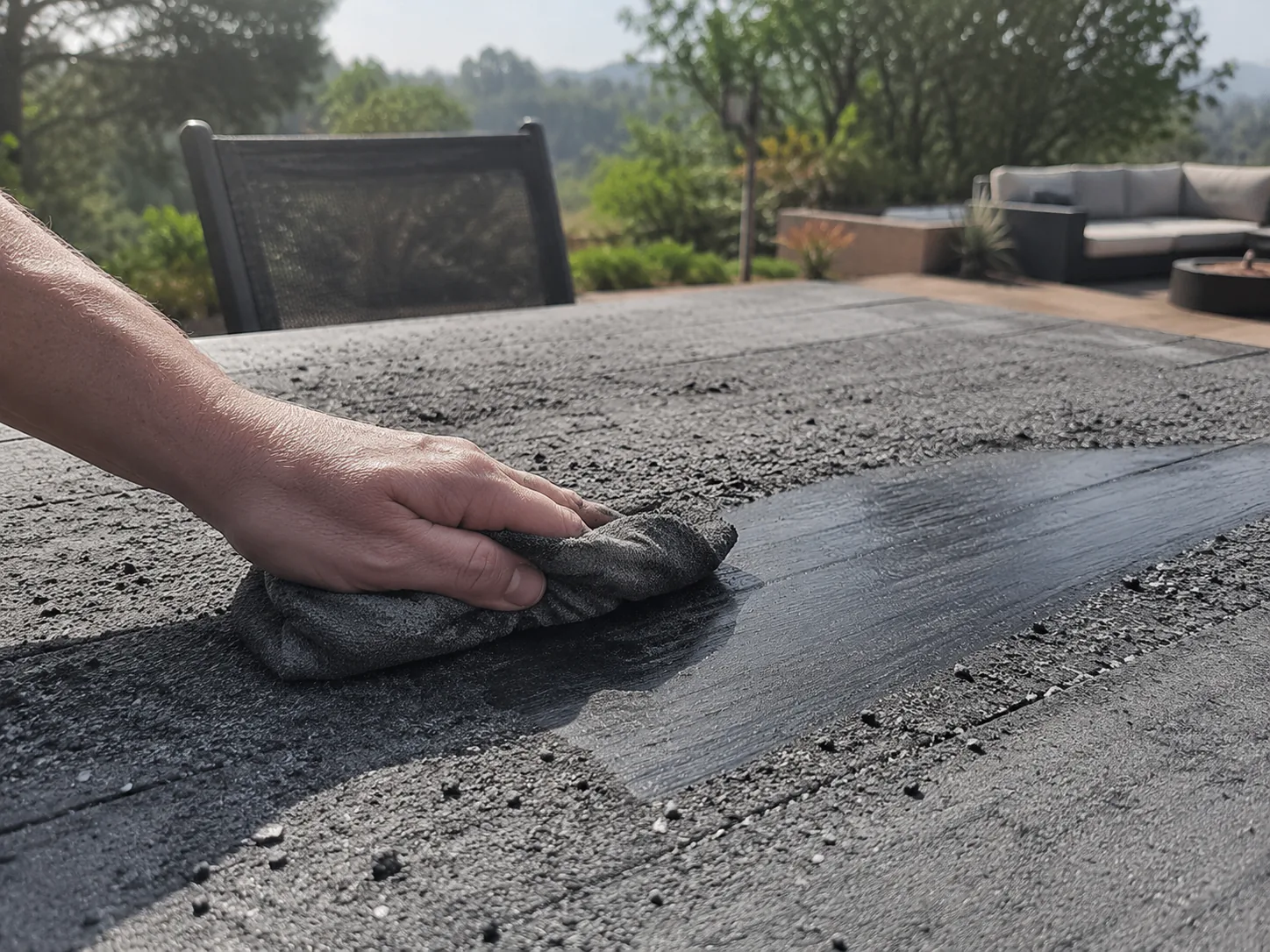
Wildfire ash is not the same as regular household dust, and cleaning it the wrong way can push fine particles back into the air you breathe or wash them into your yard. The safe order is exterior surfaces first, then your HVAC filter, then interior rooms from top to bottom, always with a damp method instead of dry sweeping.
Orange County’s wildfire season
Orange County’s fire risk climbs from late summer through the Santa Ana wind season in fall and early winter, when hot, dry wind blows out of the inland deserts toward the coast. Canyon and foothill communities sit closest to the wildland vegetation that fuels these fires: Silverado, Modjeska, and Trabuco Canyons in the Cleveland National Forest foothills, Anaheim Hills, Yorba Linda, Coto de Caza, and the hillside neighborhoods above Laguna Beach and Laguna Niguel. When a fire breaks out in one of these areas during a wind event, ash and smoke can settle over neighborhoods miles away that never saw flames but still end up with a gray film on every outdoor surface.
Homes farther from the hills are not exempt. Smoke and ash from fires burning elsewhere in Southern California, or even hundreds of miles north, can drift in on the wind and settle the same way. The source doesn’t change how you should clean up after it.
Why wildfire ash is a health concern, not just a mess
Wildfire ash is finer than regular household dust and includes particulate small enough to stay airborne and work its way deep into the lungs when inhaled. That fine fraction, generally referred to as PM2.5, is the main reason health agencies treat wildfire smoke and ash as an air quality issue rather than a cleaning inconvenience. Anyone with asthma, COPD, or another respiratory condition is more sensitive to it, and so are young children, older adults, and anyone who is pregnant.
Ash is also chemically different from ordinary dust. It tends to be alkaline, which is part of why it can irritate skin and eyes on contact. When a fire has burned homes or vehicles rather than just vegetation, the ash can carry residue from building materials and treated wood, one more reason to clean up in gloves and, for heavier accumulations, a well-fitted mask.
Check air quality before you start
Before any cleanup, check a local air quality source such as the South Coast Air Quality Management District for current conditions in your area. If air quality is still listed as unhealthy or a fire is active nearby, keep windows and doors closed and hold off on exterior cleanup that would stir more particulate into the air you are standing in. Cleaning is both more effective and safer once conditions have actually improved, rather than while smoke is still settling.
The safe cleanup order
| Order | What to do | Why this order matters |
|---|---|---|
| 1 | Check air quality | Cleaning into still-active smoke just adds more particulate to what you’re already breathing |
| 2 | Exterior surfaces: roof, gutters, patio, vehicles, pool | Keeps ash from being tracked indoors or washed into soil before you touch anything inside |
| 3 | HVAC filter | A clogged filter recirculates ash through the house as fast as you clean it out |
| 4 | Interior, top to bottom, room by room | Ash settles from ceiling height down, so working top-down catches what falls during the pass below it |
| 5 | Textiles and laundry | Fabric holds fine particulate and odor longer than hard surfaces |
Step 1: Clear the exterior first
Starting outside keeps you from undoing indoor work by tracking more ash in through the door later, and it matters for a second reason: ash left on the roof and patio can wash into gutters or garden beds the next time it rains or the next time you reach for a hose.
Roof and gutters. Loose ash is easiest to clear with a soft broom or a gentle rinse rather than a pressure washer, which can drive ash into shingles or force water under roofing material. Check gutters specifically, since ash mixed with moisture forms a paste that clogs downspouts faster than dry leaves do.
Patios, decks, and walkways. Sweep loose ash first, then rinse with a garden hose on a low setting rather than a pressure washer, and watch where the runoff goes. Pressure-washing ash directly onto flower beds, lawns, or a vegetable garden can chemically stress plants or leave contaminants in soil you plan to grow food in. Direct runoff toward a driveway or hardscape drain instead of a planting bed whenever you can.
Outdoor furniture, cushions, and vehicles. Wipe or rinse furniture frames before anything ash-covered gets carried inside; fabric cushions usually need an actual wash, since ash works into the weave the same way it does on indoor upholstery. Rinse a car with water before wiping it down too, since dry wiping ash grinds gritty particulate into clear coat and glass and causes fine scratches that build up over repeated cleanings.
Pool. Skim ash off the surface as soon as you reasonably can, since it sinks and clouds the water the longer it sits, and check the skimmer basket and filter afterward. Heavy ash can also shift pool chemistry, so a chemical check is worth doing before swimming.
Entryway. Treat your doormat as the last outdoor step. Shake it out or hose it down before you cross the threshold into indoor cleanup.
Step 2: Replace the HVAC filter before touching interior surfaces
This step comes before any interior cleaning, not after. A dirty filter keeps recirculating whatever ash and smoke particulate is already in the ductwork every time the system runs, so surfaces you clean now get re-coated within a day or two. Check the filter size printed on the frame, replace it, and consider a higher-MERV-rated filter for the weeks following a fire if your system supports one. HVAC filters matter more in Orange County than in most climates even outside fire season, since Santa Ana winds already push dust through the same ductwork year-round, so homes in canyon or foothill areas may want a spare filter on hand through fire season.
Step 3: Work through the interior, room by room
Once the filter is handled, move inside with a damp cloth or a vacuum fitted with a HEPA filter, never a dry broom or a standard shop vac without proper filtration. Work top to bottom in every room, since ash that gets knocked loose from a ceiling fan or vent falls onto whatever is below it, and rinse or swap cloths often so you are relocating ash into a bucket rather than smearing it from one surface to the next.
Entryways and mudrooms first. These take the heaviest indoor ash load since they sit closest to the door. Floors, shoe racks, and any bench near the entry get the first pass.
Kitchen. Countertops, the stovetop, and appliance tops collect a visible film fastest. Check the range hood and exhaust fan filter specifically, since the exhaust pulls air, and ash, right through them while the fire was burning nearby. Wipe cabinet fronts near any window or vent that stayed open.
Bedrooms. Dresser tops, blinds, and window sills hold a noticeable layer even in rooms that stayed closed. If a closet door was open, give shelves a pass too. Bedding is handled separately, below.
Bathrooms. Easy to skip since doors are usually closed, but exhaust fans and window sills still collect ash, and the fan cover is one of the more commonly missed spots in a quick pass.
Living areas. TV and electronic screens attract ash through static faster than most surfaces. Give upholstery a surface vacuum with an upholstery attachment, and pull curtains through a vacuum pass or a wash if machine washable. Carpets and rugs need a full HEPA vacuum pass, not just a surface sweep, since fine ash works down into carpet fiber the same way regular dust does, just faster.
Garage. Often the dirtiest interior space after a fire, since it sits closest to the exterior door and frequently has a gap that let ash in. Treat garage floors and shelving as their own pass rather than an afterthought.
Handle textiles as their own step
Curtains, bedding, and upholstery hold onto ash and smoke odor longer than hard surfaces do, since fine particulate works into fabric fibers rather than sitting on top of them. Washable textiles belong in a normal wash cycle, not shaken out over a porch or balcony, which just redistributes particulate into the air. Upholstery and anything that can’t go through a washing machine, a sofa or an area rug for example, may need a professional extraction clean to fully clear both the residue and the odor a home vacuum can’t reach.
What not to do
- Don’t dry-sweep ash, indoors or outdoors. A dry broom or leaf blower lifts fine particulate back into the air instead of removing it.
- Don’t pressure-wash ash onto landscaping. Runoff from a roof, patio, or driveway sends ash straight into flower beds, lawns, or a vegetable garden, where the alkaline residue can stress plants and leave contaminants in soil.
- Don’t run the HVAC system on a dirty filter, thinking it will help clear the air. It recirculates the problem instead.
- Don’t rely on air freshener to cover smoke odor. It masks the smell without removing the particulate causing it.
- Don’t skip the exterior pass and go straight for interior surfaces. Ash tracked in on shoes undoes cleaning you already finished.
- Don’t wipe ash off a car or window dry. The grit scratches paint and glass; rinse first.
When heavy smoke exposure means a professional deep clean is worth it
Light ash on a handful of surfaces after a distant fire is usually manageable with the steps above. A heavier accumulation is a different situation. Ash worked into carpet and upholstery padding, persistent smoke odor throughout the home, ash inside HVAC ductwork, or a household member with asthma or another respiratory sensitivity are all reasons to bring in a crew with proper extraction equipment rather than working through it room by room on your own.
A deep cleaning covers exactly the spots ash settles hardest into and a quick wipe-down never fully clears: baseboards, vents, grout lines, cabinet fronts, and inside appliances, in a visit that typically runs 3 to 6 hours. It’s priced the same way as any deep clean on our site: a $60 base, plus $25 per bedroom and $35 per bathroom, times a 1.5x deep-clean multiplier.
| Home size | Base calculation | Deep clean price (x1.5) | With $39 new customer offer |
|---|---|---|---|
| 2 bed, 1 bath | $60 + (2 x $25) + (1 x $35) = $145 | $217.50 | $178.50 |
| 3 bed, 2 bath | $60 + (3 x $25) + (2 x $35) = $205 | $307.50 | $268.50 |
| 4 bed, 2 bath | $60 + (4 x $25) + (2 x $35) = $230 | $345.00 | $306.00 |
New customers get $39 off automatically at checkout, no code required. Homes with heavier ash tracked through carpets or upholstery may also want a dedicated upholstery cleaning alongside the deep clean, since a deep clean gives fabric surfaces a vacuum and surface wipe rather than the extraction pass a full upholstery service uses to pull residue and odor out of the padding itself.
Wildfire ash cleanup FAQ
How do I know if it’s safe to start cleaning up ash outside? Check a local air quality source like the South Coast Air Quality Management District first. If conditions are still listed as unhealthy or a fire is active nearby, wait.
Can I use a leaf blower to clear ash off my patio faster? No. It lifts fine ash back into the air instead of removing it, which worsens the air quality around you.
Will a pressure washer get ash off my house and driveway faster? It moves ash faster, but the runoff carries that ash, and any residue in it, straight into whatever it’s aimed toward. Avoid directing runoff onto lawns or gardens, and use a lower-pressure rinse near roofing so you don’t drive ash under materials instead of off them.
Do I need a mask to clean up wildfire ash? For light dusting on a few surfaces, gloves are usually enough. For heavier accumulation, a well-fitted mask rated for fine particulate is worth using, especially for anyone with asthma or another respiratory condition.
How long does wildfire ash stay a health risk once it’s settled indoors? Until it’s actually removed. Settled ash doesn’t become inert, it can be stirred back into the air by dry sweeping, foot traffic, or an HVAC system running on a dirty filter.
Should I keep running my HVAC system during and right after a fire nearby? Replace the filter first if it’s clogged or overdue, then run the system normally. Keeping windows and doors closed during active smoke matters more than whether the system itself is running.
Can I vacuum ash with a regular household vacuum? Only if it has a HEPA filter or a sealed system. Without proper filtration, a vacuum can push fine ash right back into the air through its exhaust.
What should I do with ash-covered outdoor cushions and furniture? Wipe or rinse frames outside before bringing anything in. Fabric cushions generally need an actual wash rather than a wipe-down, since ash works into the weave.
Is it safe to swim in my pool after ash has settled on the surface? Skim it off as soon as you can and check the filter and skimmer basket afterward. Heavy ash can shift pool chemistry, so a chemical check is worth doing before swimming.
How do I clean ash off my car without scratching the paint? Rinse with water first to loosen and float off loose ash before touching it with a cloth. Wiping dry grinds particulate into the clear coat and glass.
When should I call a professional instead of handling this myself? Heavier ash accumulation, persistent smoke odor throughout the home, ash inside HVAC ductwork, or a household member with asthma or another respiratory sensitivity are all good reasons to bring in a crew with extraction equipment rather than working through it room by room alone.
Does a deep clean remove smoke odor from carpets and upholstery? A standard deep clean gives carpets a HEPA vacuum pass and upholstery a surface vacuum and wipe, which helps but doesn’t fully extract residue worked deep into padding. For persistent odor, a dedicated upholstery cleaning reaches further into the fiber.
Dealing with ash and smoke residue throughout the home? Get an instant quote for deep cleaning and reset every surface, inside and out, from a crew that knows what a fire season in Orange County actually leaves behind.
or call +1 (949) 330-0081.